A New Year in the Garden
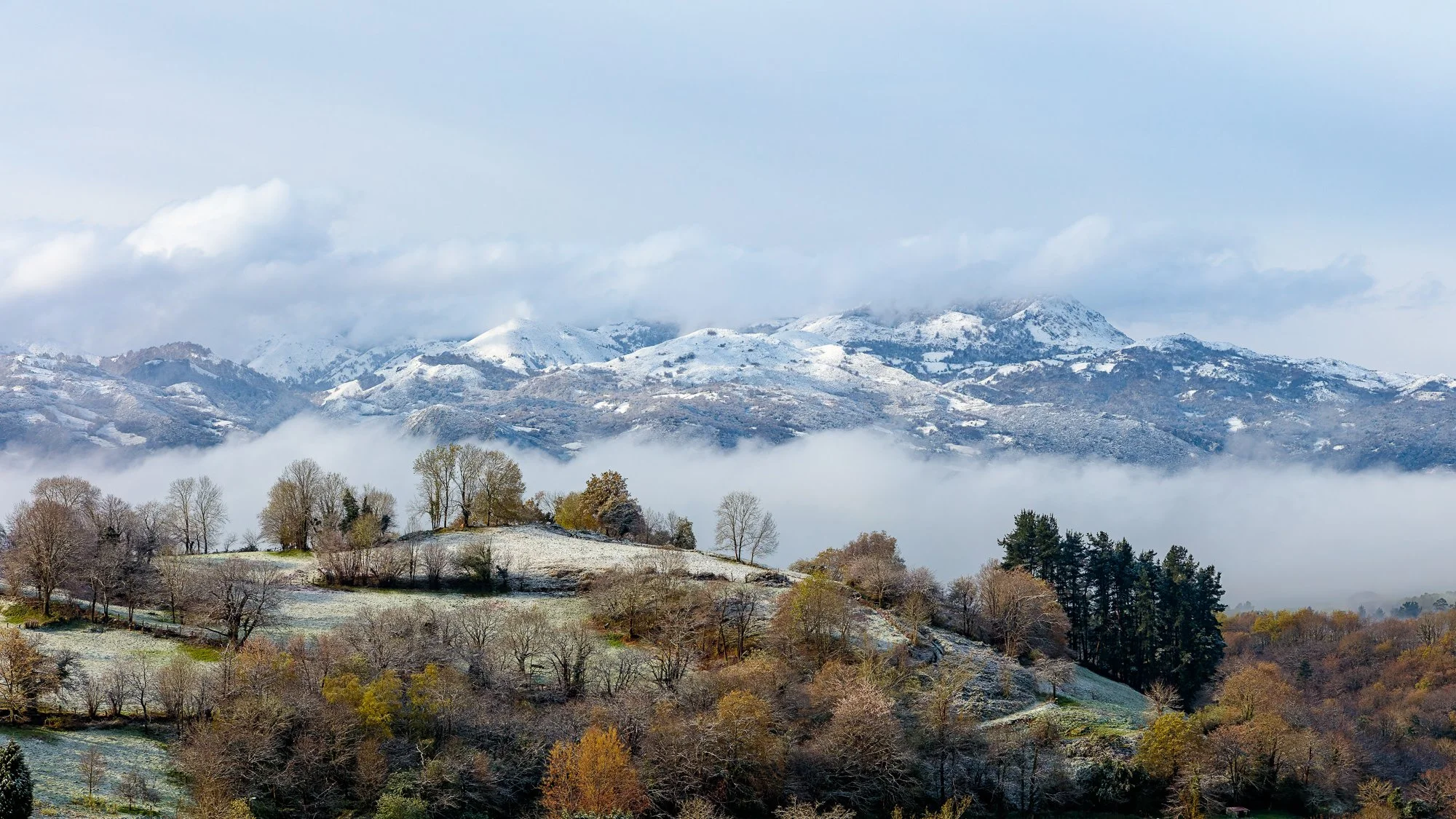
Far too many books give the impression that the gardening year starts in January. Wrong. The calendar year is for brown-thumbed mere mortals. When the only excitement on offer is browsing through seed catalogues and waiting for snowdrops to appear (cheerless, glacial things that have somehow found their way onto the Lady Gardener’s list of good taste plants), I prefer to stay indoors, get to grips with more Beethoven (18 sonatas down in a 32 year project) and sample some of Speyside’s finest. The combined results aren’t always what Ludwig might have hoped for, but it saves me from scrabbling around in the dirt looking for the first signs of spring.

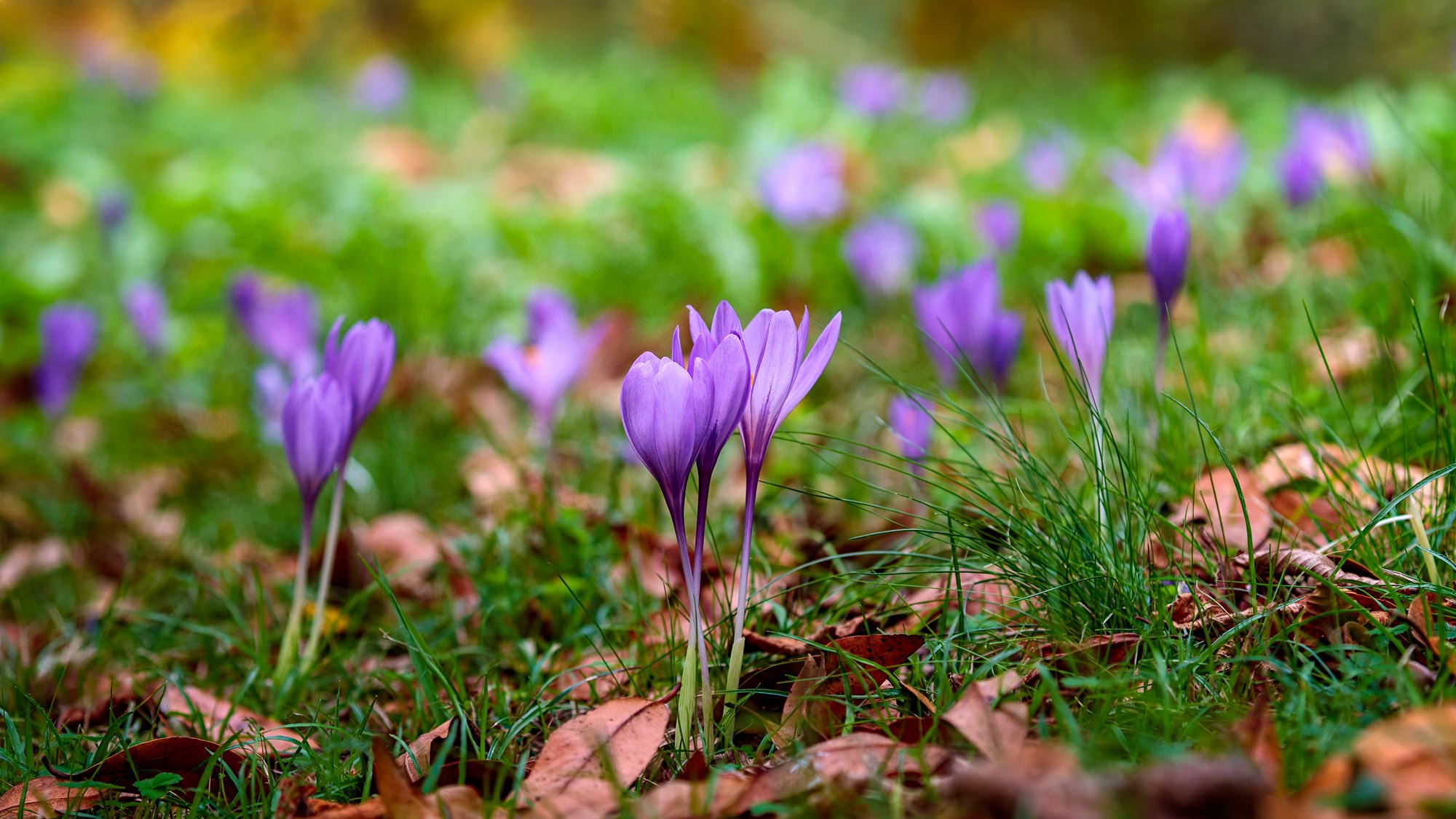
As every fool knows, the gardening year actually kicks off in autumn. That’s make or break time for next summer’s displays of horticultural excellence, the best time to plant, shift and tweak. If you want to wow the local gardening club with your prowess while they shovel down the free cucumber sandwiches and Earl Grey, you need to start making plans in October. And after a long, scorching drought of a summer, any tedium in the terraces or awkwardness in the orchard are too glaringly exposed to be ignored any longer. About the only upside of having no rainfall for four months is that the grass is so short that it doesn’t need cutting and the crocuses can rejoice in the lack of competition. Everything else needs attention.
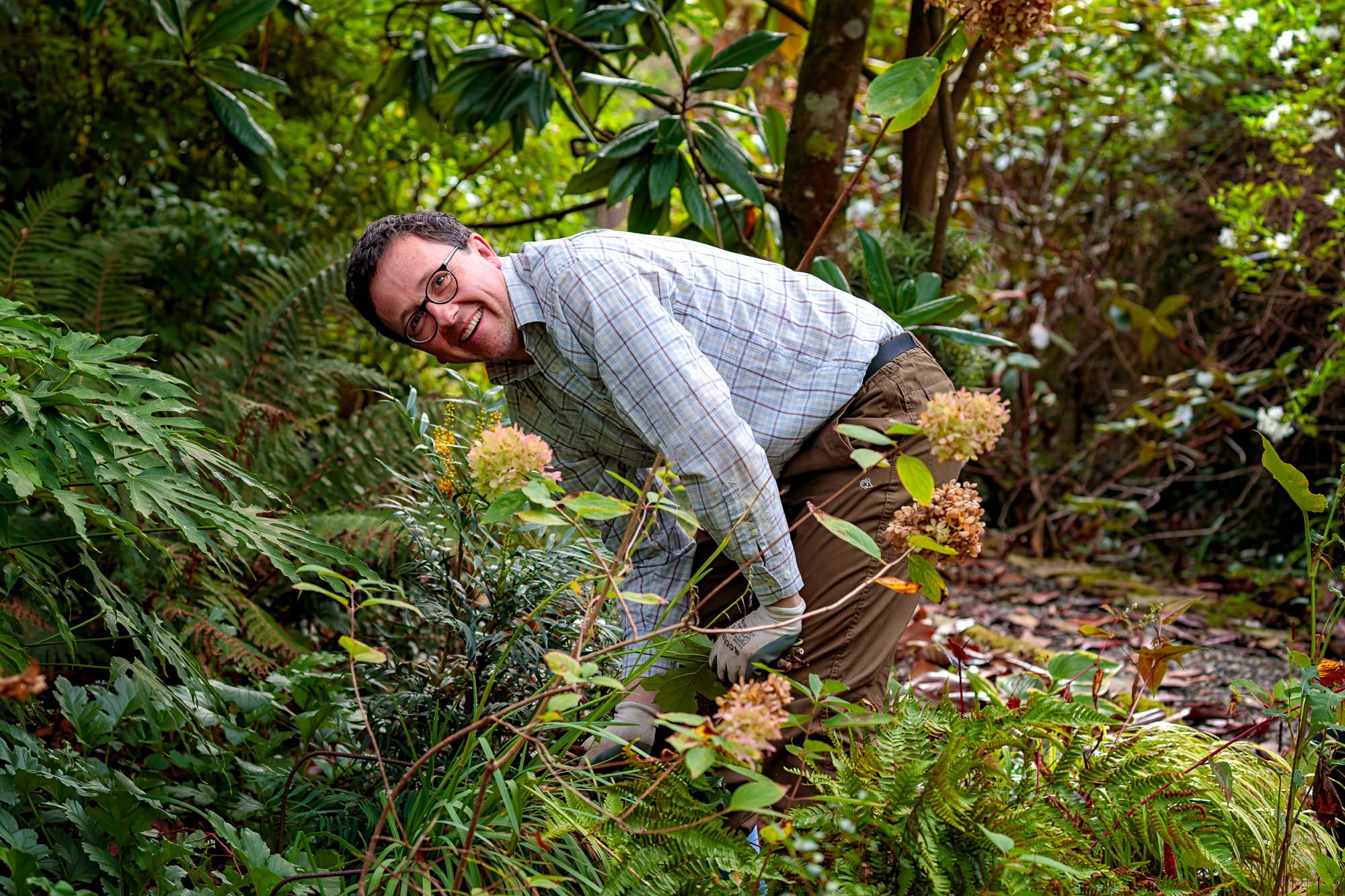
Four areas of the garden have been ruthlessly re-assessed, re-jigged and re-modelled – the dogwood arc below the Avenue, the Grass Terrace, the Rose Garden and the Orchard. Some, like the Rose Garden, have been there from the beginning and were starting to show their age. Others, such as the Grass Terrace, were youthful follies, the result of reading too much New Perennial propaganda during a period of prolonged impecuniousness, constant reminders of the garden equivalent of living on Skid Row. I was tempted to call the whole process ‘Operation Rethink and Refine’. In truth, it’s been more like ‘Operation Rip Out and Replace’.
Dogwood Arc
Do you have any idea how far the surface roots of Cornus alba ‘Sibirica’ spread? Too far – they’re greedy, thuggish and have a tendency to colonise new ground wherever a stem makes contact with bare earth. Sure, they have brightly coloured stems and are an obligatory component of any winter garden. But I’m playing the piano and drinking whisky, remember, so devoting 50 square yards of prime real estate to them is frankly wasteful. Out they came, after much huffing and puffing. I’ve left a token drift at the very top of the hill, in remembrance of things past, but I knew I could come up with something better here.
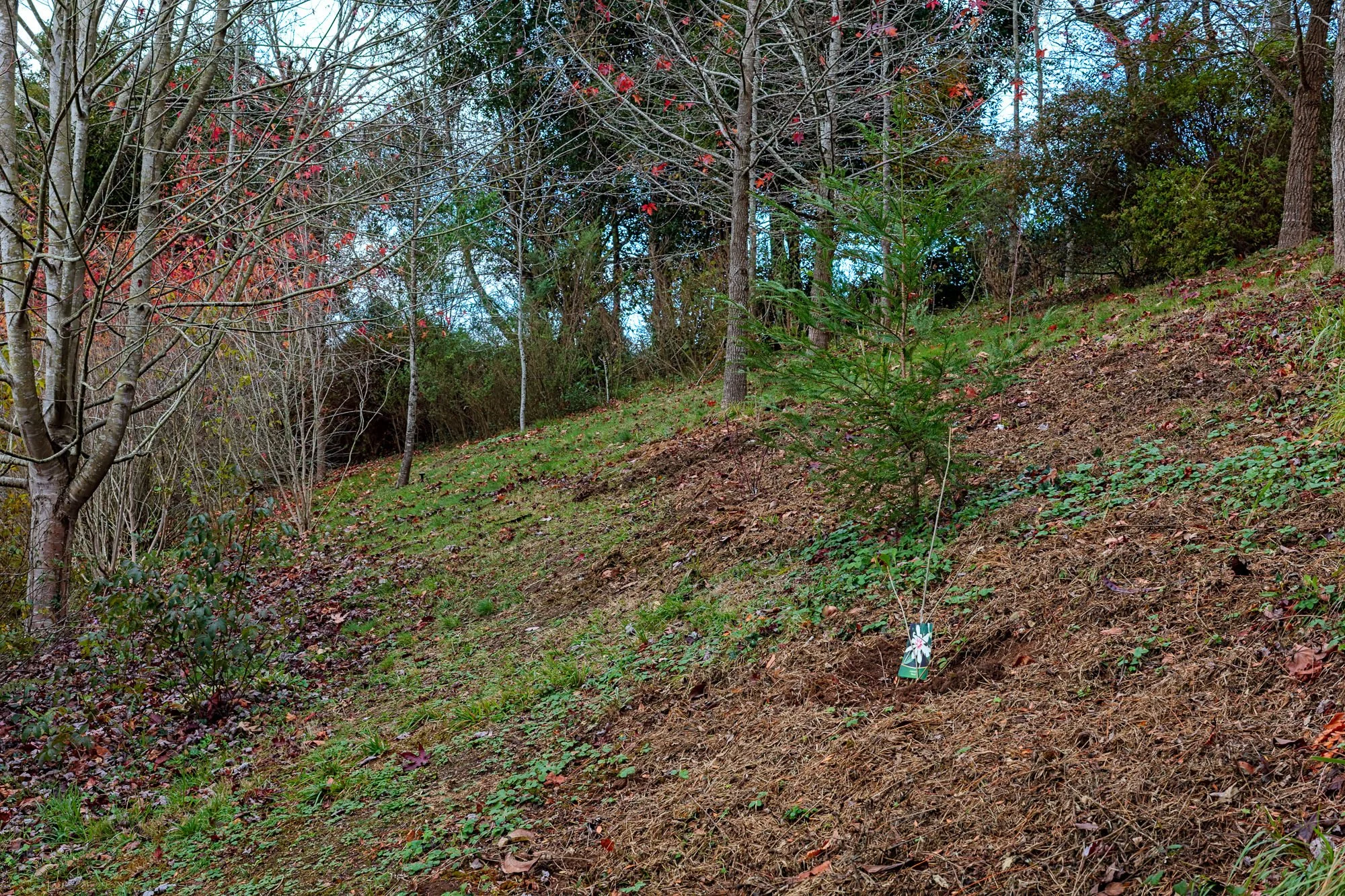
In went a variety of shrubs that can cope with increasing levels of shade and will flatter yet another seed-grown redwood (Sequoia sempervirens) that was surplus to requirements elsewhere. Of course, such radical revamps can take a couple of years to settle down and look ridiculously sparse in the meantime. Which is why I’ve used one of my favourite tricks, ‘the shiny bauble’, to draw attention away.
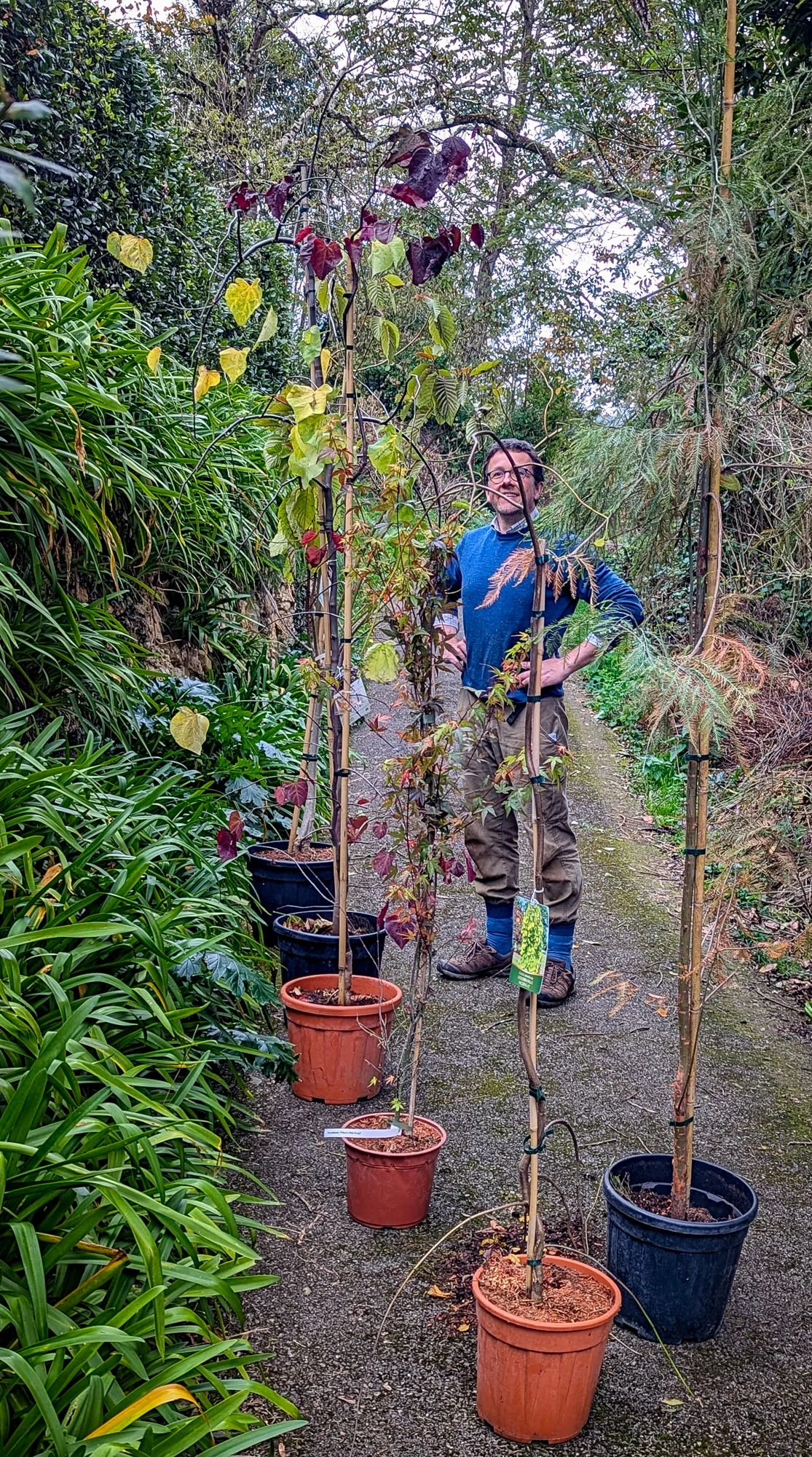
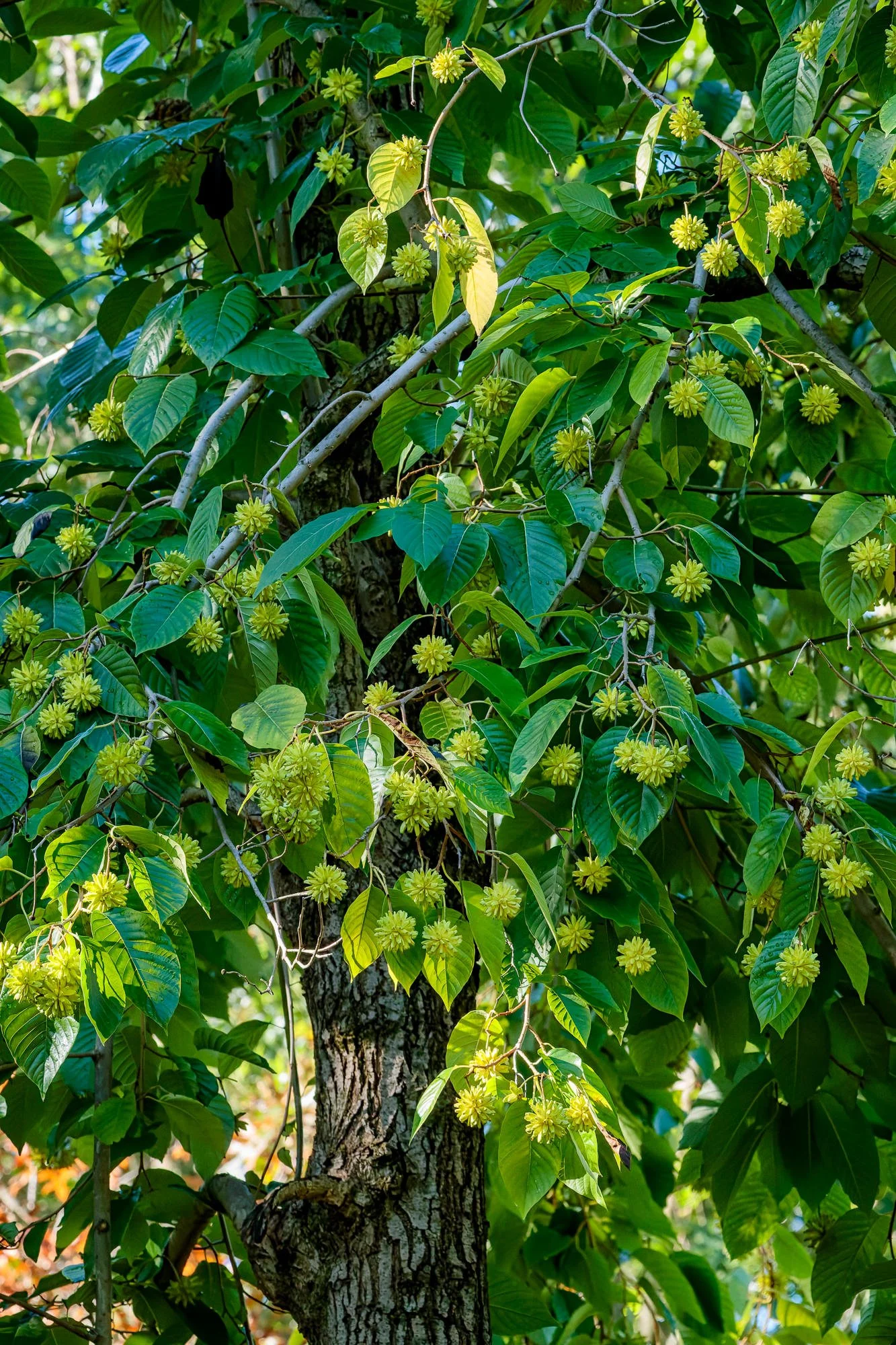
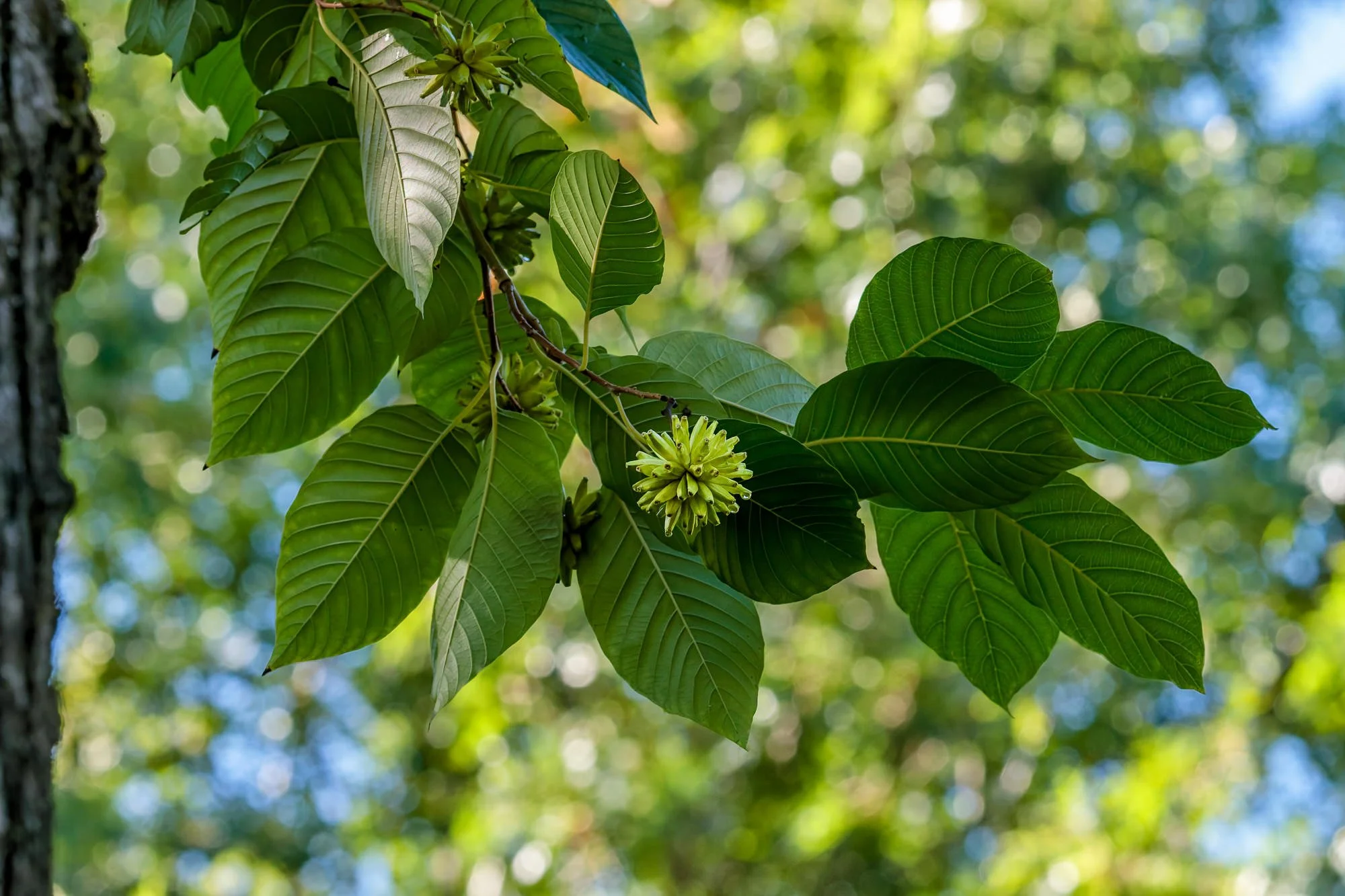
In this case, I’m breaking all the rules and have popped in a risky tree to hold the space – a Camptotheca acuminata, pushing the limits of its comfort zone here and already about 5ft taller than the trees I normally plant out. It was a novelty purchase I couldn’t resist adding to the autumn bulk-buying extravaganza organised by a local gardening group and fulfilled by a Polish nursery – modern-day international plant-hunting at its most civilised. I’d first seen one at the Coker Arboretum in Chapel Hill, North Carolina, suggesting it can cope with freezing winters as long as the summers are hot enough to ripen new growth. And if it’s good enough for my under-gardener’s alma mater, it’s good enough for La Corolla.
Grass Terrace
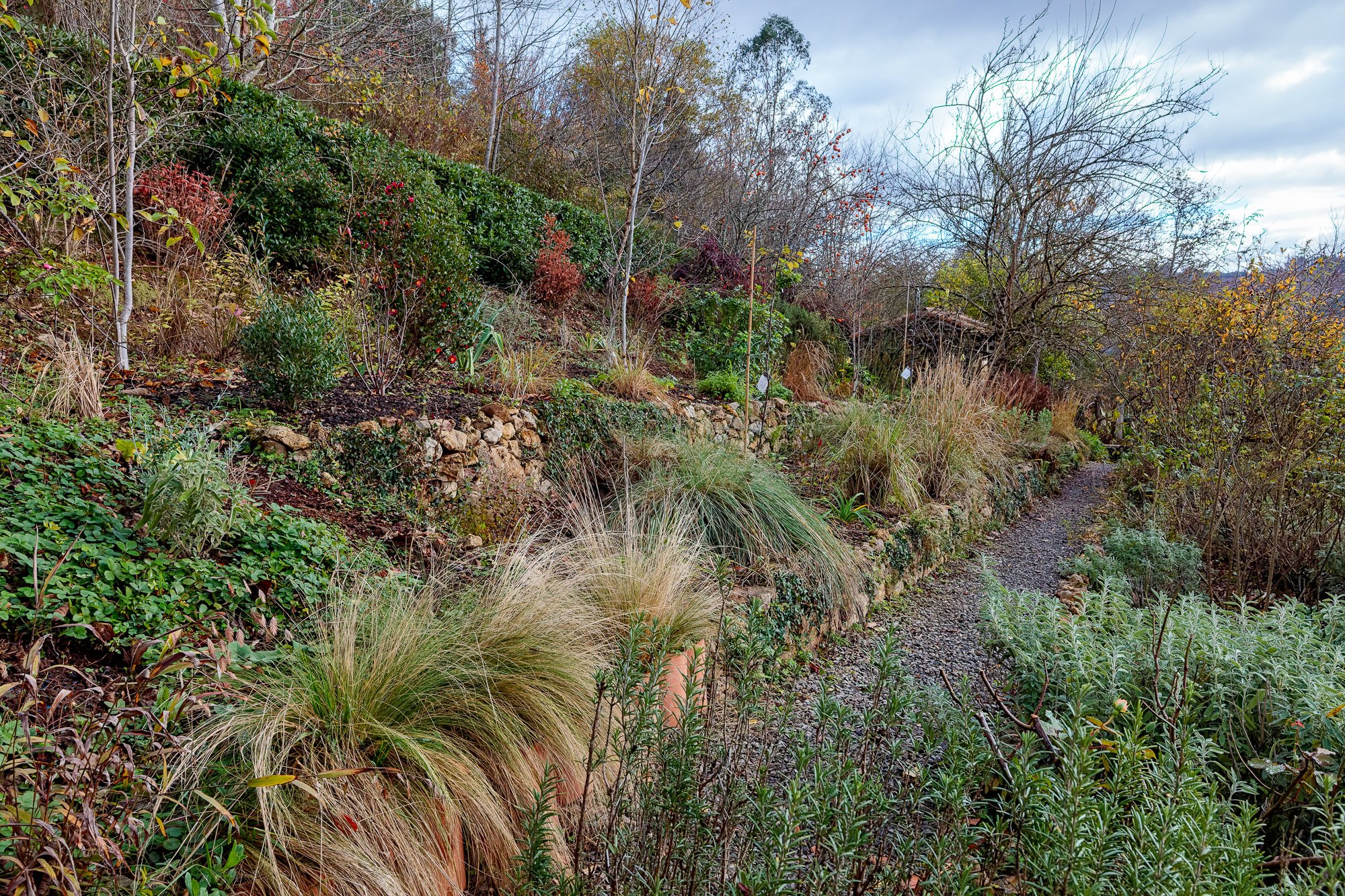
Have you ever tried to hack out an established clump of Miscanthus sinensis with nothing more at your disposal than blood, sweat, tears and a mattock? And then having to repeat it five more times? A prime example of planting in haste and repenting at leisure. They were too big, too unruly and offered too little in return for keeping them upright and stopping them seeding everywhere. Staring at their indifference to drought all summer long oddly just made me want to cull them once and for all – they were just too static, too dull. Again, because I’m a sentimental old thing, I’ve left a couple of clumps along the Avenue where the mood is more relaxed and they can loll and collapse to their heart’s content.
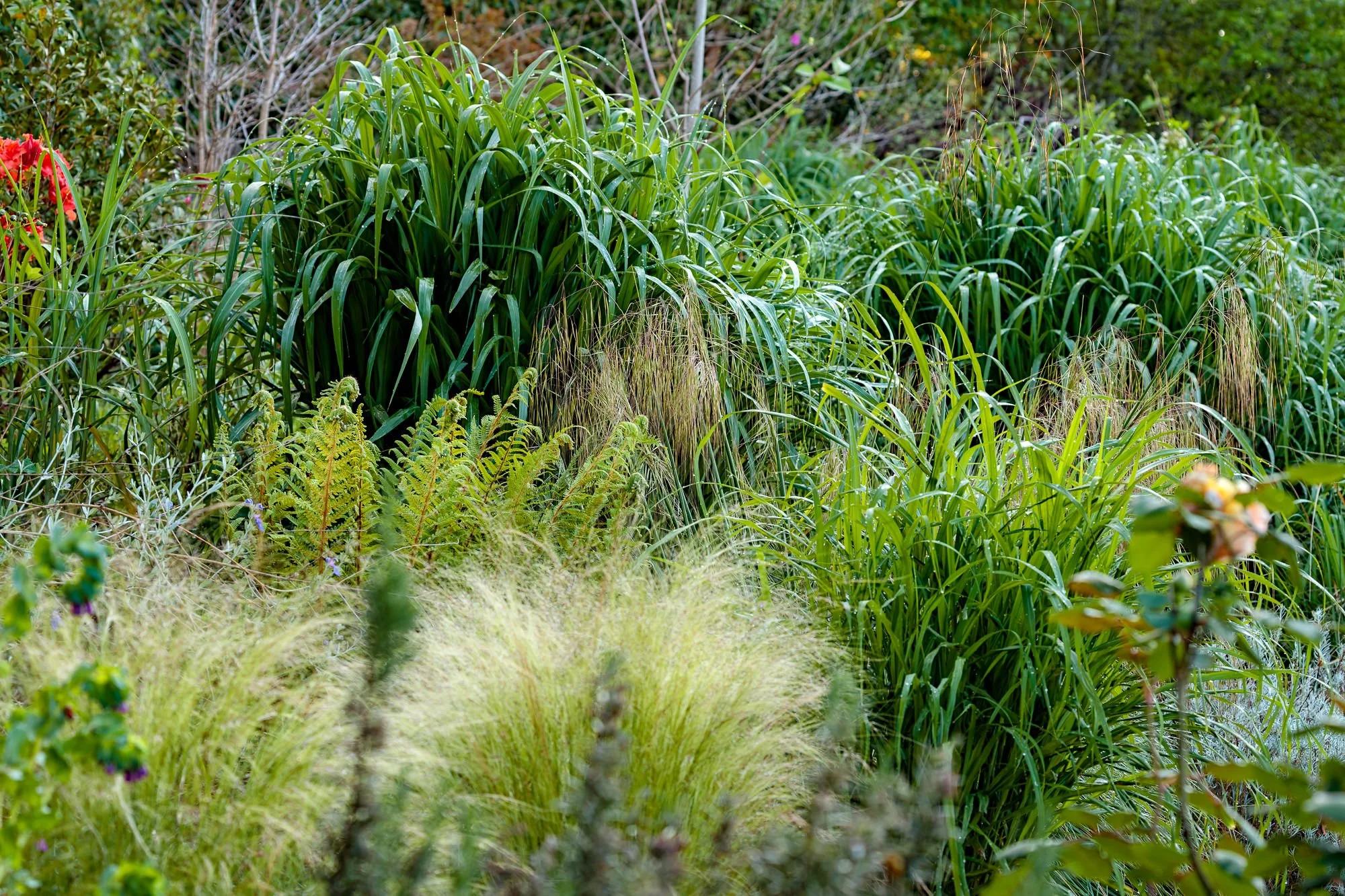
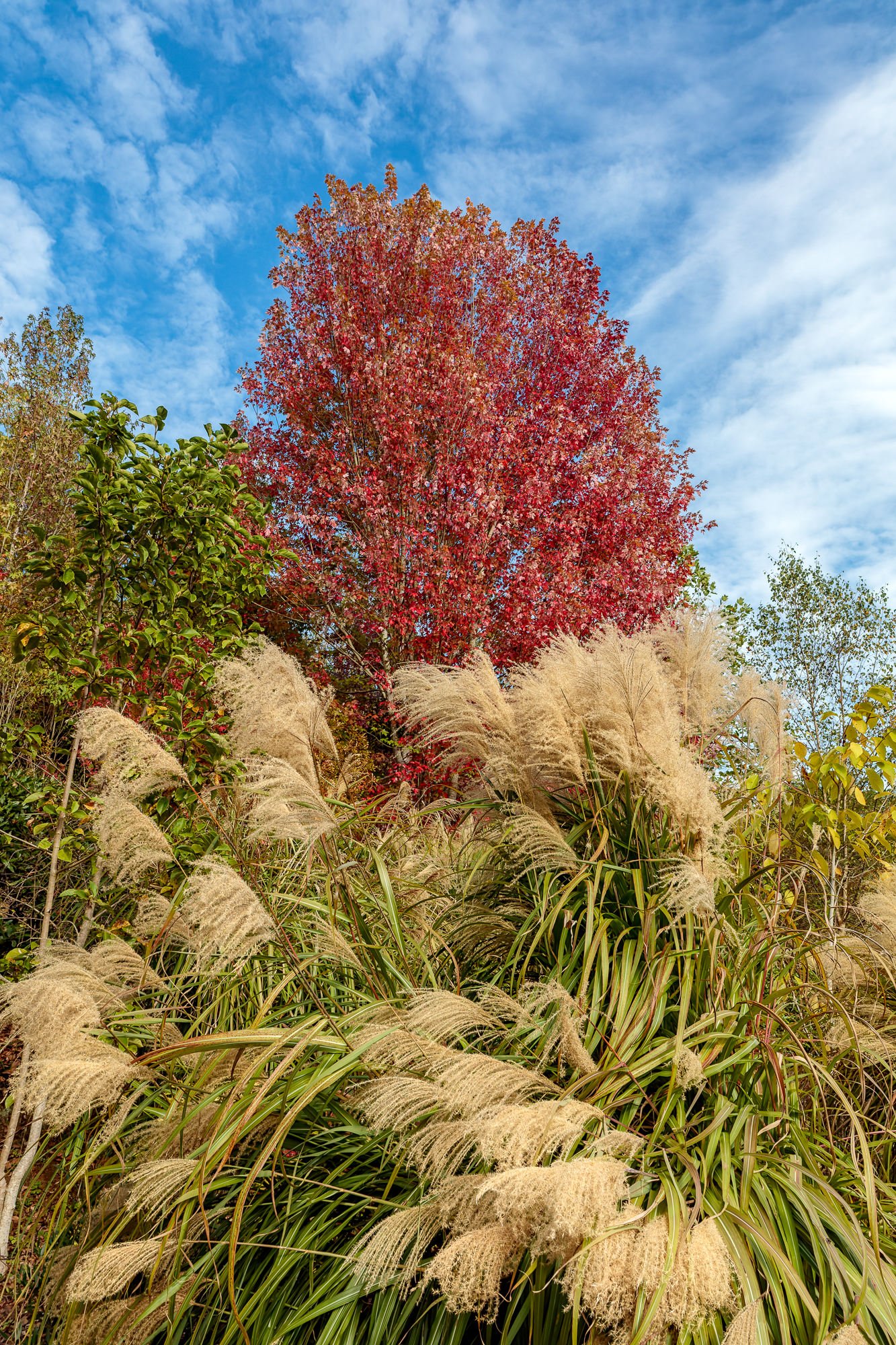
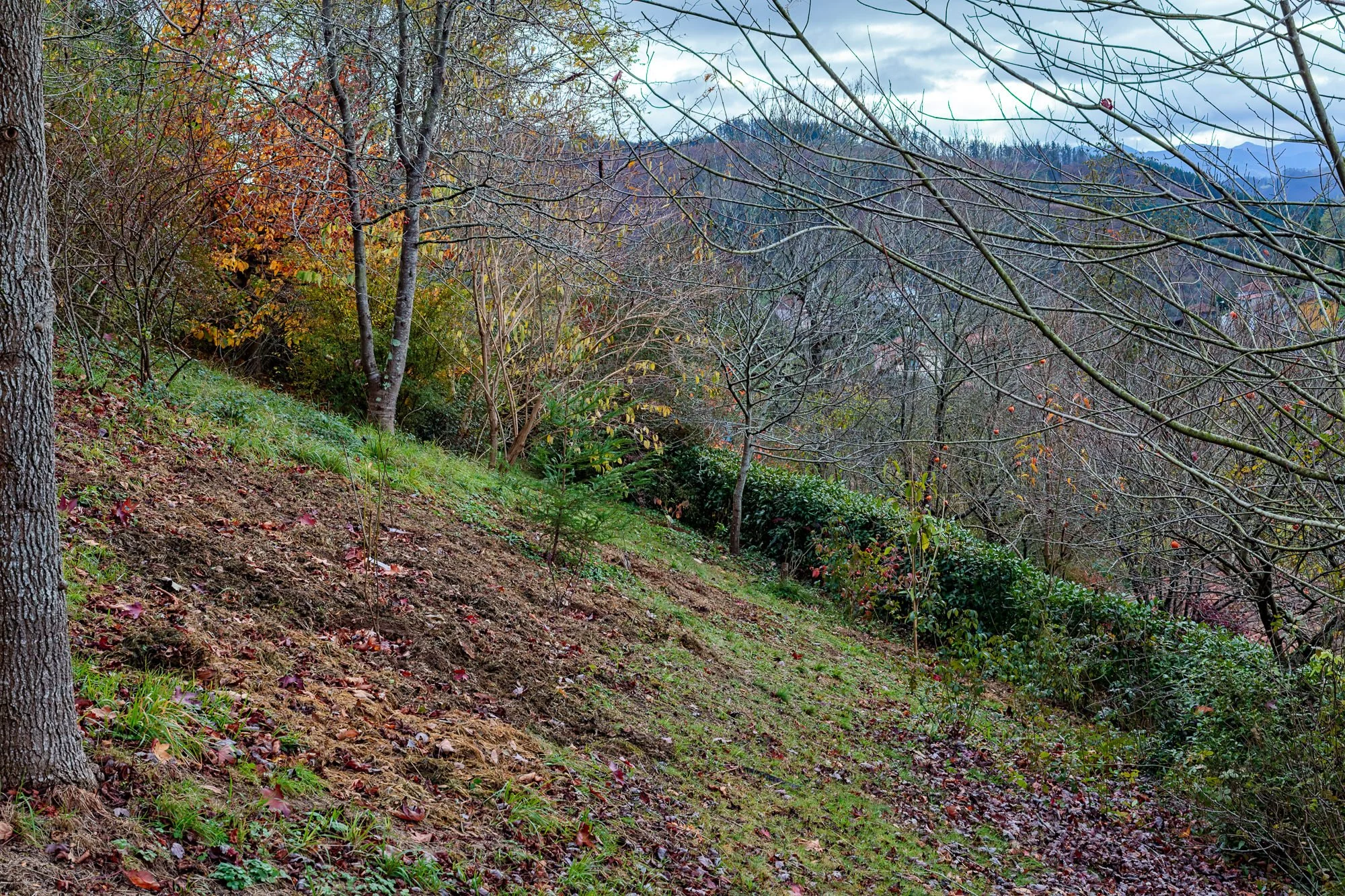
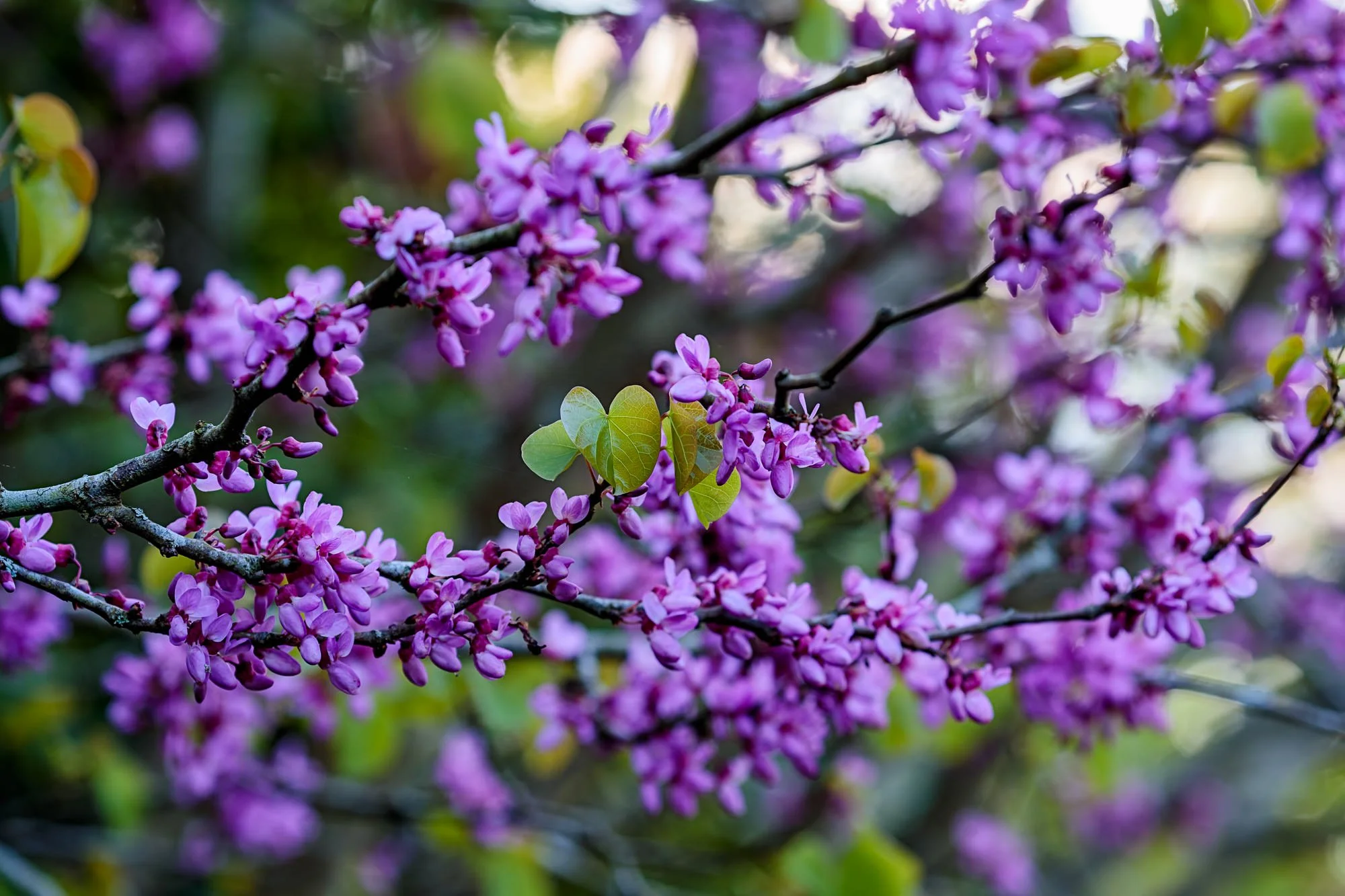
Other grasses (Deschampsia caespitosa, Pennisetum macrourum, Calamagrostis brachytricha, Stipa gigantea, S. tenuissima and S. pseudoichu) have been edited and re-arranged. Only the pennisetum might make a run through the border but a sharp spade applied to its circumference every few months keeps it in check. While it remains the Grass Terrace, the grasses have been turned into supporting players with the focus now on a trio of redbuds (Cercis canadensis ‘Vanilla Twist’, ‘Ruby Falls’ and ‘Golden Falls’), a group of plants I first fell for at Stoneleigh outside Philadelphia. Again with a Polish provenance, they pick up on others (‘Forest Pansy’, of course, ‘Carolina Sweetheart’ and ‘Alley Cat’) in the Woodland as well as a group of seed-grown Judas trees maturing nicely over by the pond. None of the established redbuds blinked during the drought so hopes are high that the newcomers will thrive in the Grass Terrace.
The Rose Garden
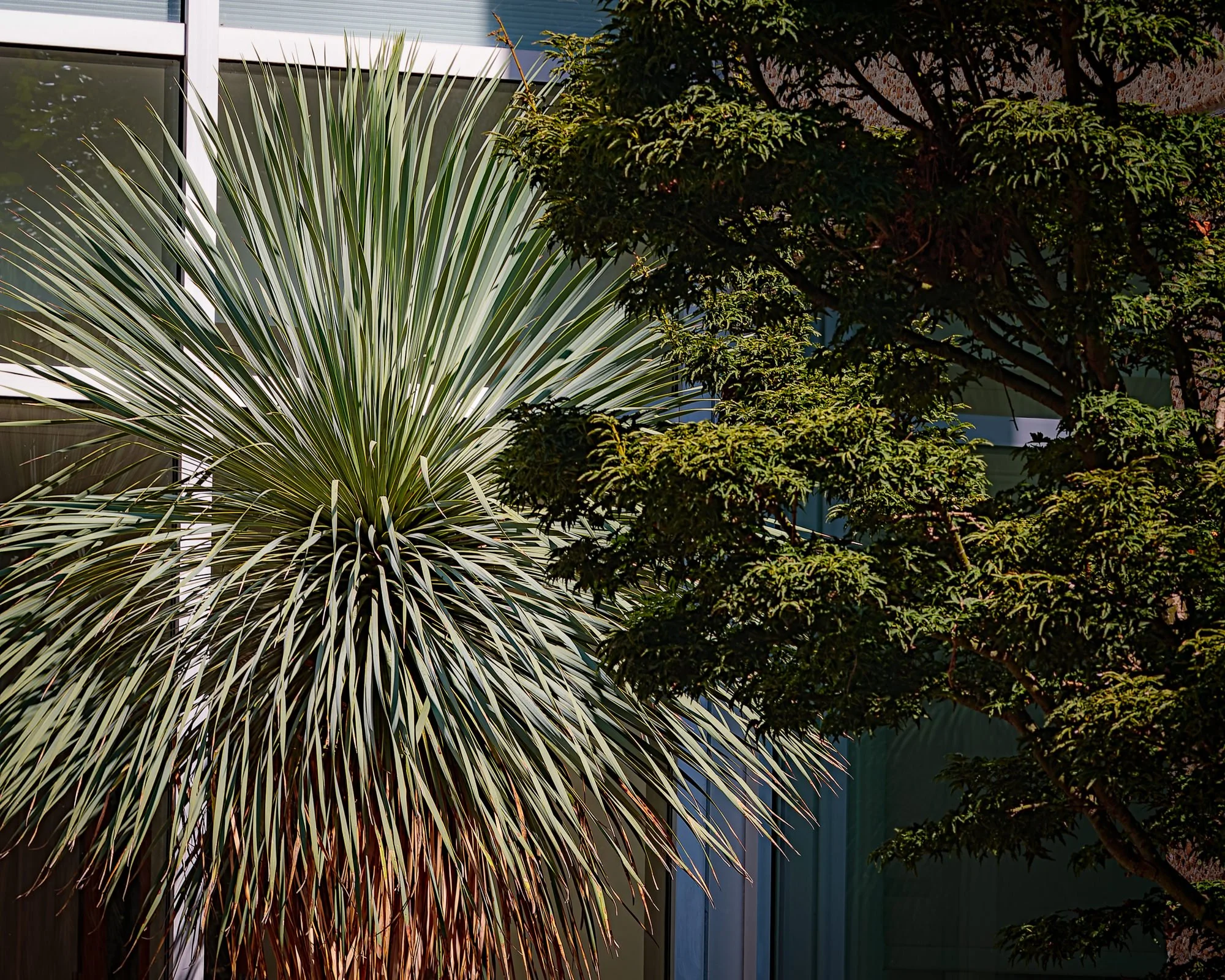
Under-performing hybrid teas and far too many agapanthus made for a dispiriting combination in a prominent location. Inspiration came from the grandiosely named tea pavilion (on the site of an old chicken house, of all things). Could I possibly get away with planting a few Japanese maples? It’s a sheltered enough spot so I don’t have to worry about wind-burn. But would it be too sunny and would the wandering roots of an Eriobotrya japonica suck all the moisture out of the ground and inhibit growth?
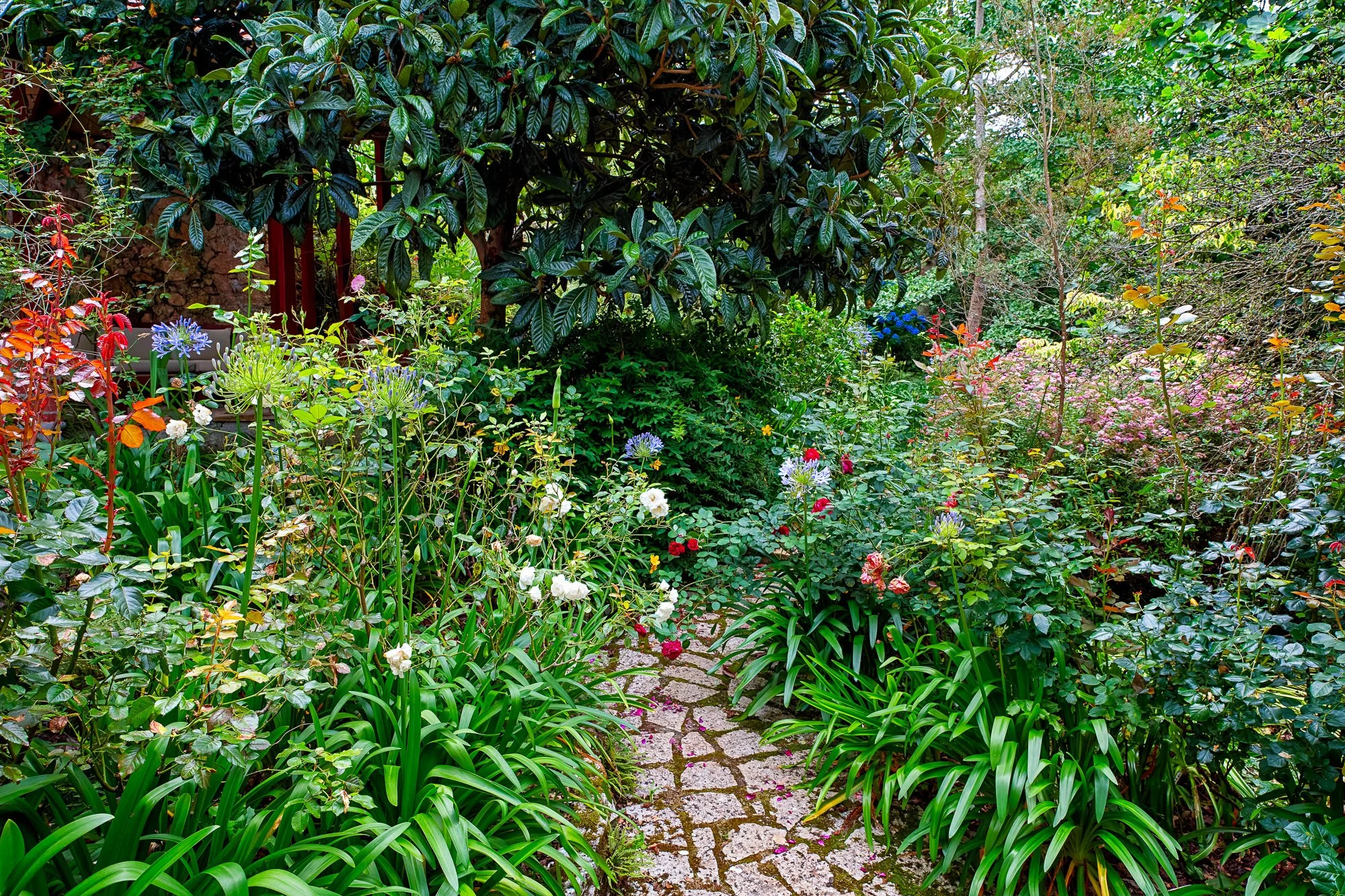
Local gardening friends assured me that Asturias is made for acers. I had my doubts and so an Acer palmatum ‘Shishi-gashira’ was the guinea pig earlier in the year. Nothing ventured, and all that. Somehow, with very little attention over a trying summer, it showed no signs of distress at all, put on a foot of growth and coloured up nicely in the autumn. Cue a further contribution to Polish GDP and the planting of another four maples (‘Ariadne’, ‘Wilson’s Pink Dwarf’, ‘Coonara Pygmy’ and ‘Orangeola’). Very much a ‘go big or go home’ strategy.
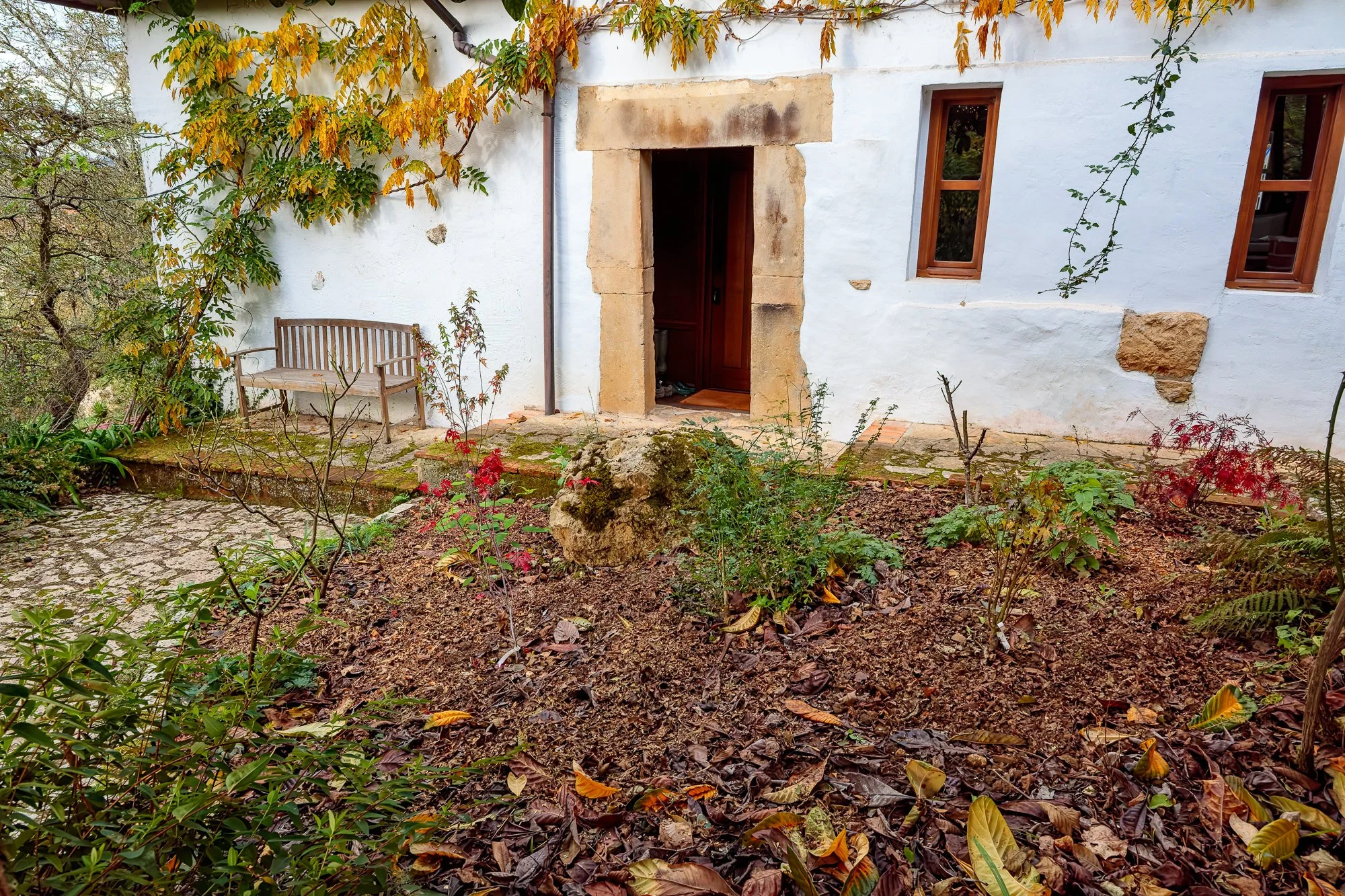
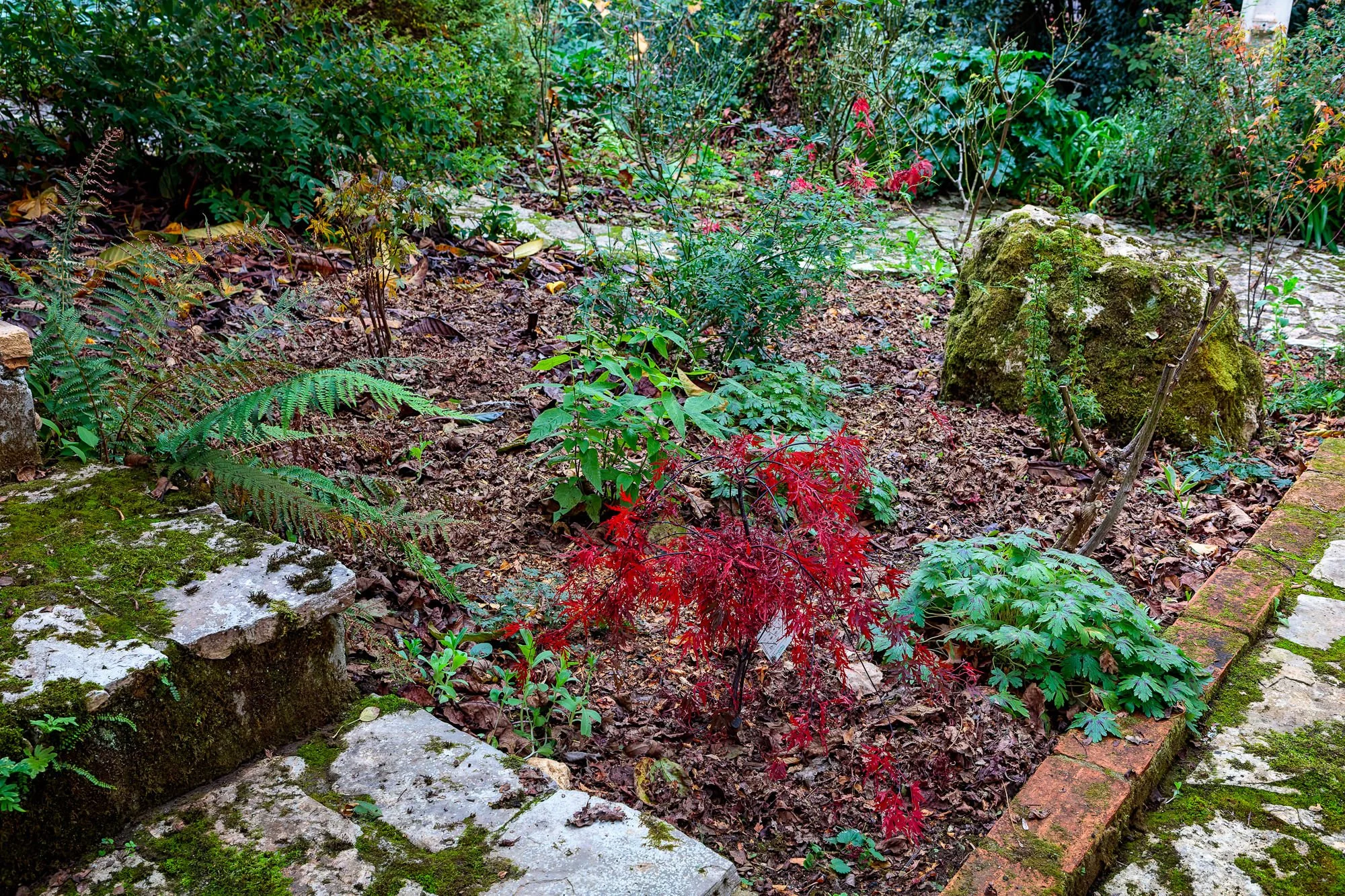
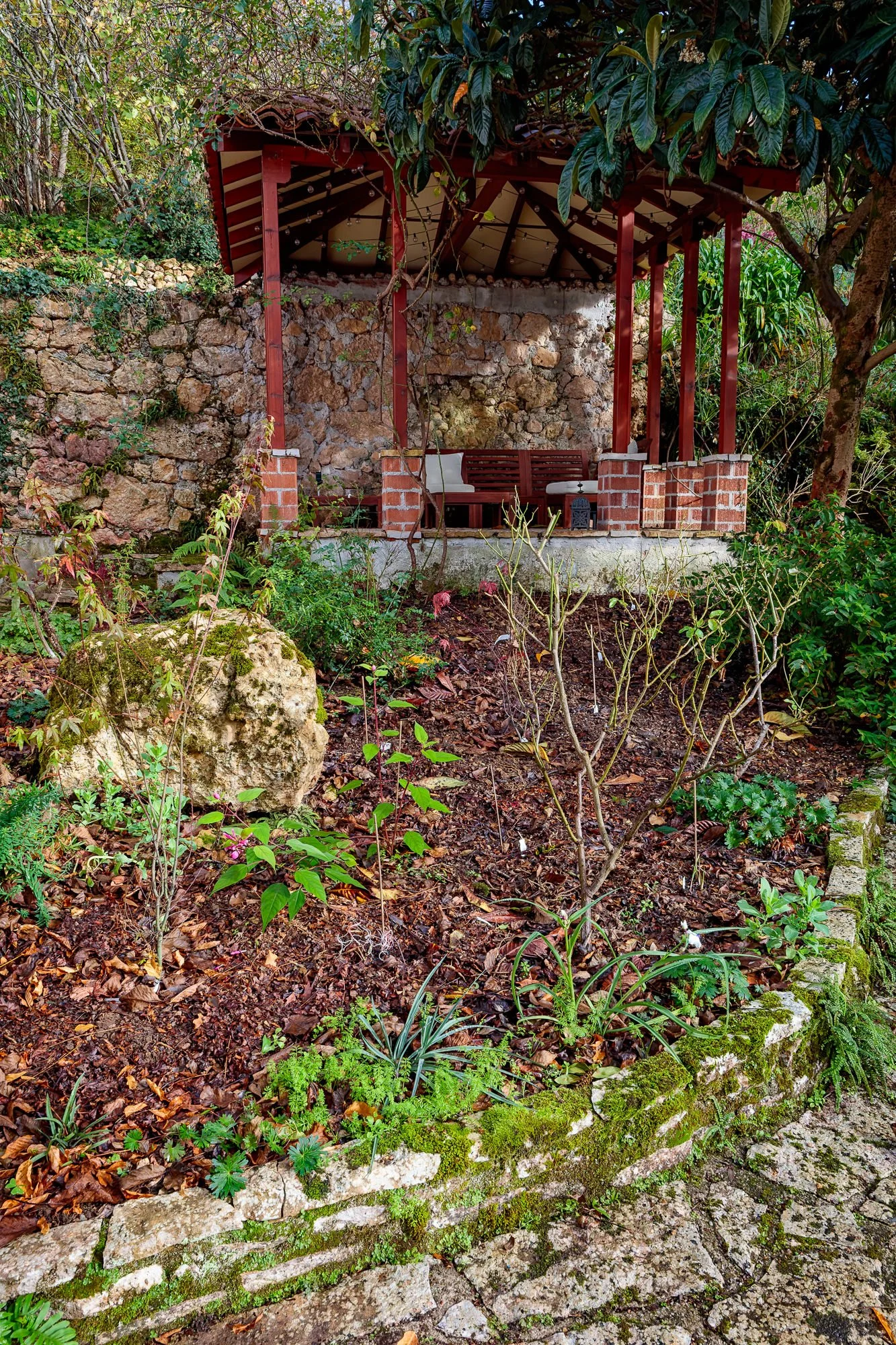
Am I guilty yet again of over-planting? Possibly. Will the acers sit awkwardly with the couple of roses I couldn’t bring myself to remove? Time will tell. Covering the ground in the interim is an adventurous mix of geraniums, tradescantias and salvias – anything to avoid the dreaded bare soil scenario while the acers take hold. Quite a restrained planting scheme compared to some.
The Orchard
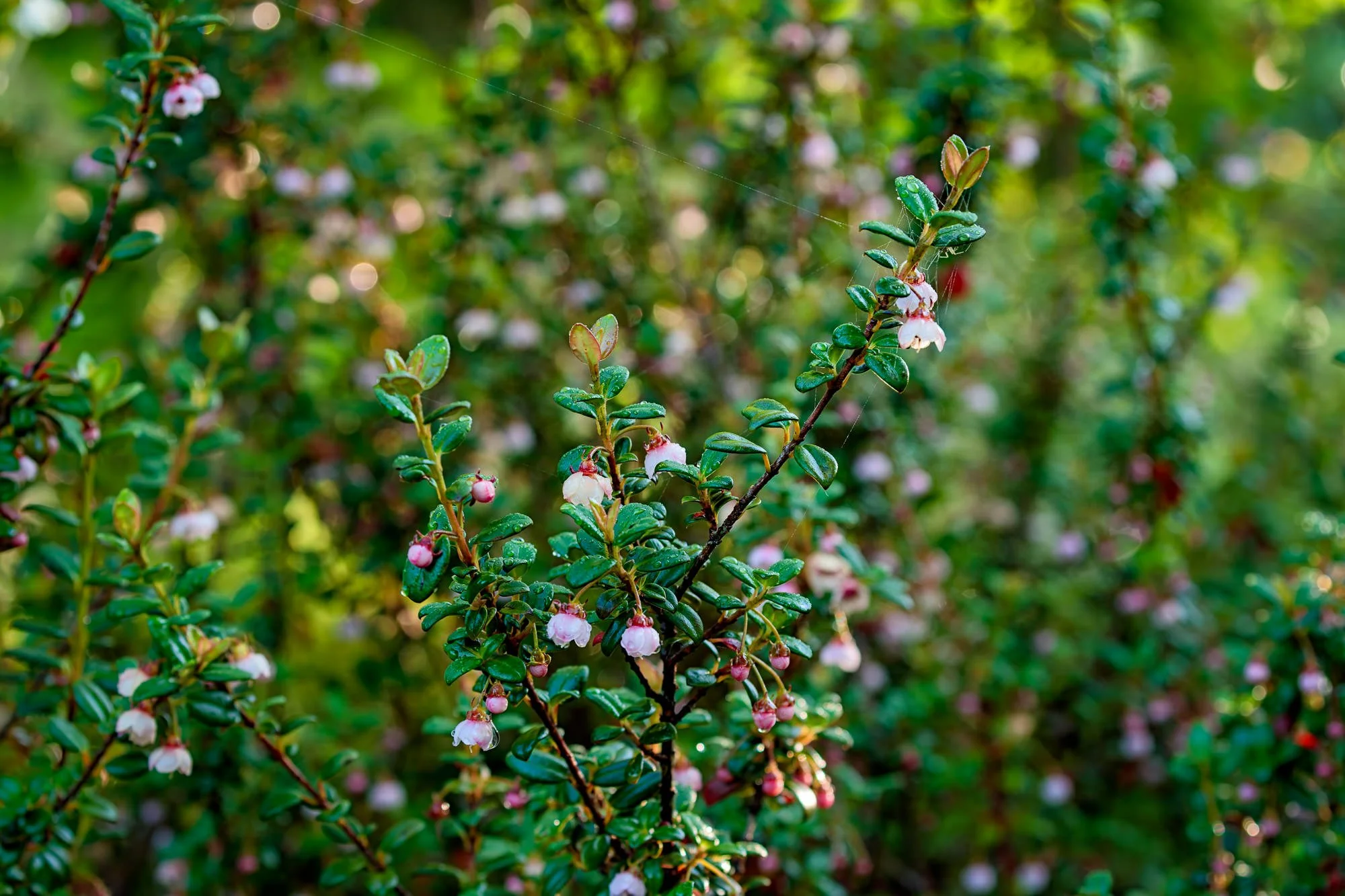
The evolution of the Orchard continues apace. Where once apples reigned supreme (hardly surprising in the heart of Spanish cider country), I’ve gradually been weaving in some more unusual ‘productive’ trees and shrubs – Japanese raisin trees (Hovenia dulcis), sugar maples, Chilean guavas (Ugni molinae), Sichuan pepper (Zanthoxylum piperitum), etc.
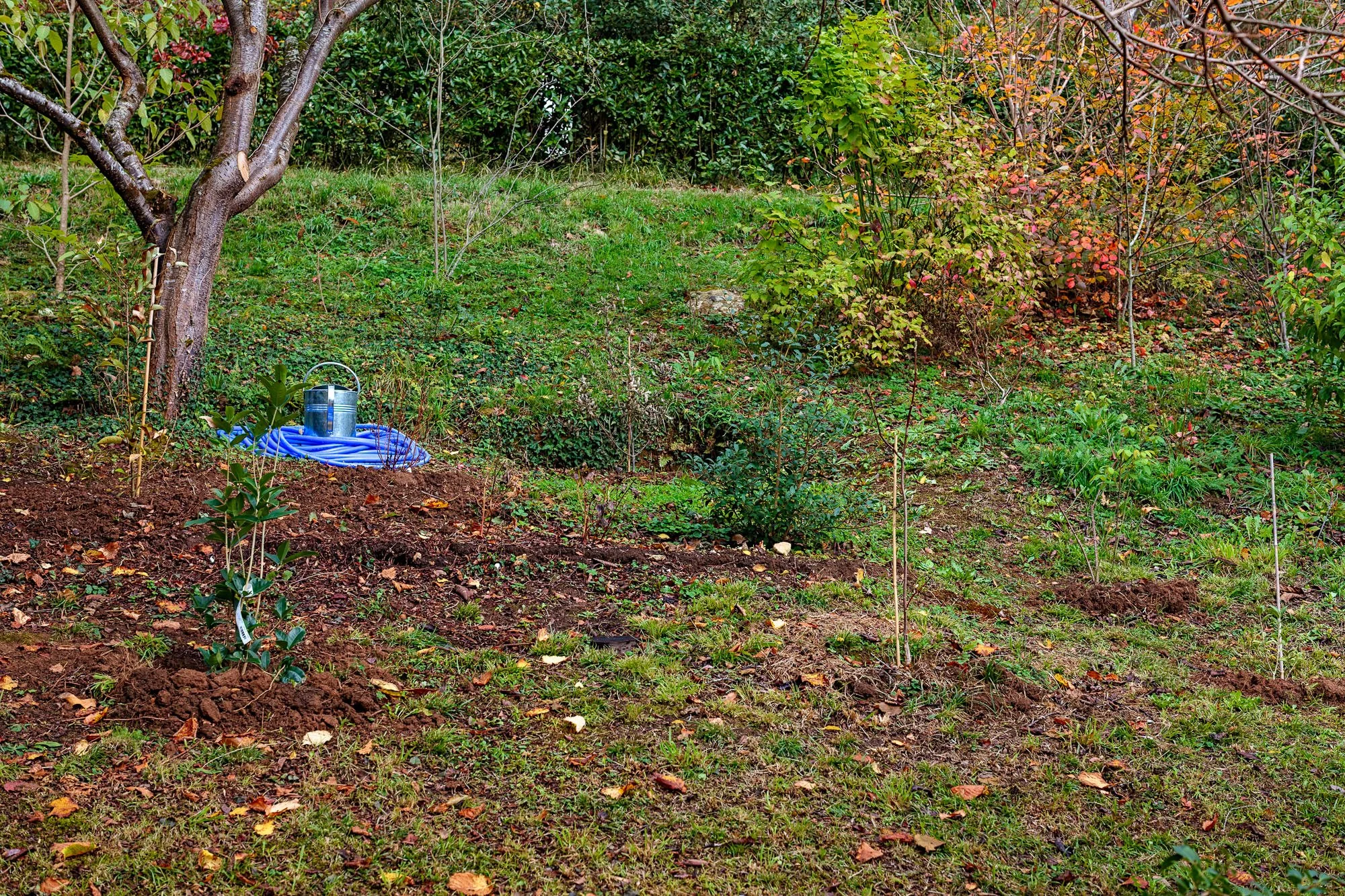
But I don’t always stick slavishly to my own self-imposed scheme, particularly as the whole area needed more evergreen, dare I say winter, interest. Enter yet more magnolias and every osmanthus that caught my eye. There’s no excuse for the magnolias except my enduring obsession with the entire genus, but at least the osmanthus are in the olive family. Throw in some refugee roses from elsewhere in the garden (for their hips), a pineapple broom (Argyrocytisus battandieri) and a few tea plants (Camellia sinensis) and I can fool myself that I’m still sticking to the brief. Just.
Here endeth planting season, a frenzy of activity to set the garden on the right track for the year ahead. Of course I won’t be able to resist adding more as the months go by (herbaceous especially). But while the new arrivals enjoy the rainy season, the occasional light frost and a flurry or two, I’ll be safely tucked up inside tickling the ivories and downing the odd dram. If I get desperate, I might even force myself to leaf through a seed catalogue.