Holker Hall
An exercise in old-school elegance
18 January 2026
By: James Lennox
When was the last time you flicked through a glossy garden magazine (Gardens Illustrated, say, or The English Garden) and saw a rainy photo shoot? Never, is the answer. Basing your blurb on photos of wet gardens must be the publishing equivalent of taking a camera to a funeral. Just not the done thing, old boy.
As you know, my long-suffering under-gardener doubles as chief photographer, forced to capture every leaf of note for the archive. He views persistent rain as a ‘challenge’, in much the same way Scott found the Antarctic slightly more demanding than he’d been led to expect. For the garden writer, it’s quite the opposite, often an atmospheric revelation, the garden all to oneself (even the staff have taken refuge in the bothy), all dripping limbs and sparkling drops, one minute decayed Southern Gothic, the next torrential Himalayan valley.
So it was at Holker Hall last September on a typically dreich Cumbrian day. I was in my element; Chief Photographer was cursing like a trooper, struggling with fogged lenses, misty vistas and bedraggled blooms. As anyone who gardens in Asturias will appreciate, when you live between the coast and the mountains, you’re going to get your fair share of rain (drought being an unwelcome exception).
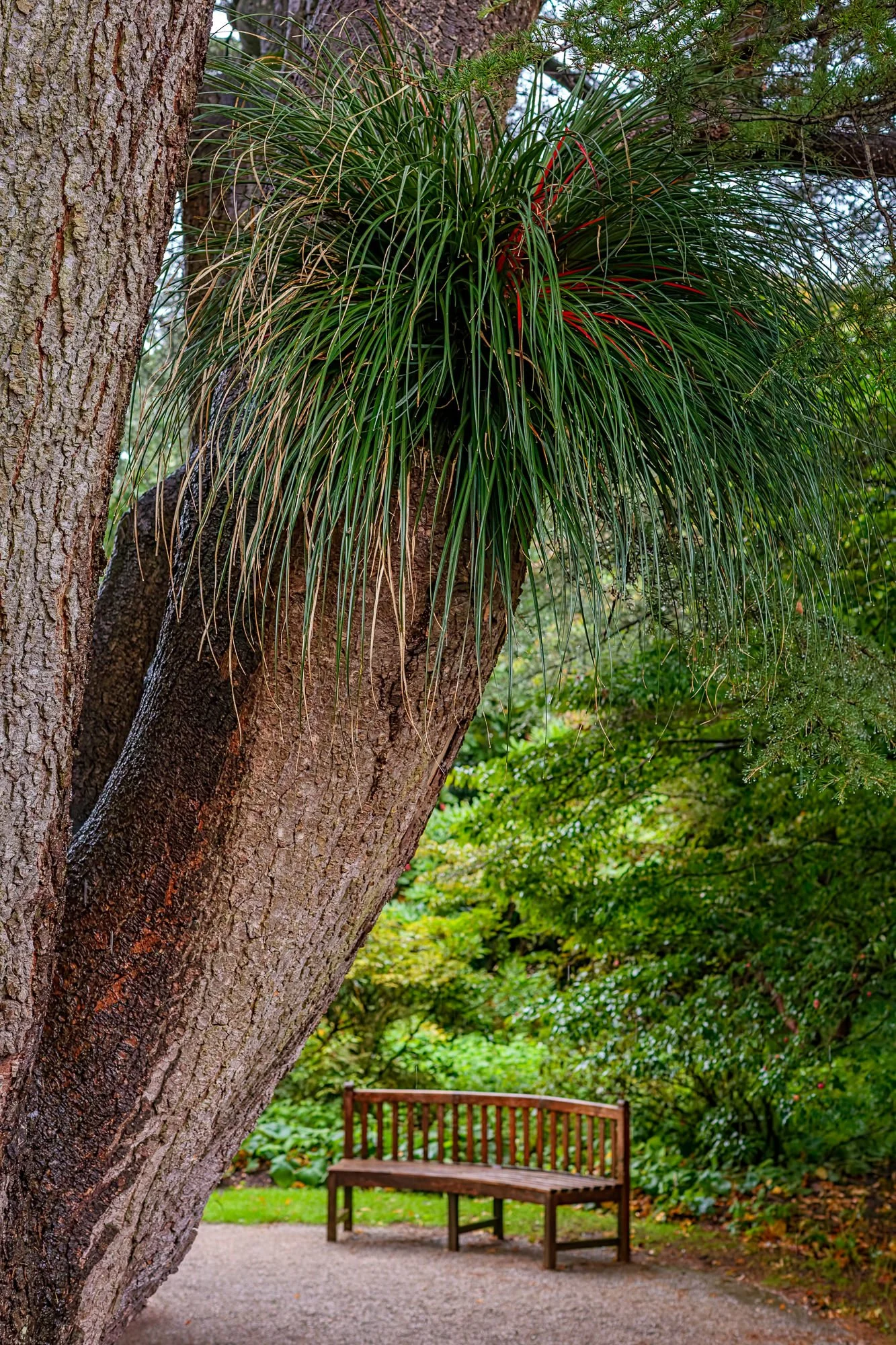
But the gentle climate also means you can expand the repertoire and push the odd hardiness boundary. Which keeps me on my toes, identification-wise. After all, it’s not every day you spot a Fascicularia bicolor up a tree this far north in England, a delightfully whimsical touch at the transition from formal garden to looser woodland.
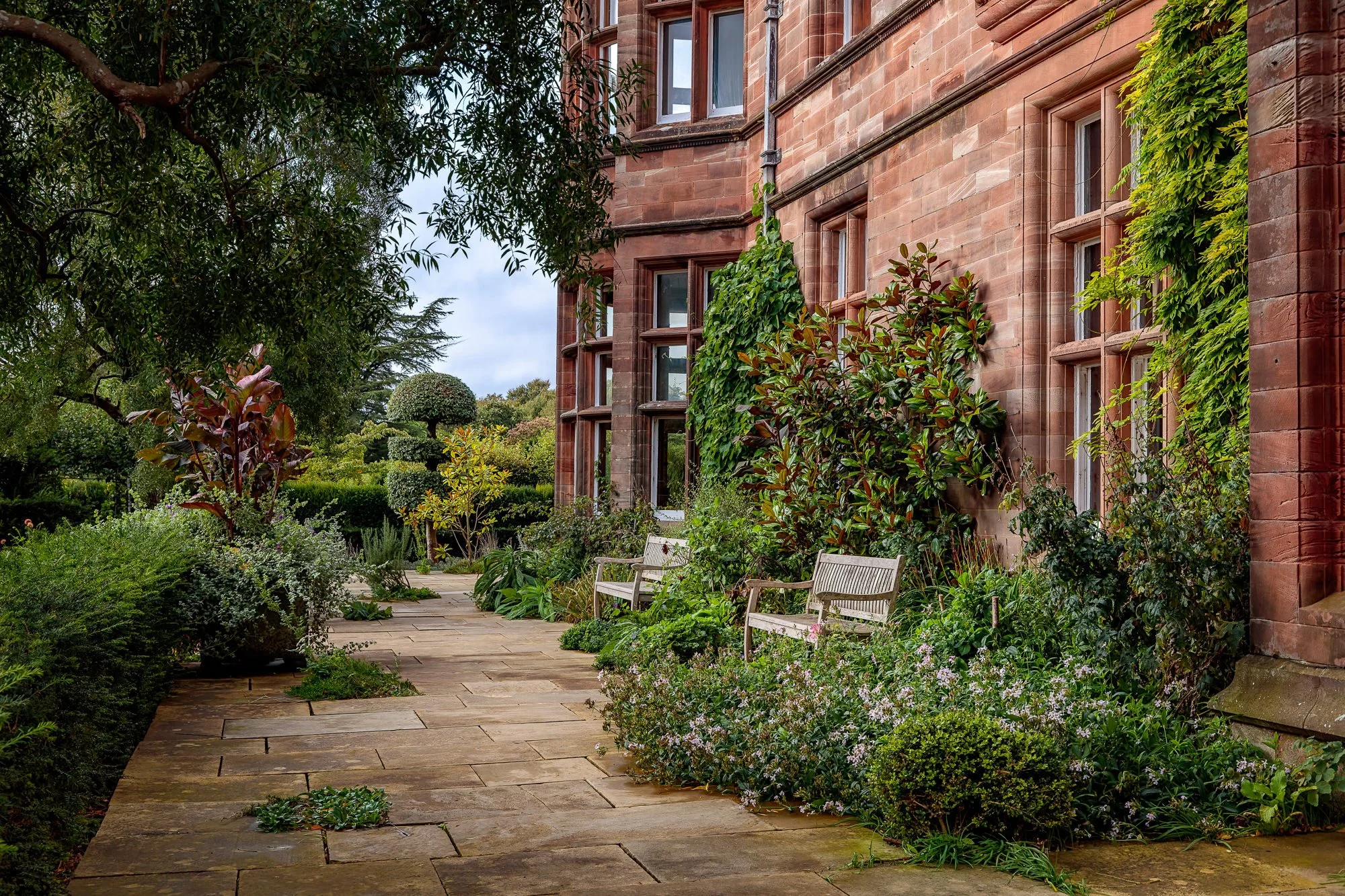
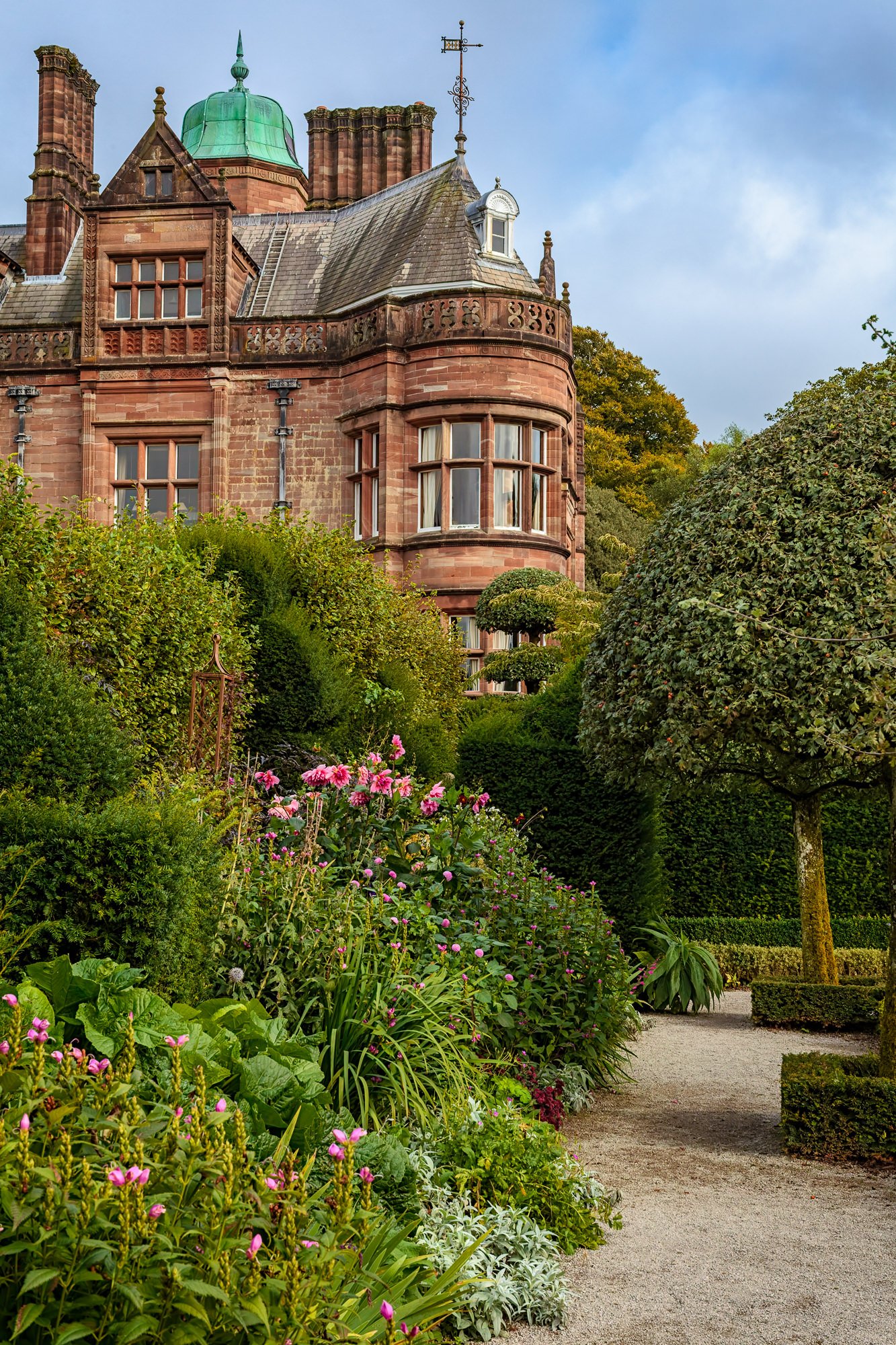
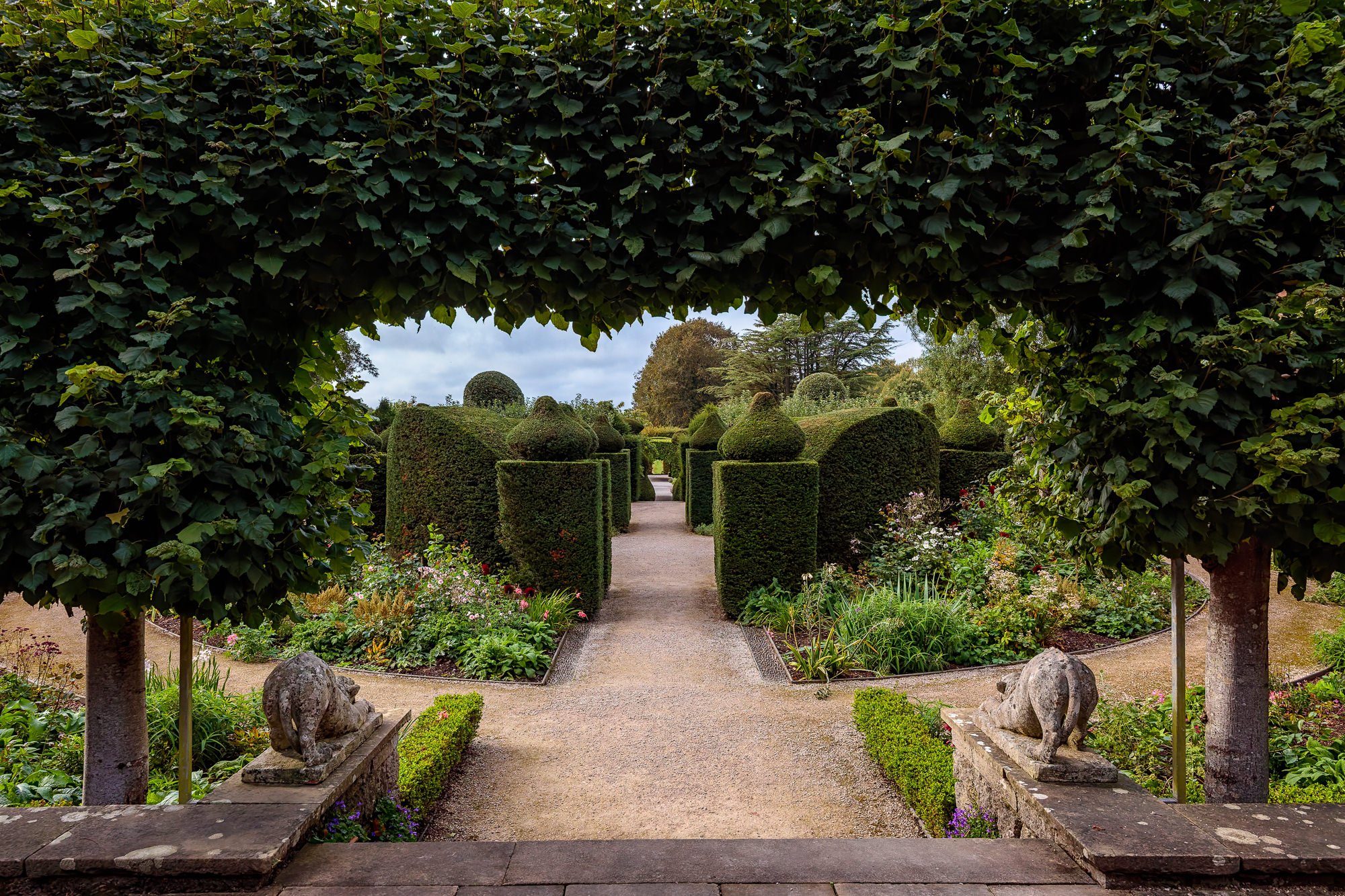
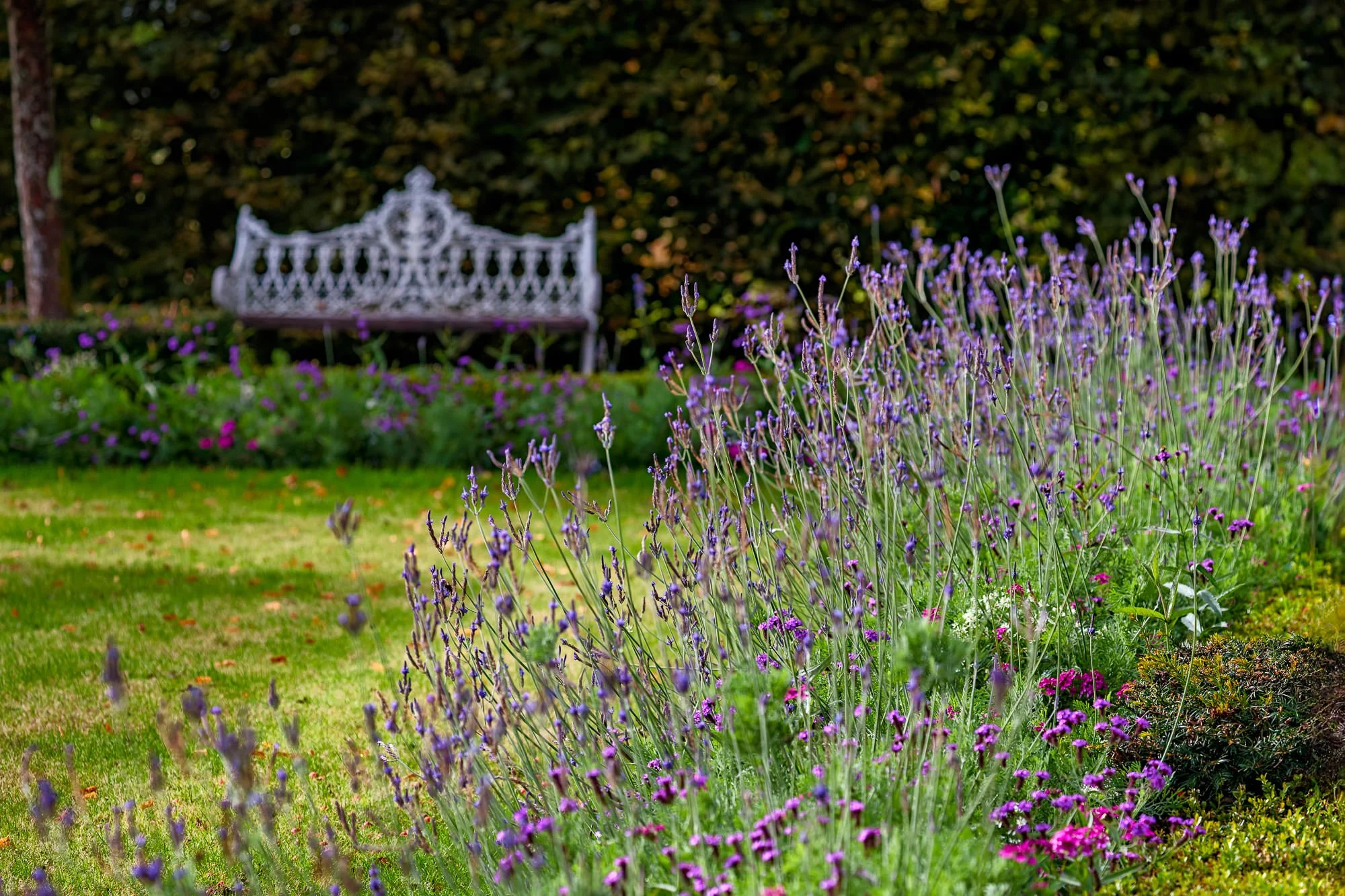
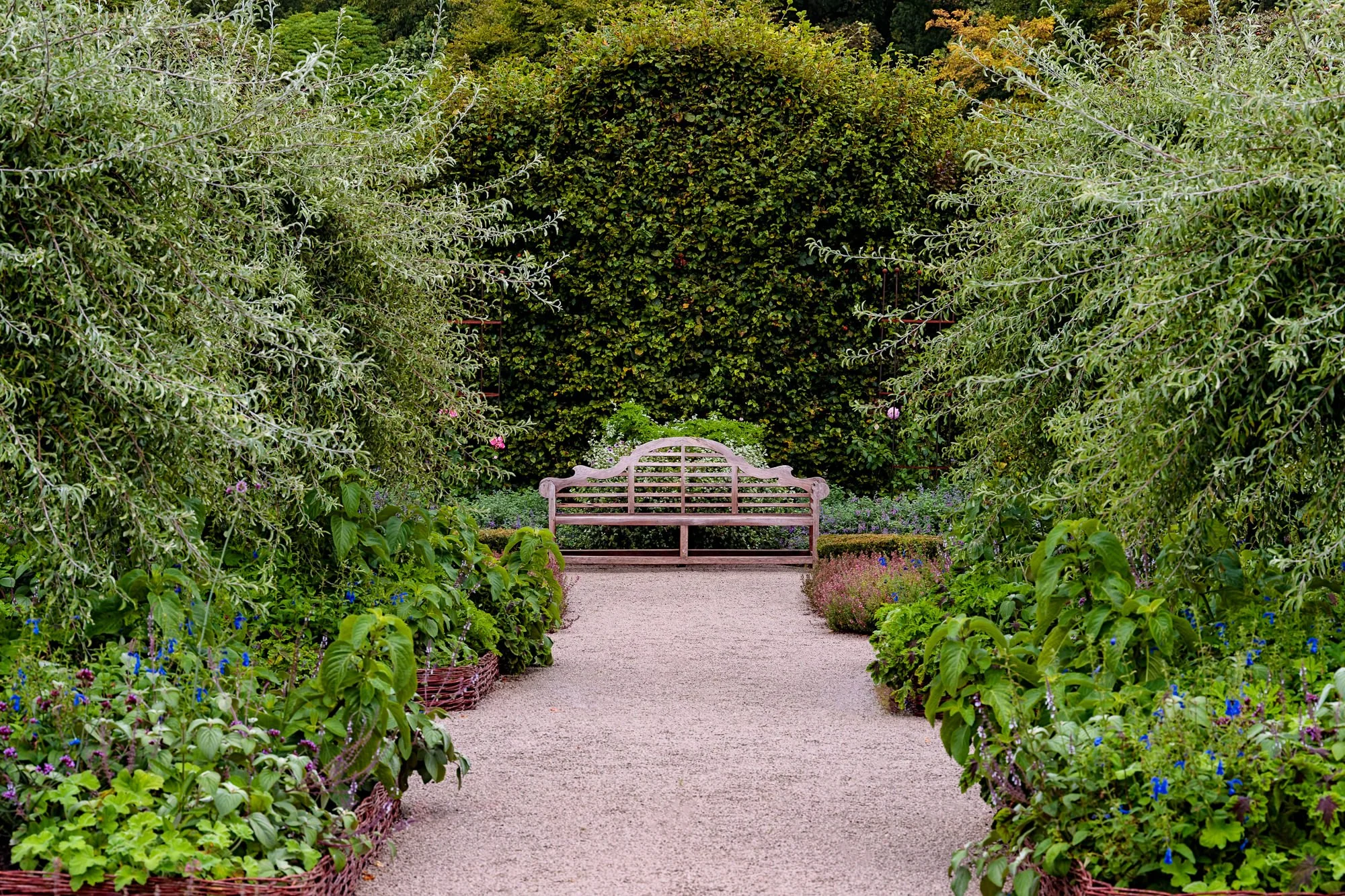
The bones of the garden are straightforward enough: formal Arts & Crafts-style rooms, building on early 18th century antecedents, give way to expansive meadows, arboretum, woodland and water. One long axis runs from the Elliptical Garden by the house (all yew hedges, stylish stonework and clipped limes) through a wibbly-wobbly green corridor to the Summer Garden, the stand-out feature of which is a herbaceous border still packing a punch at the end of the season. Calm assurance abounds; the controlling hand of man unites the whole sequence.
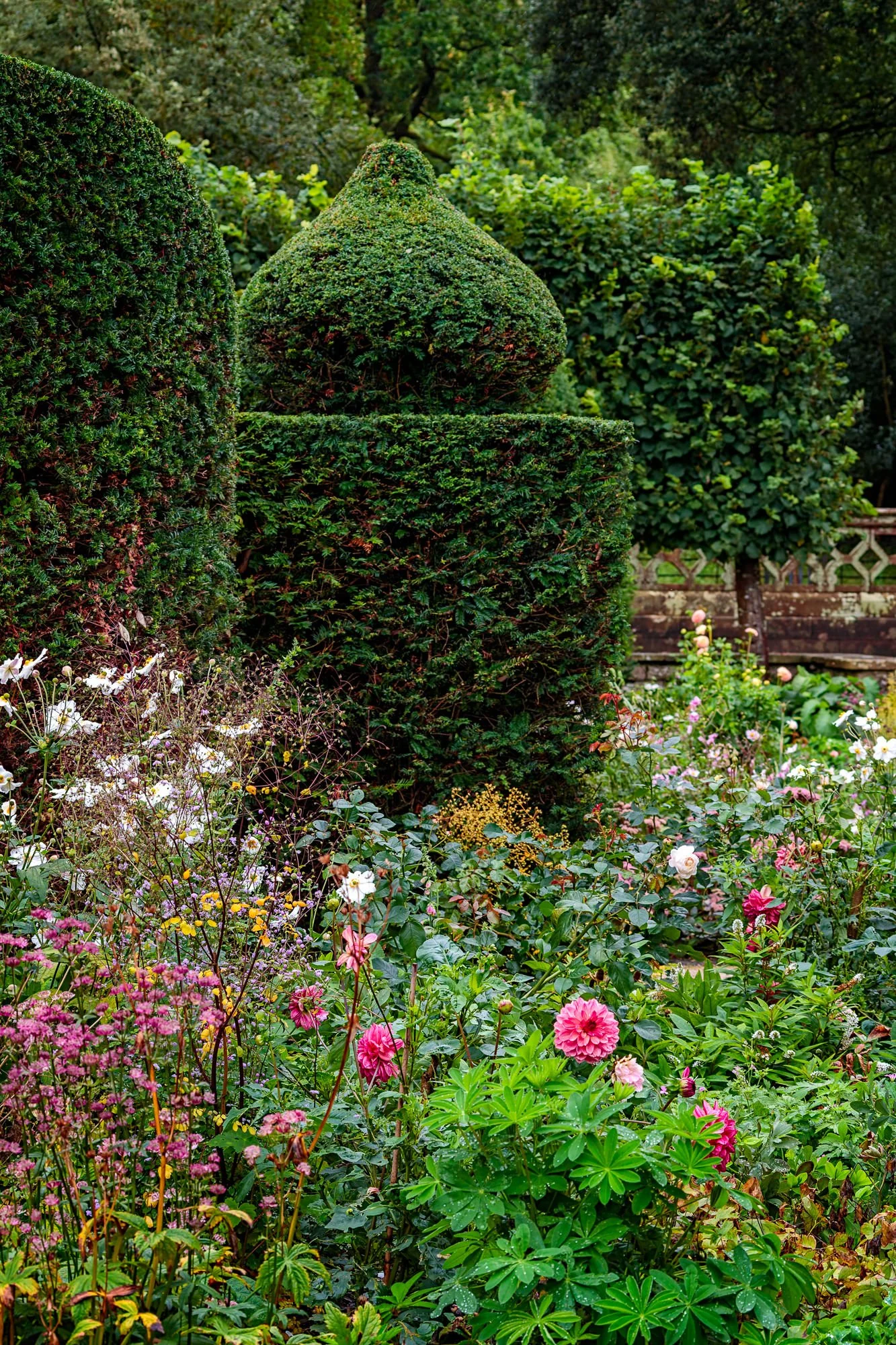
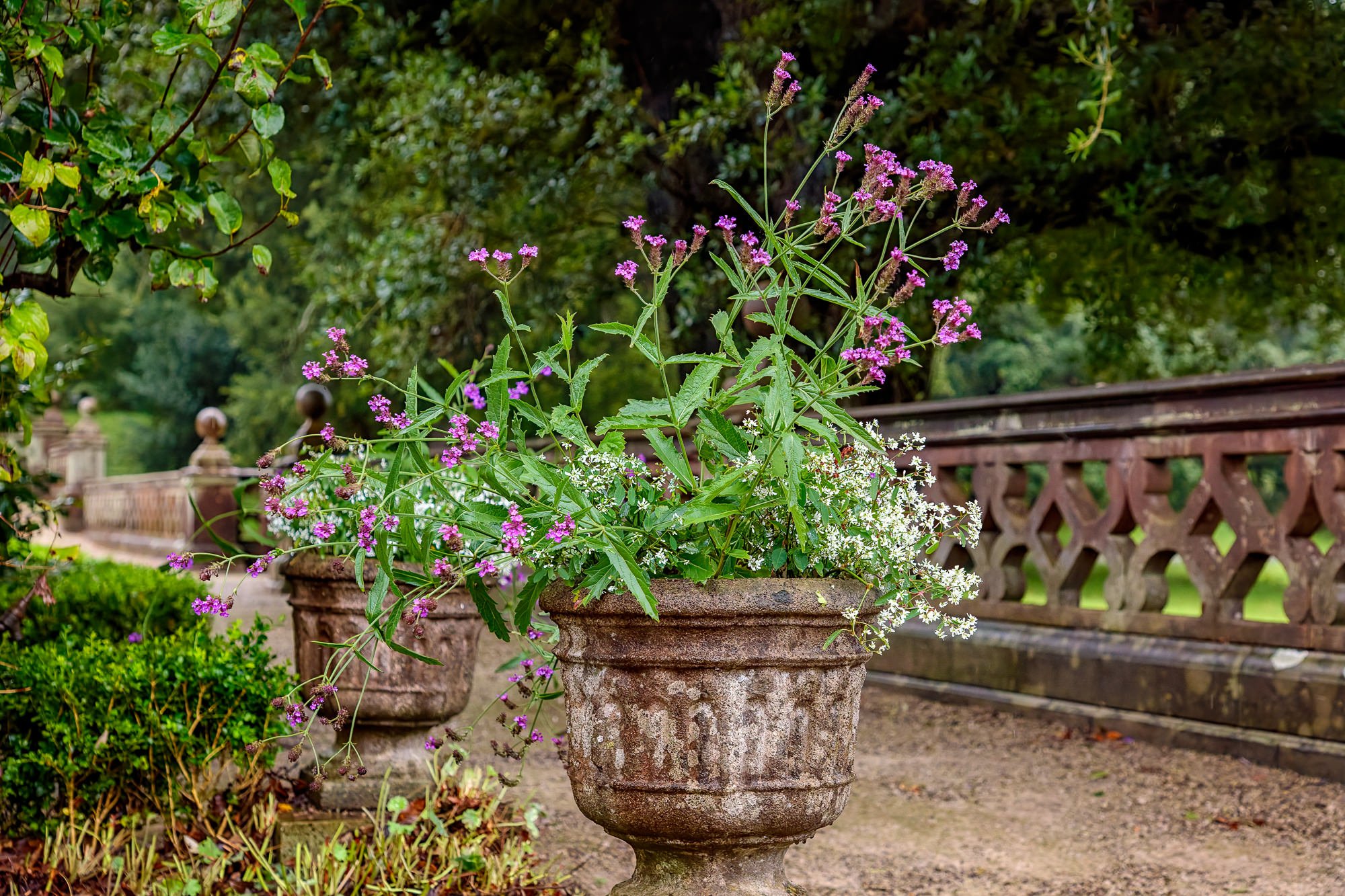
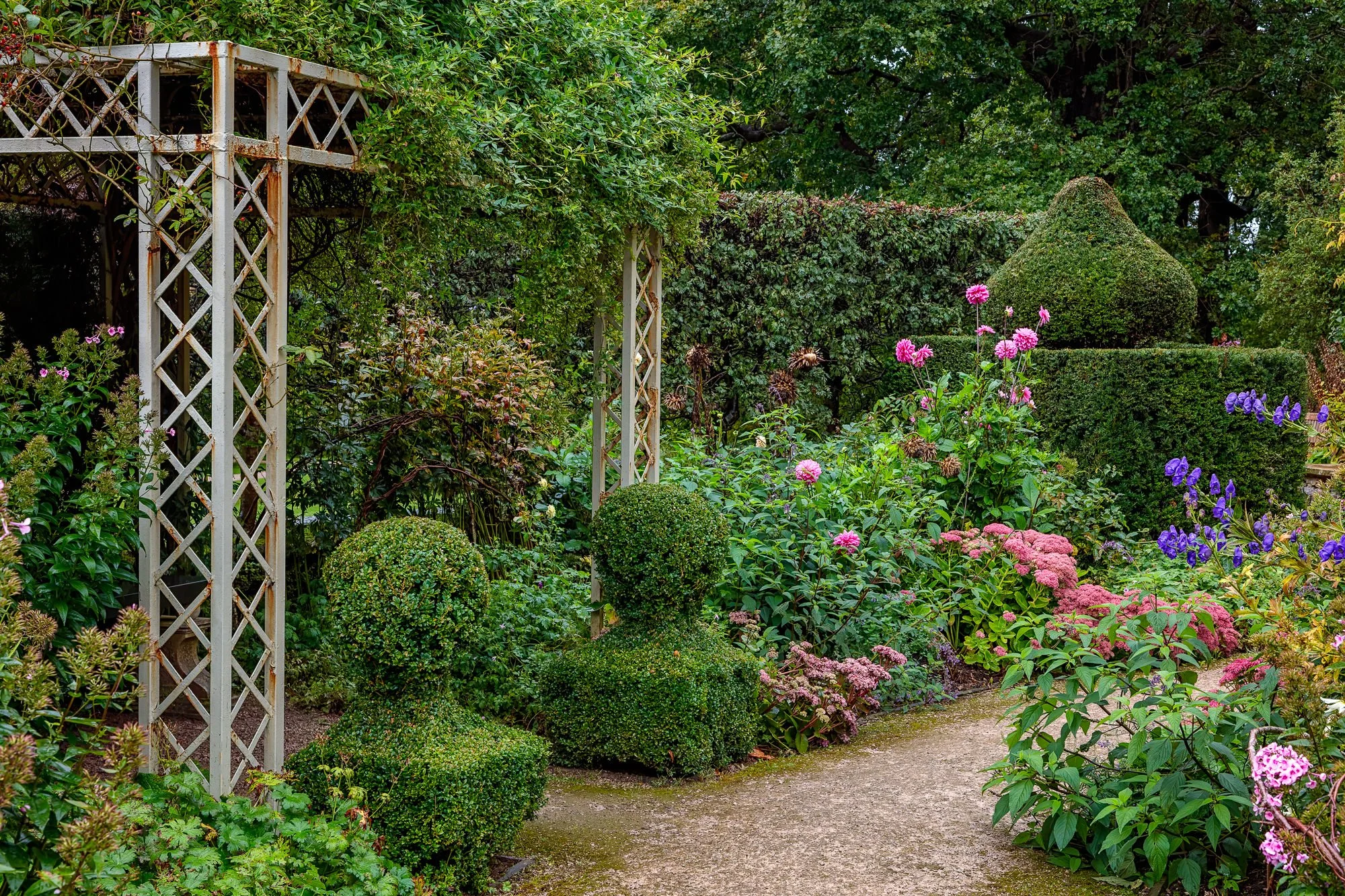
The planting is generous, without being obnoxiously clever; layered rather than choreographed. Plants are allowed to bulk up, overlap and occasionally jostle for space, which lends the whole a sense of momentum. There’s none of that brittle, over-edited look that suggests a border has been assembled for a magazine spread rather than an entire growing season.
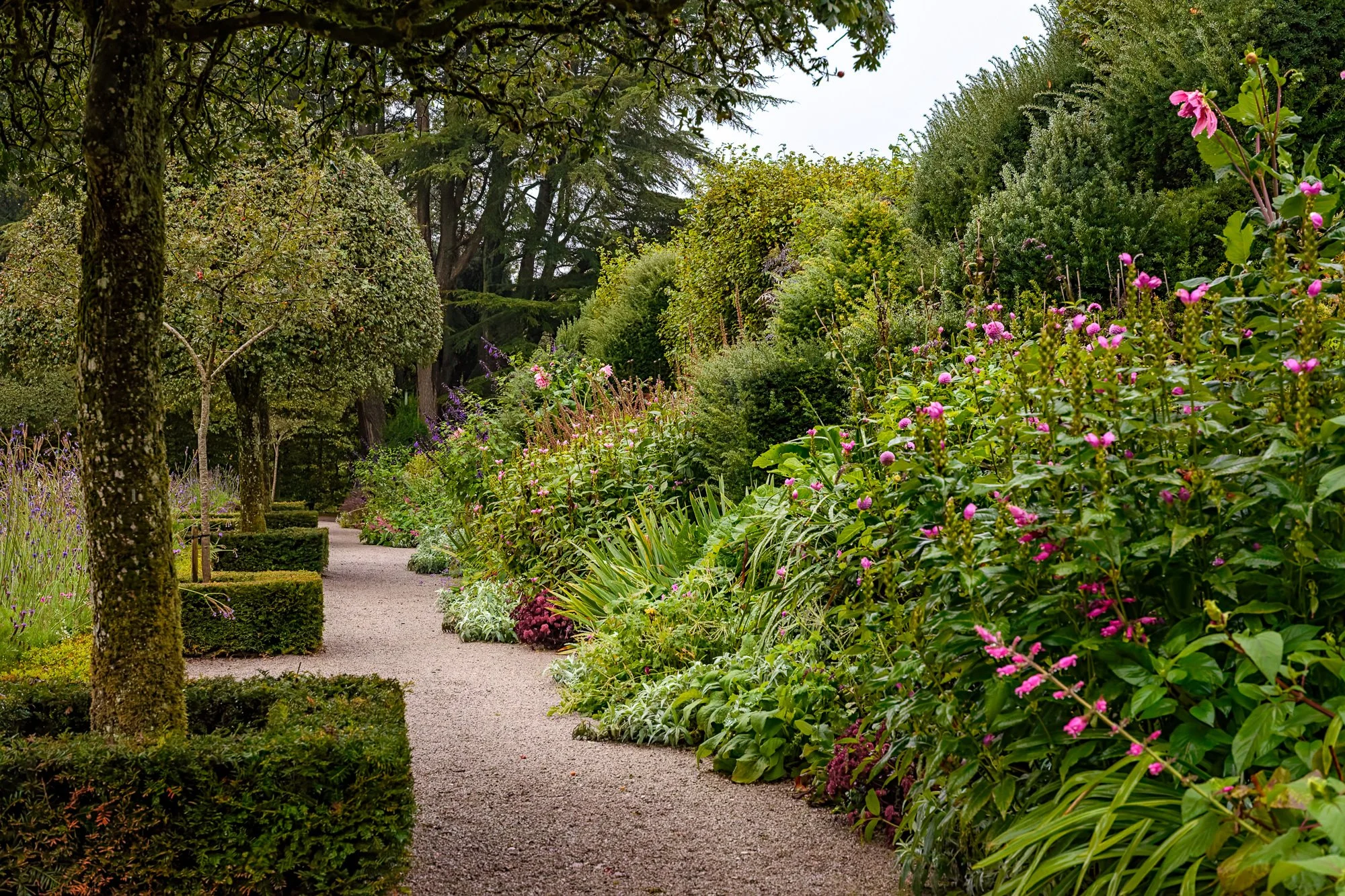
I’ll pass swiftly over the silver weeping pears (Pyrus salicifolia ‘Pendula’ adding a touch of 80s/90s Cotswold cliché) at the heart of the Summer Garden and instead applaud the cut-leaf hornbeam standards (Crateagus orientalis) as being more of an indication of the imaginative planting around every corner. High-input annuals edged with low hurdles (a neat response to box blight and the dreaded caterpillar?) keep the show on the road and demonstrate that the team here are more than capable of nailing the details as well as refining the broader brushstrokes of the woodier areas.
While I can admire an aster with the best of them, at heart I’m a dendrophile. A typical bloke, in other words. For folk similarly afflicted, one of the big draws at Holker is the arboretum. With a National Collection of Styracaceae, Holker has serious tree cred. If ever you need proof of a gardener’s good taste, see if his snowbells outnumber his flowering cherries. As well as the different species (including S. americanus, S. hemsleyanus and S. obassia), there are some stylish forms such as ‘Fargesii’ and ‘Pink Chimes’. Of course, they weren’t showing off in September, but they have an elegance and poise that carries them right through the year. Much like the garden as a whole.
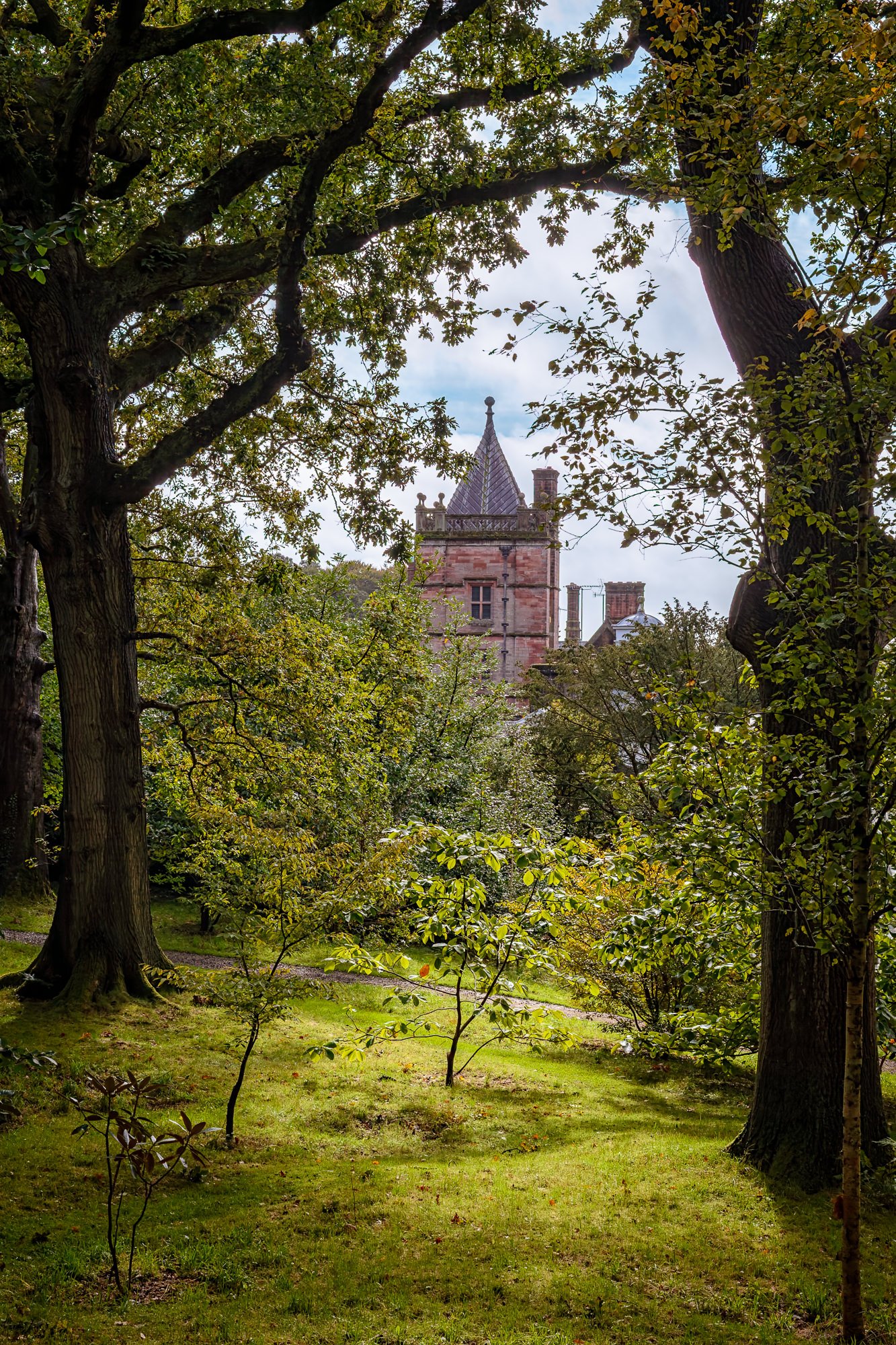
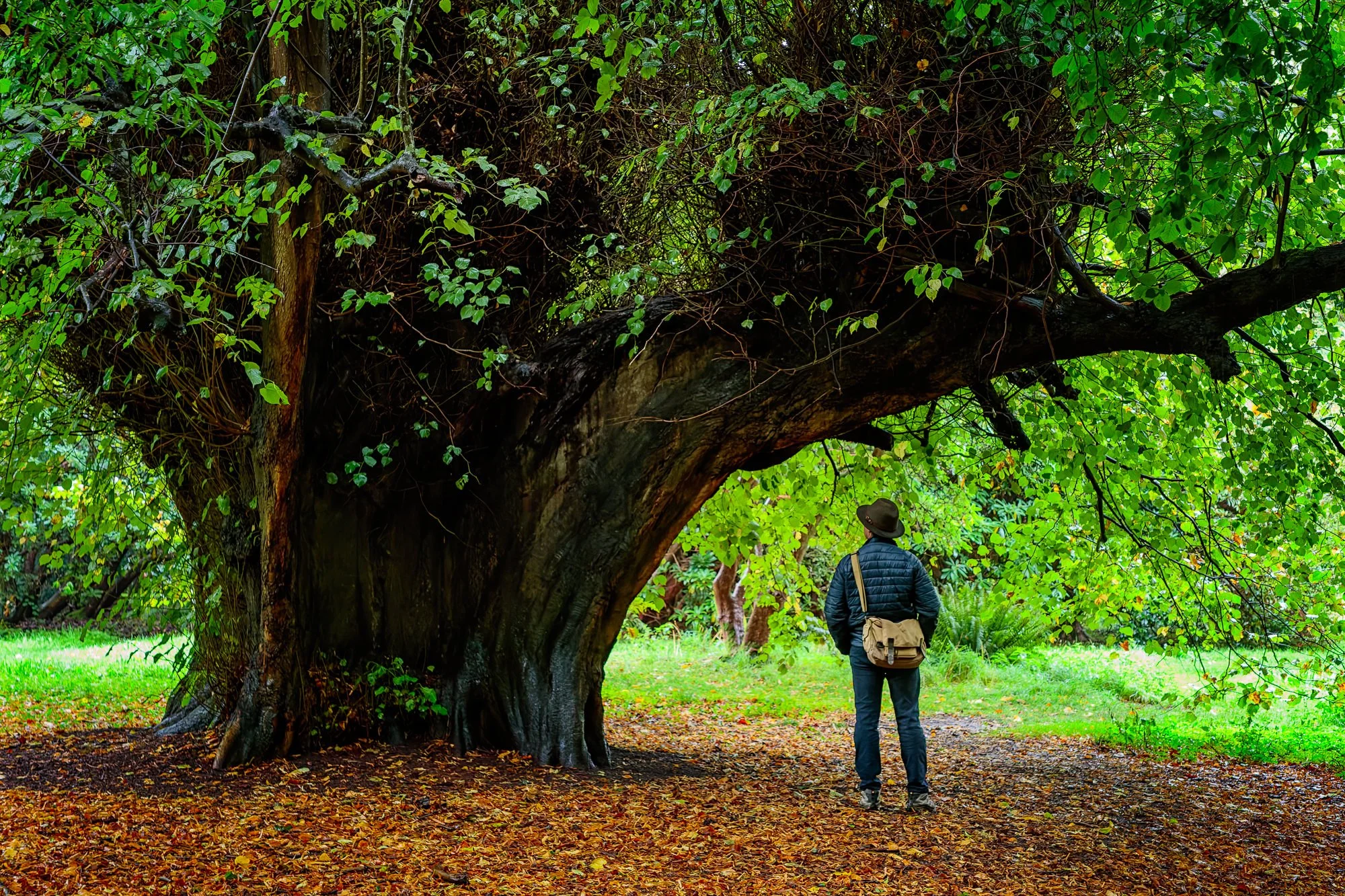
Even if you don’t know your styrax from your elbow, you won’t manage to miss the Great Lime (Tilia x europaea). It’s an absolute beast of a tree. Around 400 years old and with a girth of over 8 metres, it holds the stage, Ent-like, quietly biding its time while relative youngsters frolic all around. And it’s the co-existence of different generations’ interventions that is one of the most remarkable aspects of the garden.
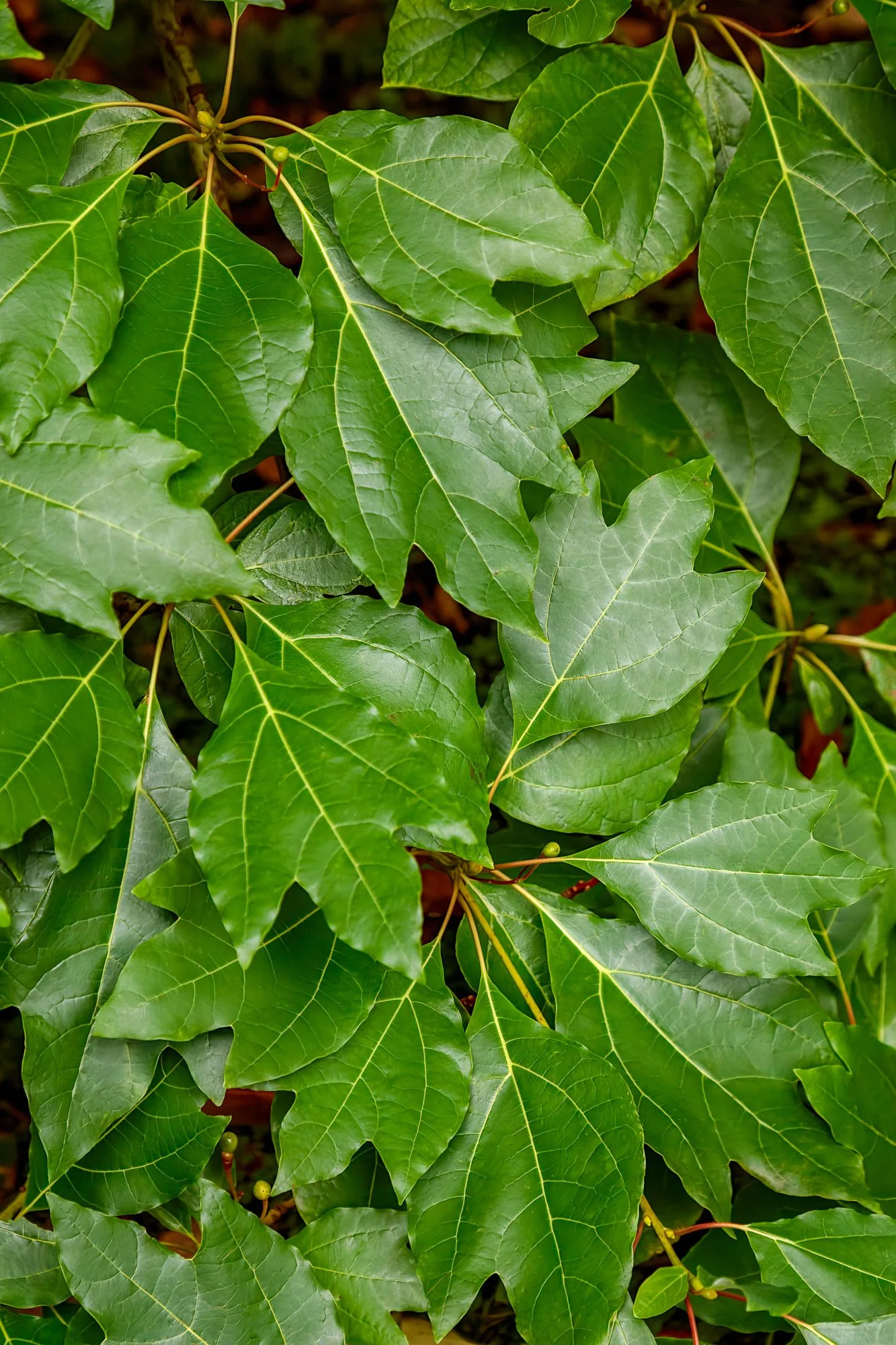
Beyond the attention grabbing stars lies an arboretum of real substance. There’s a depth here that only comes from decades of sensible planting and the occasional calculated risk – the chances of the young Emmenopterys henryi ever flowering this far north must be slim, climate change notwithstanding. Trees have been chosen because they suit the site, not because they photograph well or come with a compelling backstory, an unfashionable approach and all the better for it. Most are already proving their worth, including a Chinese sassafras (Sassafras tzumu, showing no sign of suckering unlike its American cousin in my orchard), a newly recognised champion Metasequoia glyptostroboides ‘Goldrush’ and over 100 magnolias dotted throughout.
Where Holker excels is in its ability to marry old and new, skilfully incorporating modern insertions into an established framework. One of the earliest examples of this is Thomas Mawson’s early 20th century Sunken Garden. Once a refuge for roses, now it’s the very definition of artful abundance, an overtly romantic space. The salvias were front and centre in September, holding their own against the imposing stonework, while a charming summer house provided a very welcome refuge from the elements. It feels used rather than preserved, which is exactly what you want in a garden with history.
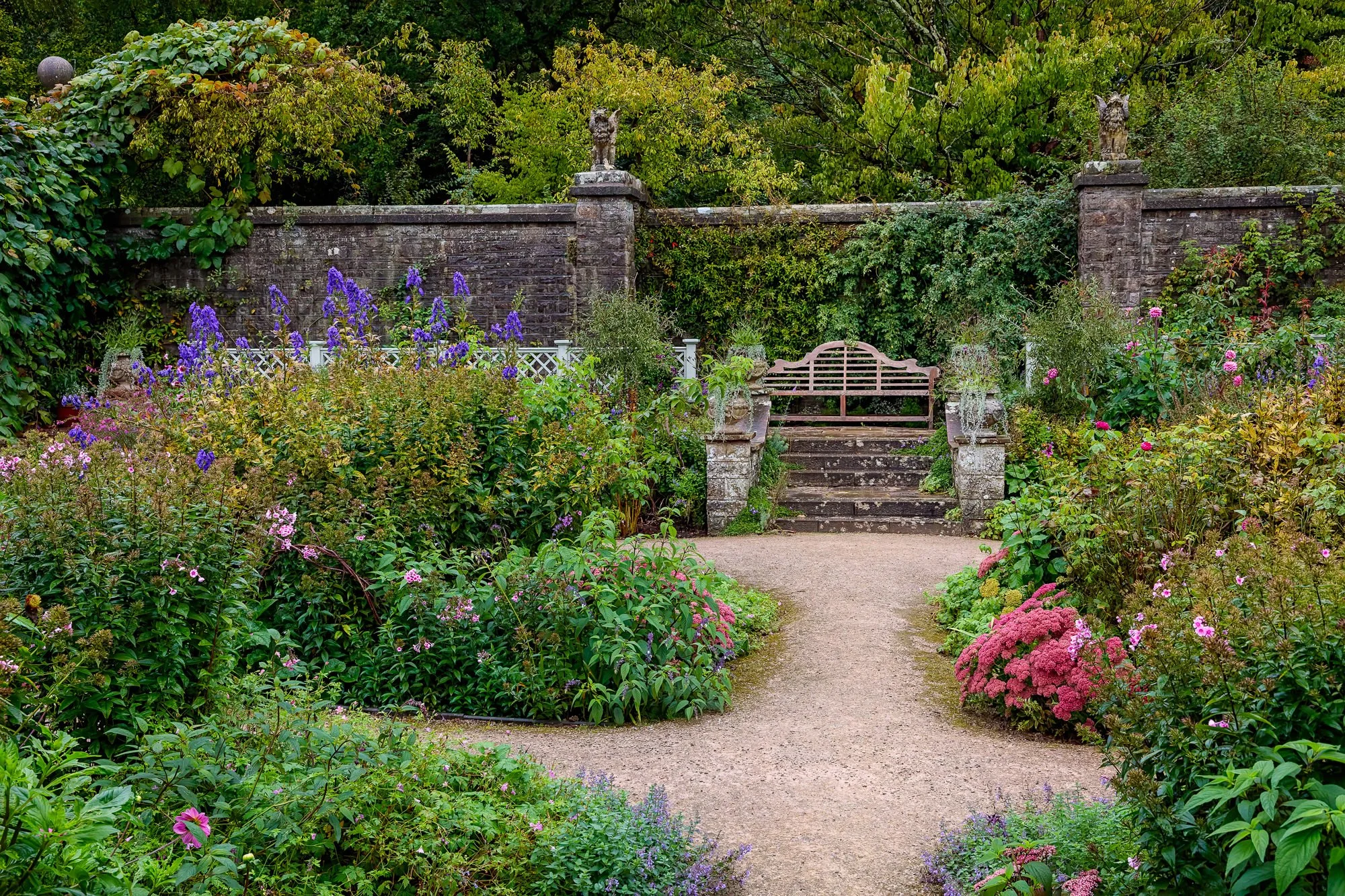
The tradition of carving fresh spaces within the centuries old gardened landscape is most impressively on show in the Neptune Cascade, a nod to family ties to Chatsworth perhaps but on a slightly more domestic scale. It’s pitched just right - grand enough to feel intentional, restrained enough not to slide into theme-park territory.
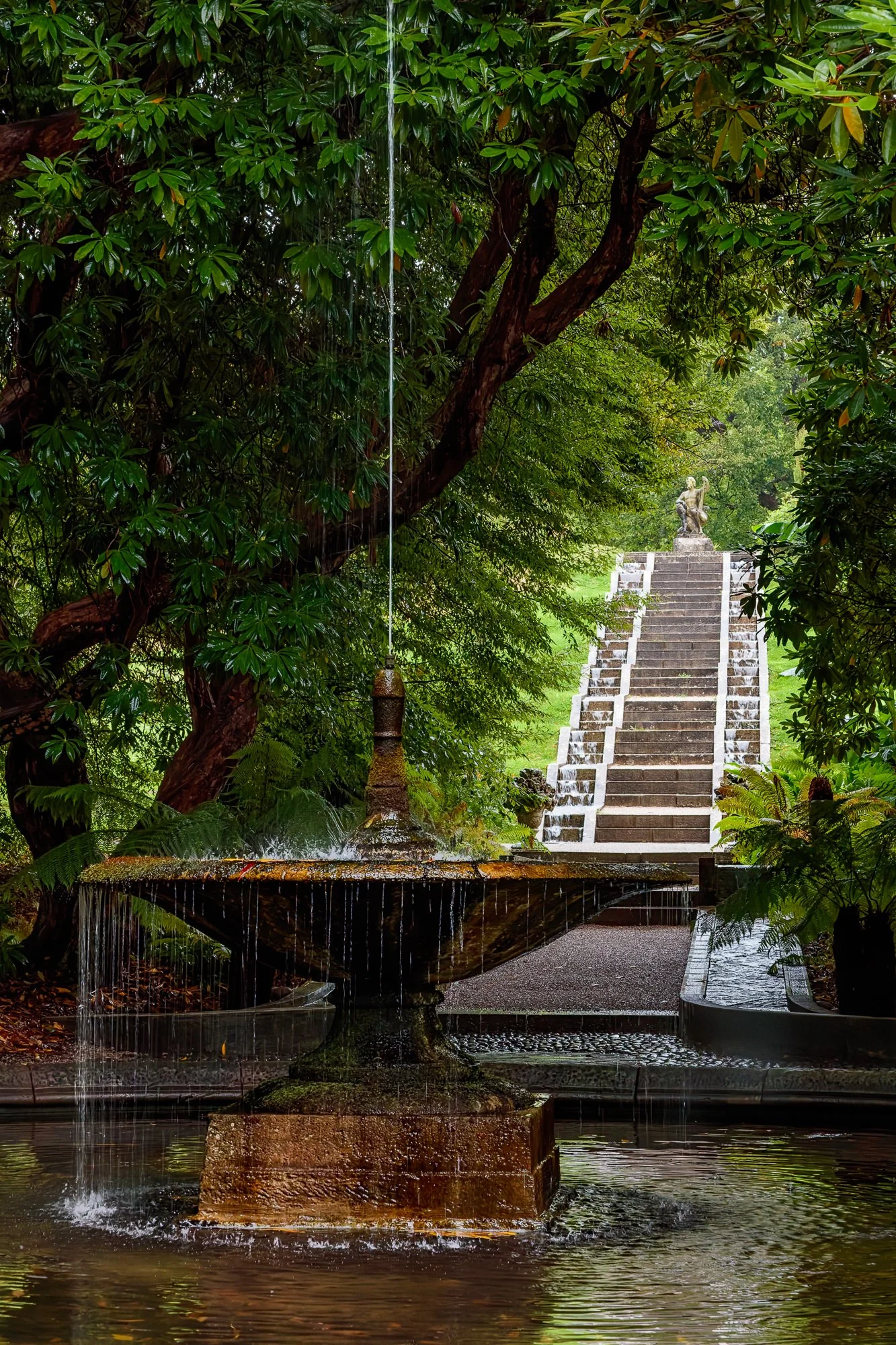
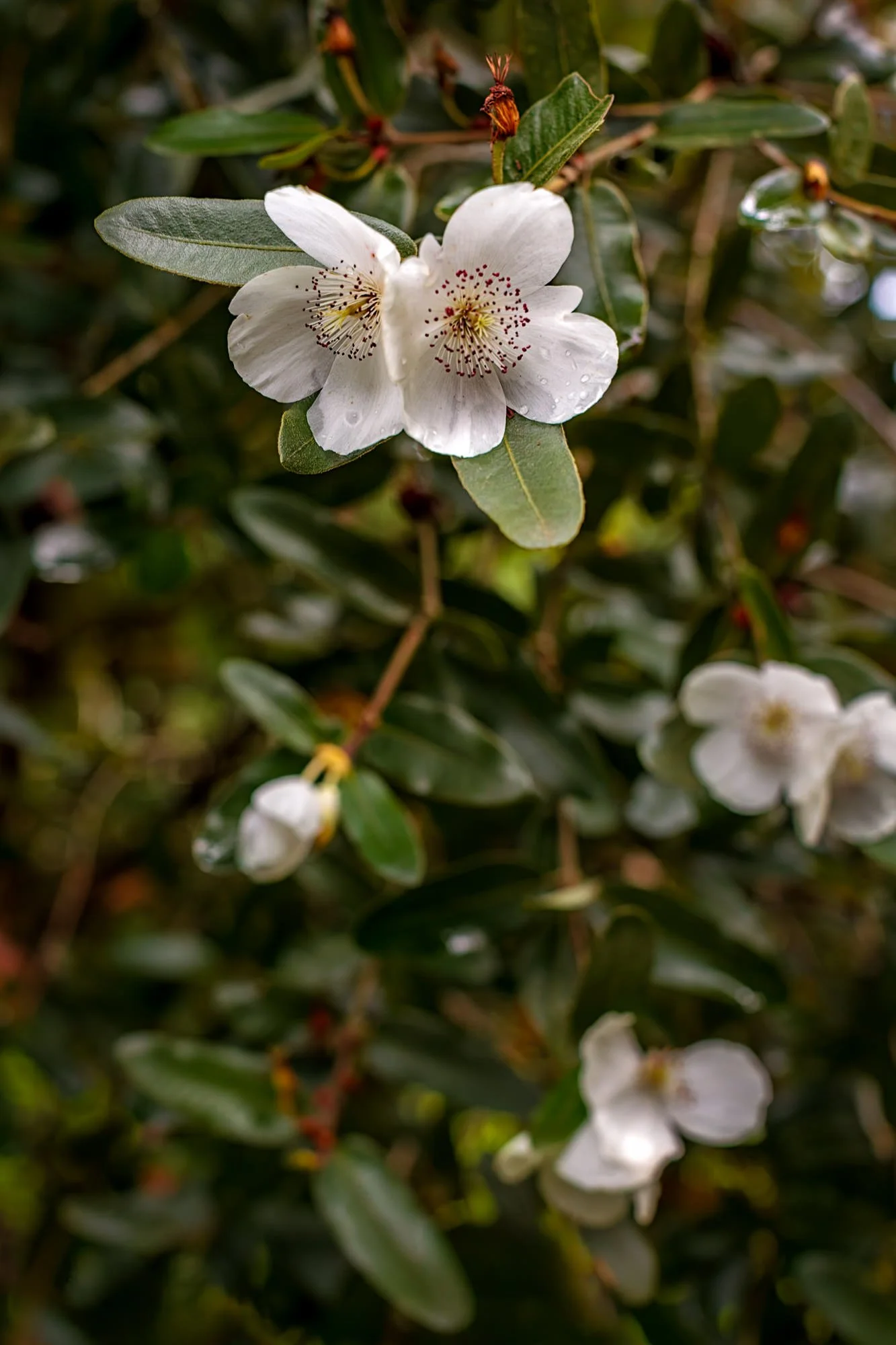
Neptune peers out from his lofty perch towards the estuary with a faintly world-weary expression, flanked by Italian cypress. I just query whether he doesn’t need anchoring more securely. The young eucryphias leading up the slope might do the job in a few years’ time, as well as adding horticultural interest to break the climb. (There’s an impressive collection of these southern hemisphere beauties in the wider garden, ranging from the widely seen Eucryphia x nymansensis ‘Nymansay’ to the lesser-spotted Eucryphia moorei.)
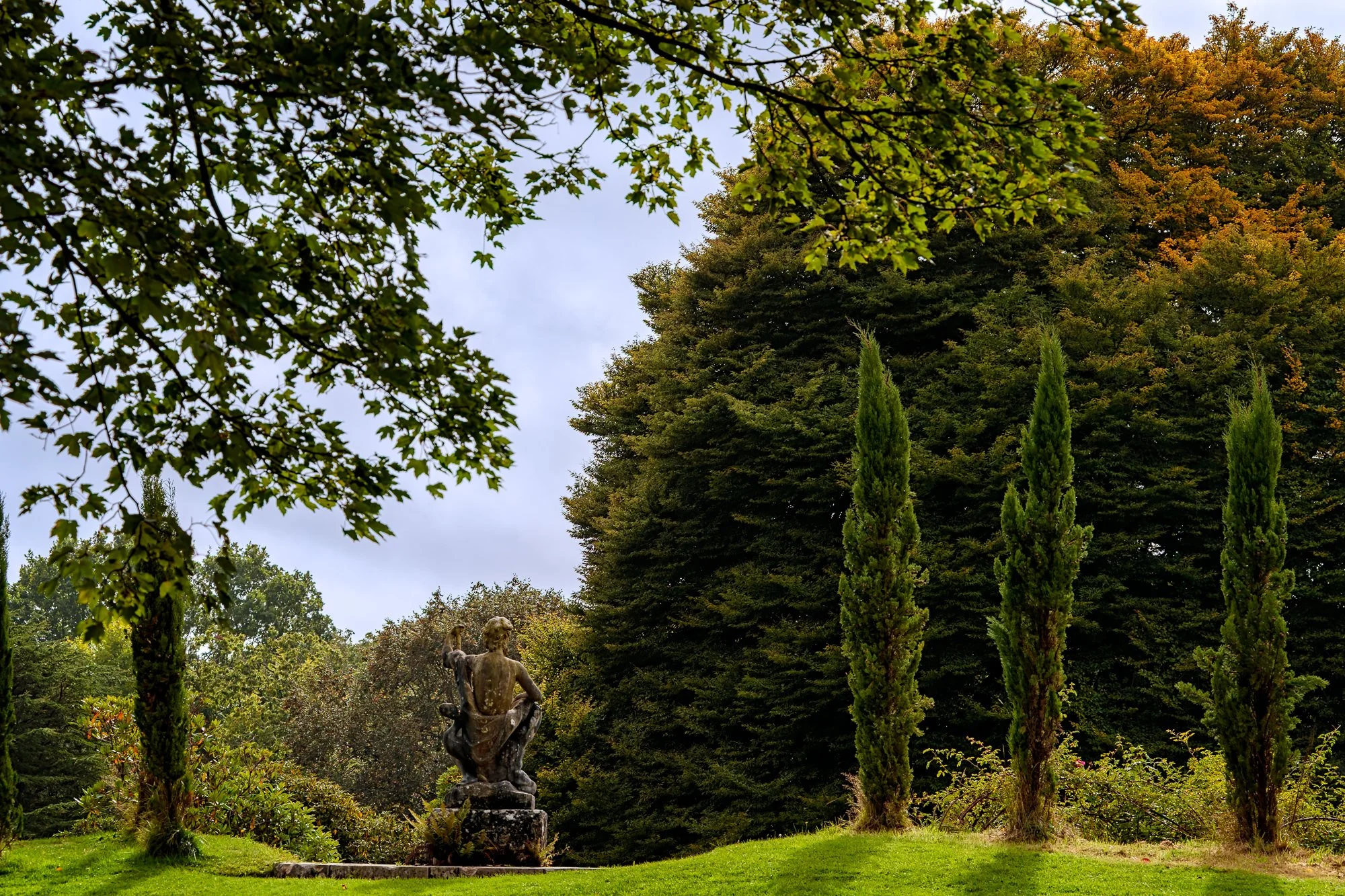
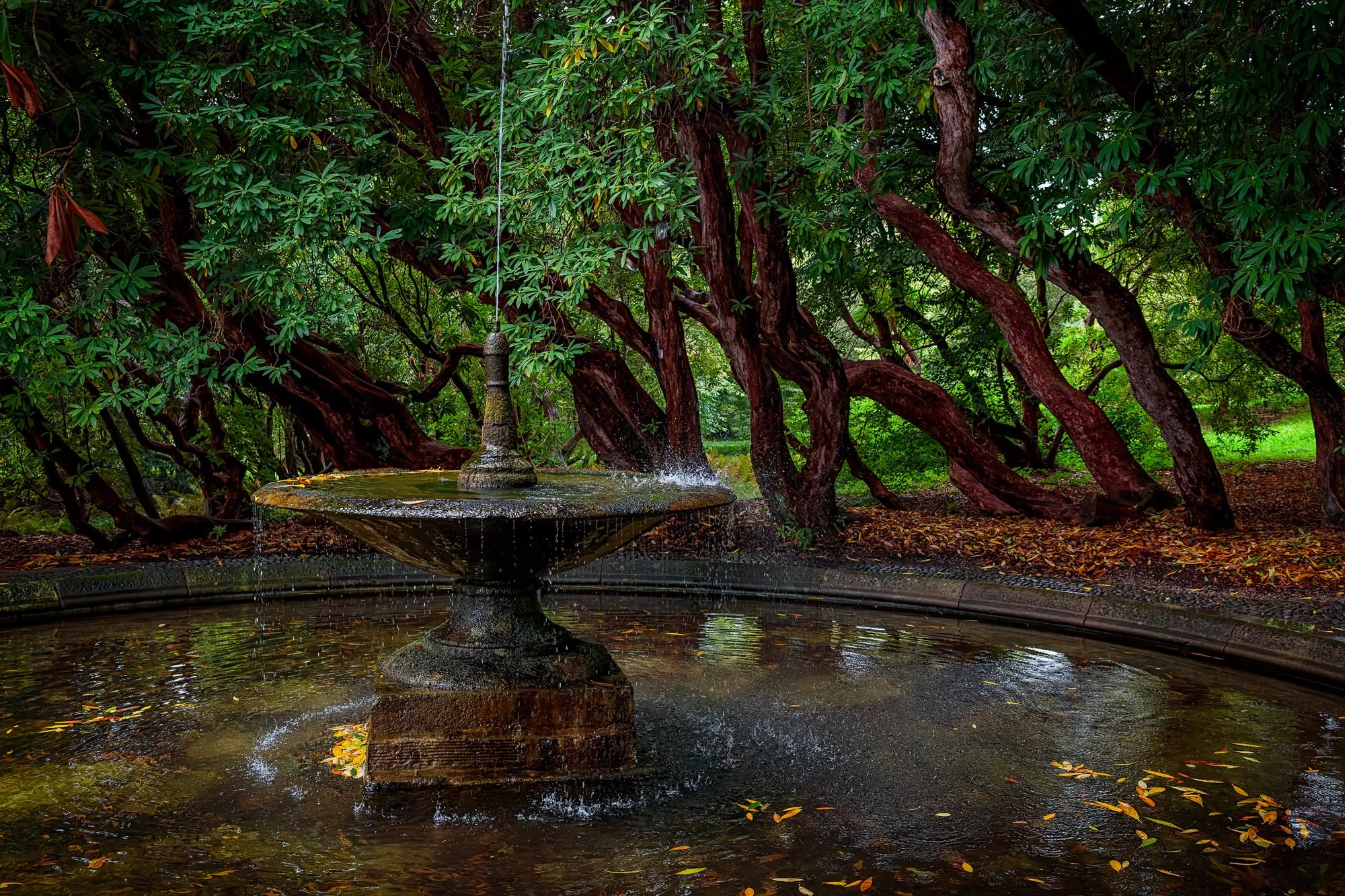
The Burlington fountain at the foot of the cascade is, on the other hand, very firmly grounded in its setting, surrounded by vast Rhododendron arboreum which, even out of flower, offer luscious big-leafed glamour and glowing trunks. It’s not difficult to see why this area is the Instagrammer’s favourite.
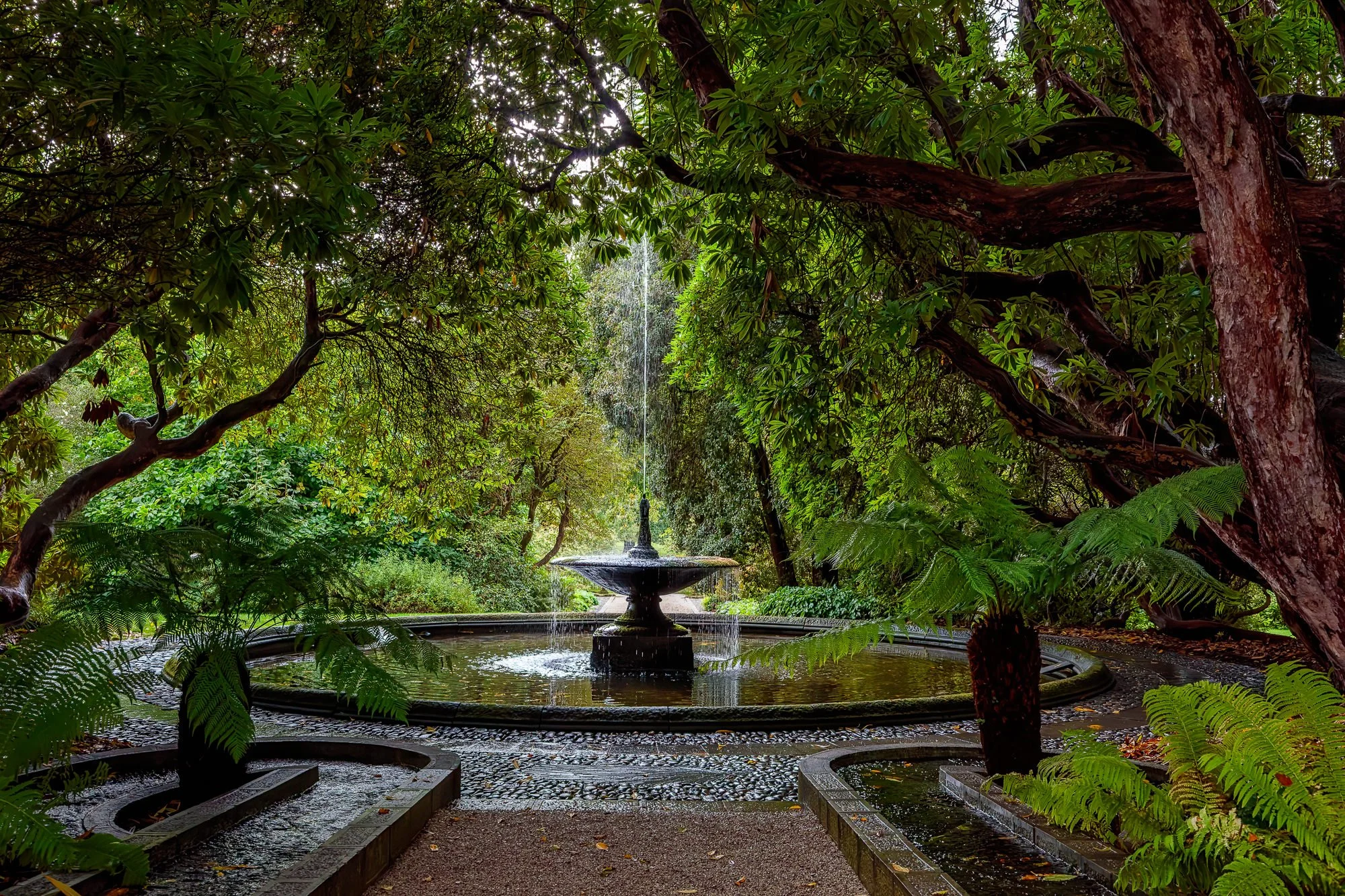
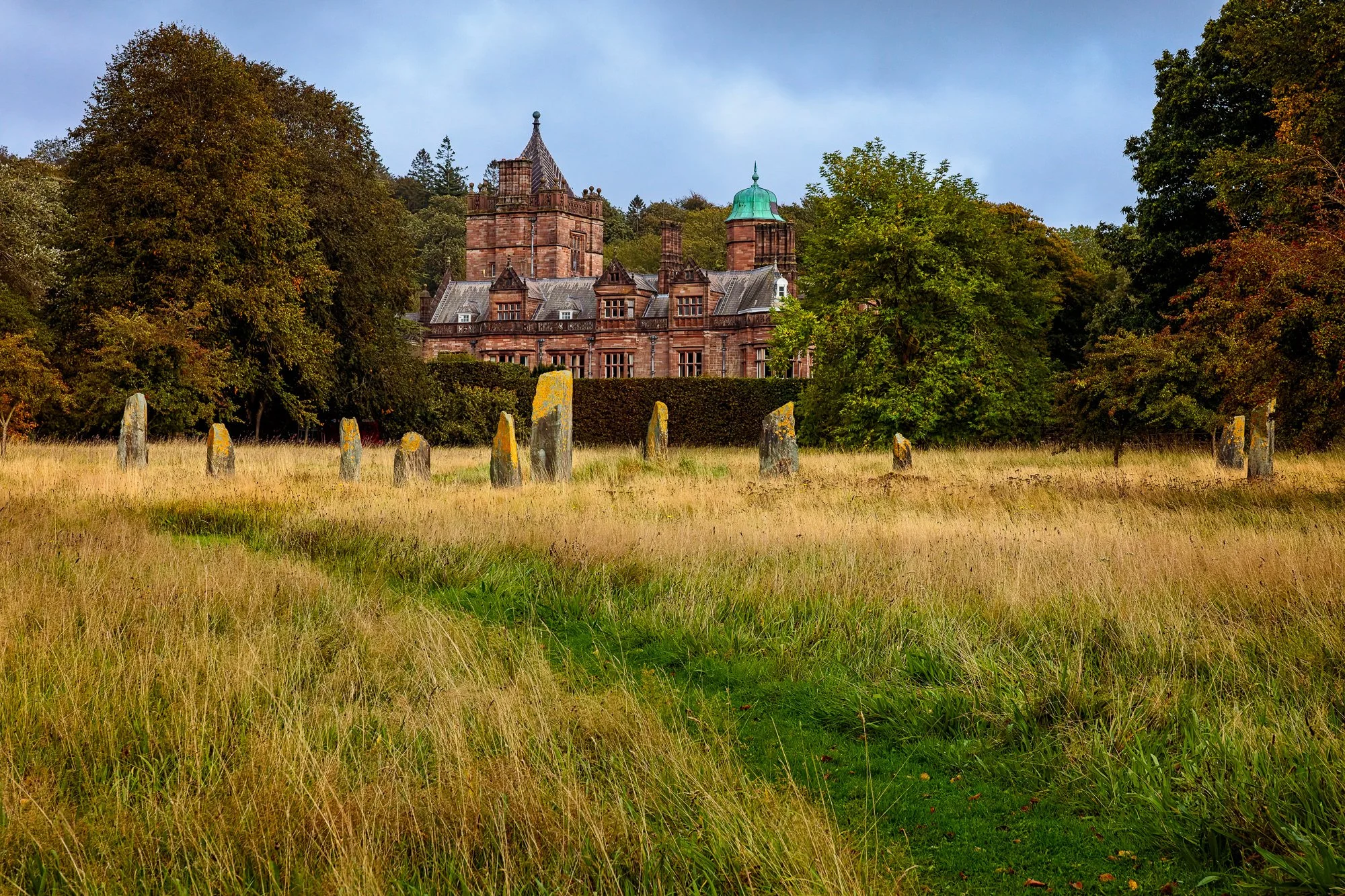
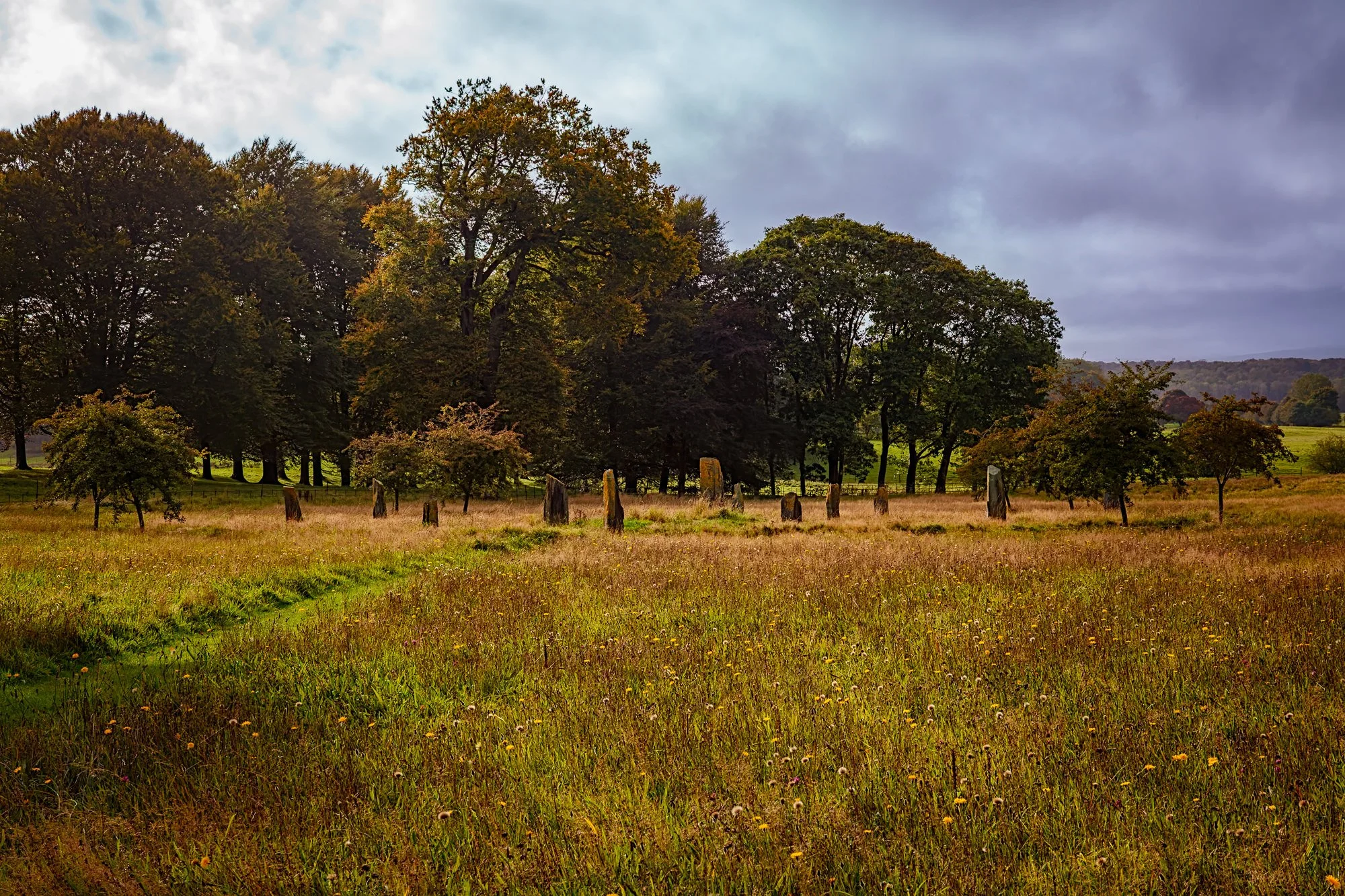
As a release from the ever so slightly claustrophobic gloomth of the fountain, the recent labyrinth set within a wildflower meadow (a forgivable nod to modishness) acts as something of a palette cleanser, even if it’s not entirely successful. Somehow the combination of labyrinth and standing stones might just be too much of a good thing – a neolithic yin-yang mash-up which in September was partly obscured by wildflowers/weeds (delete as appropriate) in dire need of a good scalping.
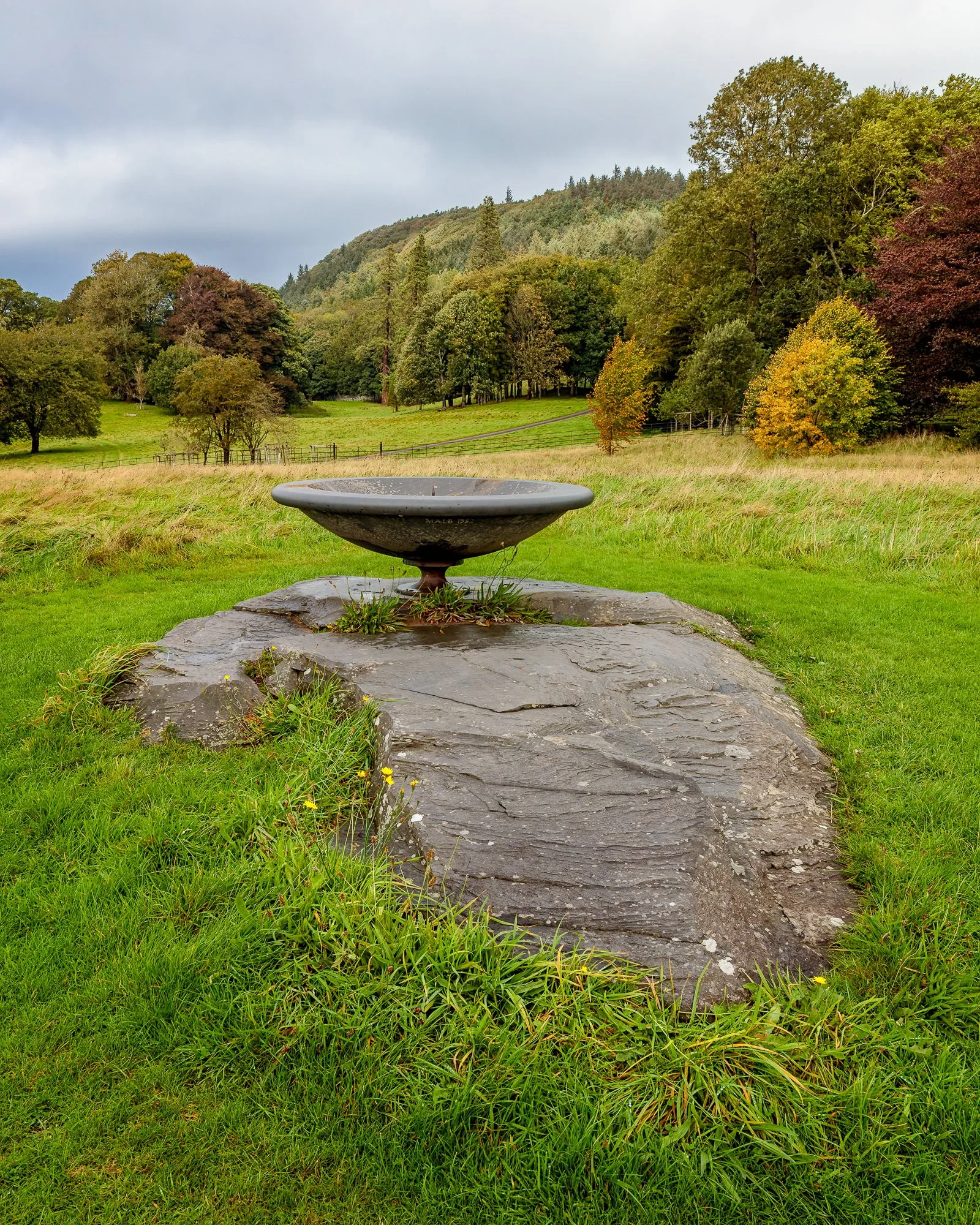
The nearby slate sun dial mounted on a glistening slab is an unqualified triumph. Designed by Mark Lennox-Boyd of Gresgarth, based on an ancient design and incised with the signs of the zodiac around the rim, it works as sculpture, focal point and destination, drawing the visitor out into the wider landscape where he can mull weighty matters such as transience, impermanence and whether it’s time to head for a cup of tea.
Perhaps, though, the most enigmatic new space is the Pagan Grove. No hard landscaping, this is a thoughtful counterpart to the Sunken Garden, a shallow, oval bowl, a grassy hollow, ringed with a collection of stewartias, another impeccable choice to provide autumn colour.
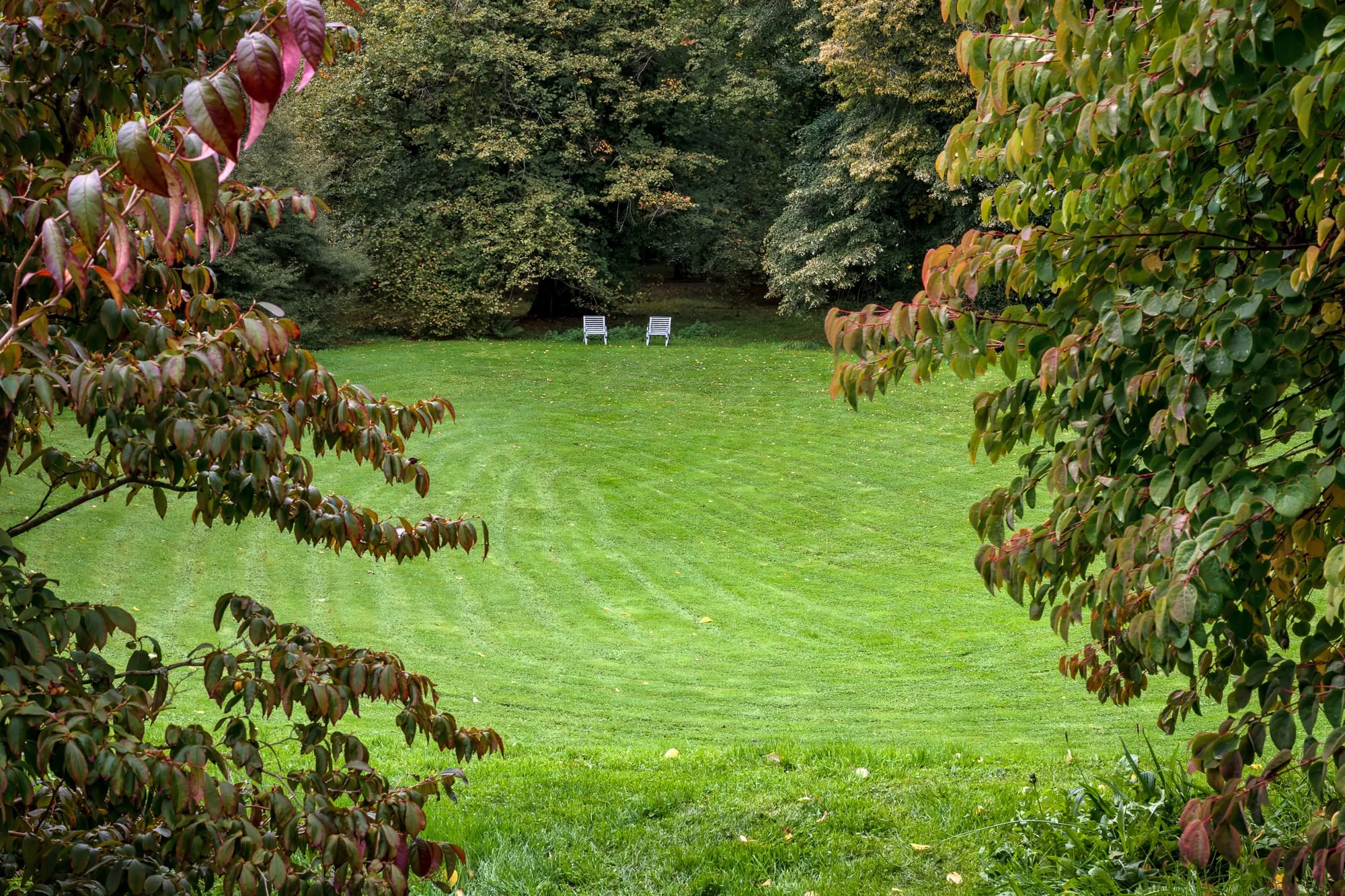
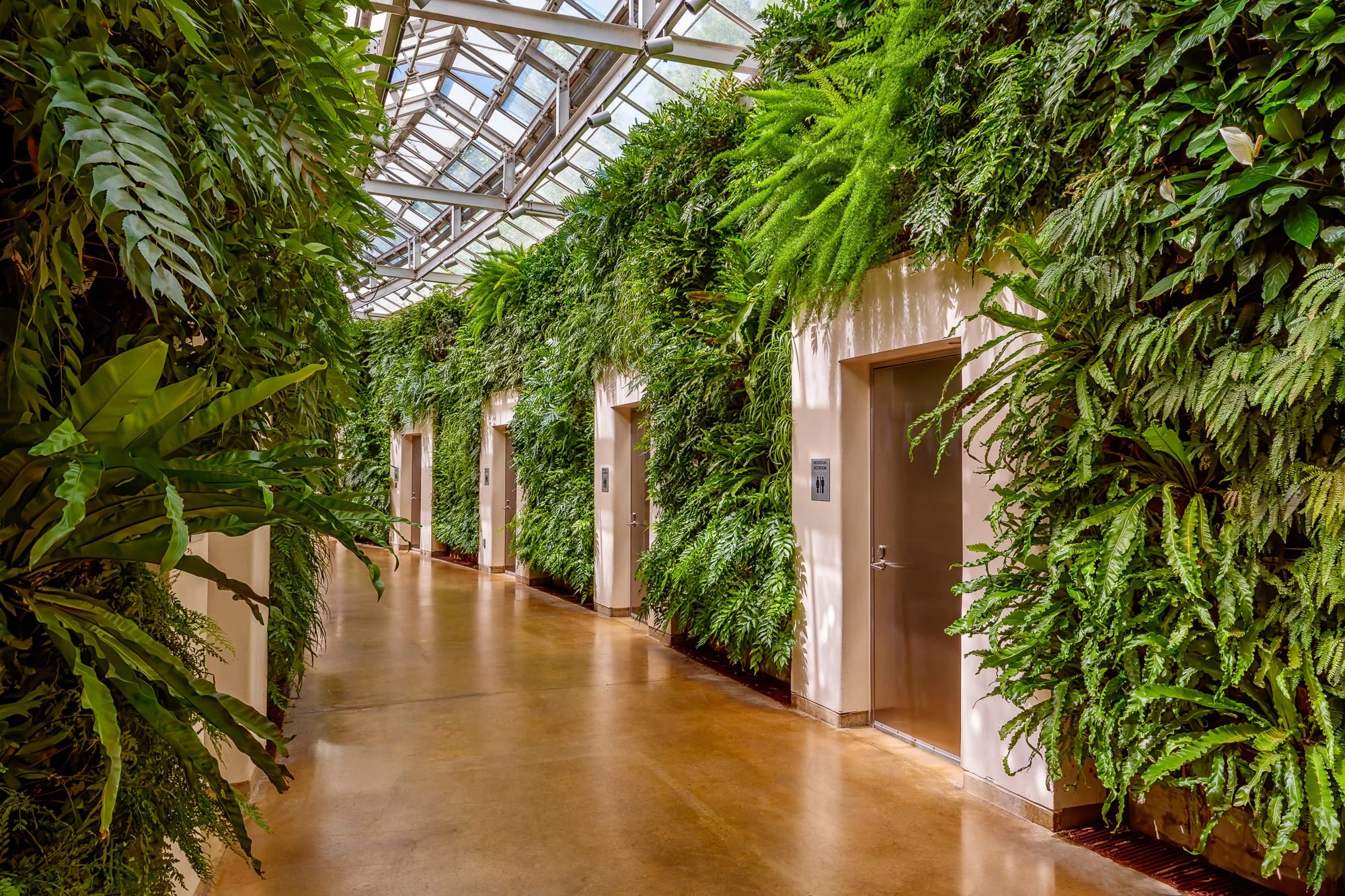
It’s a very stylish demonstration of the power of absence in a densely planted garden. A recent innovation, it was designed by Kim Wilkie whose CV stretches to the curvaceous green wall in the toilet block at Longwood, a world away from this serene spot and, for me, an unexpected highlight of that American showpiece.
Holker is not a garden that ambushes you at every turn. There’s no big theatrical reveal, no manipulation of emotion. Instead, the garden unfolds gradually and with nothing to prove, with the quiet confidence of a place that has been treated seriously over a long period of time – there’s no apparent urge to reinvent itself every five minutes in search of relevance.
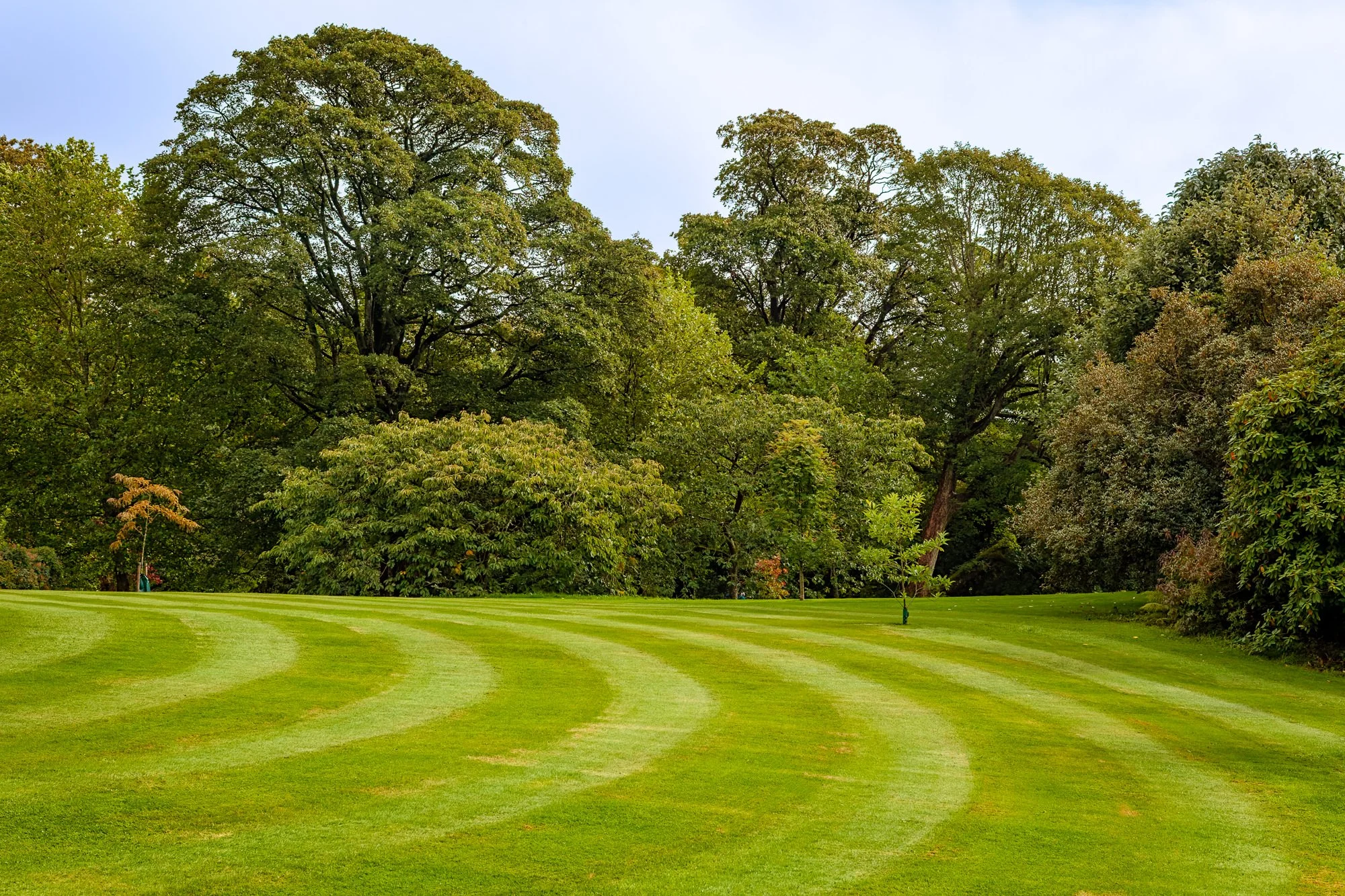
Visitors looking for novelty, provocation or the gardening equivalent of a manifesto may leave wondering what all the fuss is about. But that’s missing the point. This is a garden built on continuity, judgement and an enviable lack of insecurity. That confidence is apparent throughout. Holker feels settled. And in a horticultural world increasingly addicted to novelty and narrative, that feels borderline subversive.
More information here: https://www.holker.co.uk