Winners and Losers - part 2
Stubborn shrubs and herbaceous heroes
28 December 2025
By: James Lennox
Now we all know which trees to plant for the future, what about the plants in between, the shrubs in their borders and the perennials in their beds? After a year of extremes, which have risen to the challenge and exceeded expectations and, just as importantly, which ones have fallen short?
Again, I’m not going to deal with the usual suspects. A cistus will cope just fine with heat and drought and an agapanthus will look like it’s living its best life. What I want to do is shine a spotlight on those plants that have just got on with the job uncomplainingly. And give a word of warning about the ones that needed a helping hand or just failed miserably.
Superb shrubs
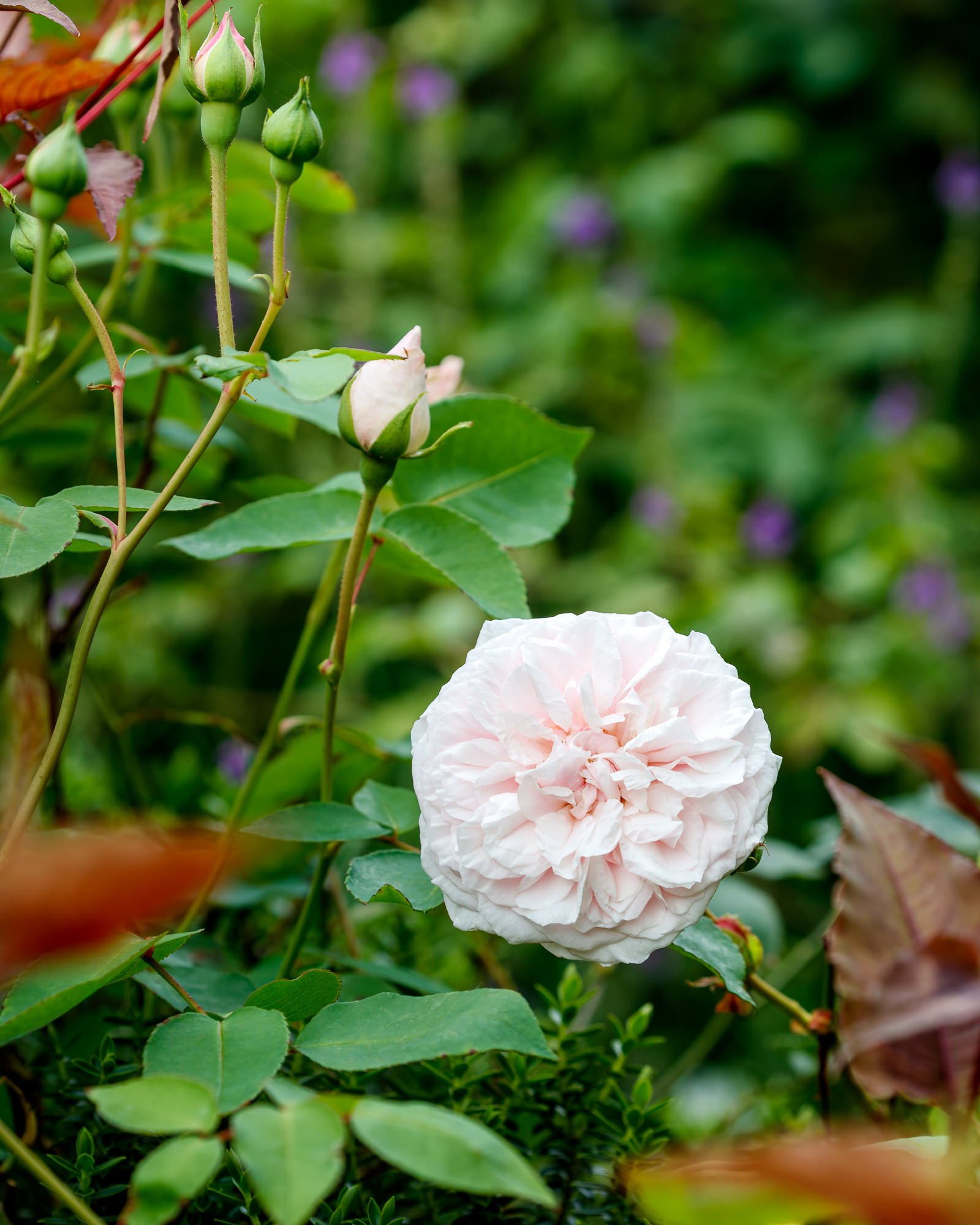
Gardening is all about celebrating the wins in the perpetual struggle to create a thing of beauty, noting each triumph over adversity. For once, the roses were blackspot-free and for that I am truly thankful. I gave up spraying years ago but I still feel that I should be doing more by them to ensure their happiness. This year the rose border was a picture of health with the once-flowering old roses doing their thing before the drought really kicked in.
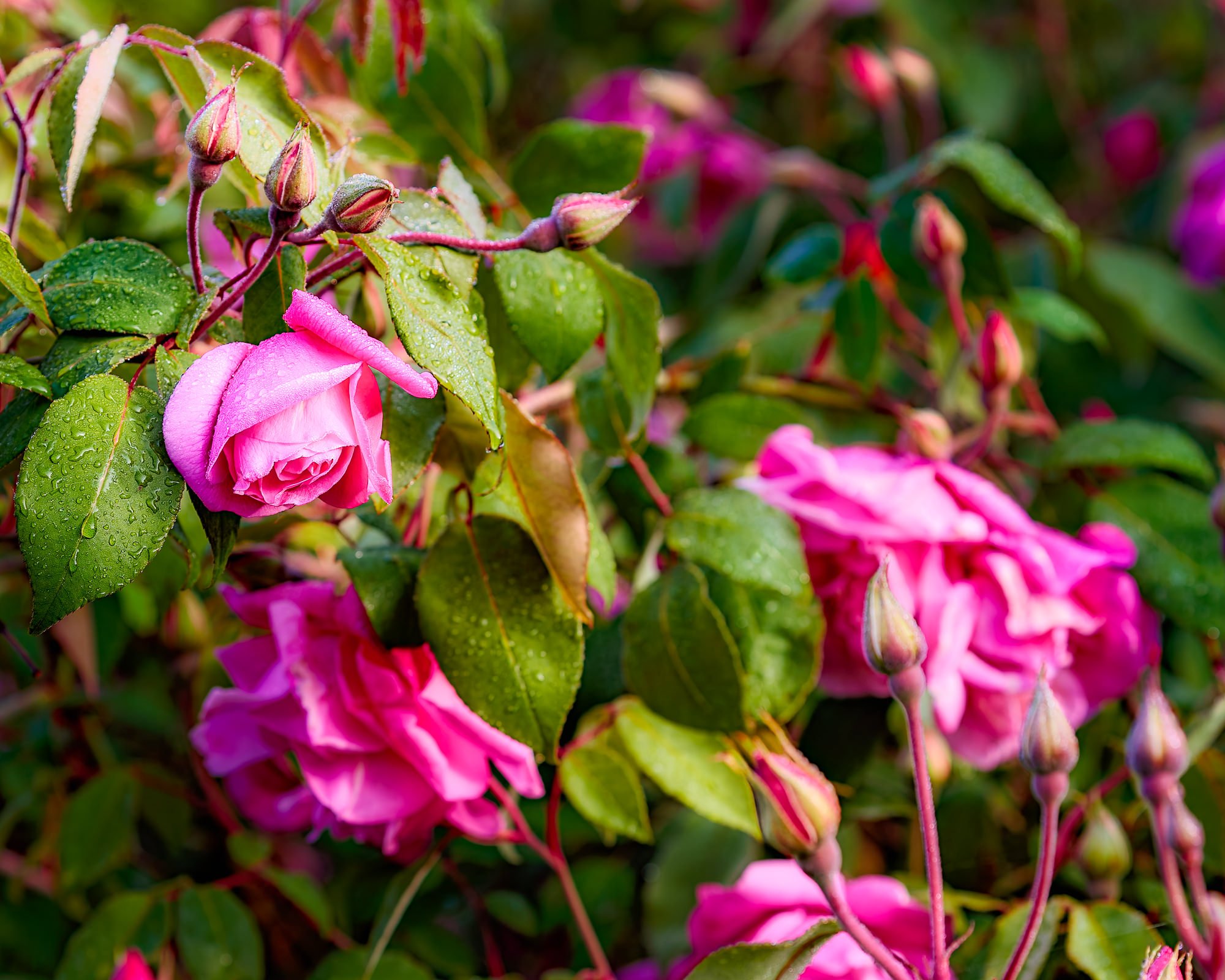
Even the repeat-flowering roses fared better than expected despite the demands of pumping out the odd flower throughout the season without any additional watering. The tea and china roses did particularly well, ‘Le Vesuve’ deserving a special mention – a non-stop wonder. And, mirabile dictu, ‘Souvenir de la Malmaison’ didn’t disappoint once – no rain, drizzle or dew means no danger of balling. I’m sure normal service will be resumed next summer.
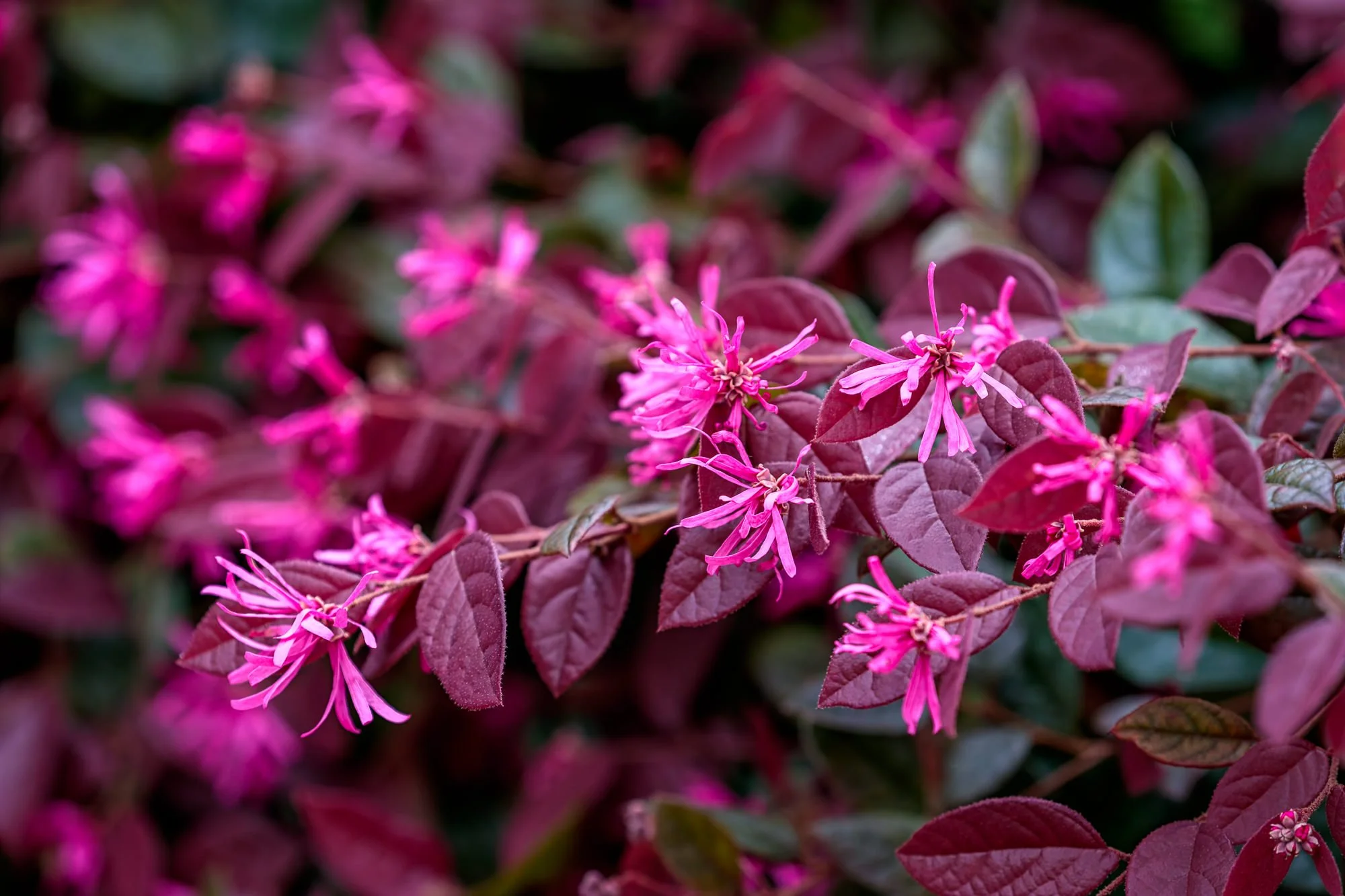
While old roses are renowned for their ruggedness, I wasn’t sure how that relatively new kid on the block, Loropetalum chinense, would respond. I’ve got various forms dotted all around the hillside, from the green-leaved, white-flowered species to the darkest plum-coloured types (‘Pearl’, ‘Fire Dance’, ‘Pipa’s Red’, ‘Burgundy’) via the half-way house of ‘Ming Dynasty’. Some are in full shade in deep soil, some in full sun on the driest powder imaginable. All proved themselves worthy of a place in the garden. They put on new growth and put out more flowers than I can ever recall. Neighbouring plants flagged. I’ve never seen a normally cast-iron Viburnum tinus or a buddleia droop with sheer exhaustion, but the Chinese witch hazels shrugged off everything that came their way.
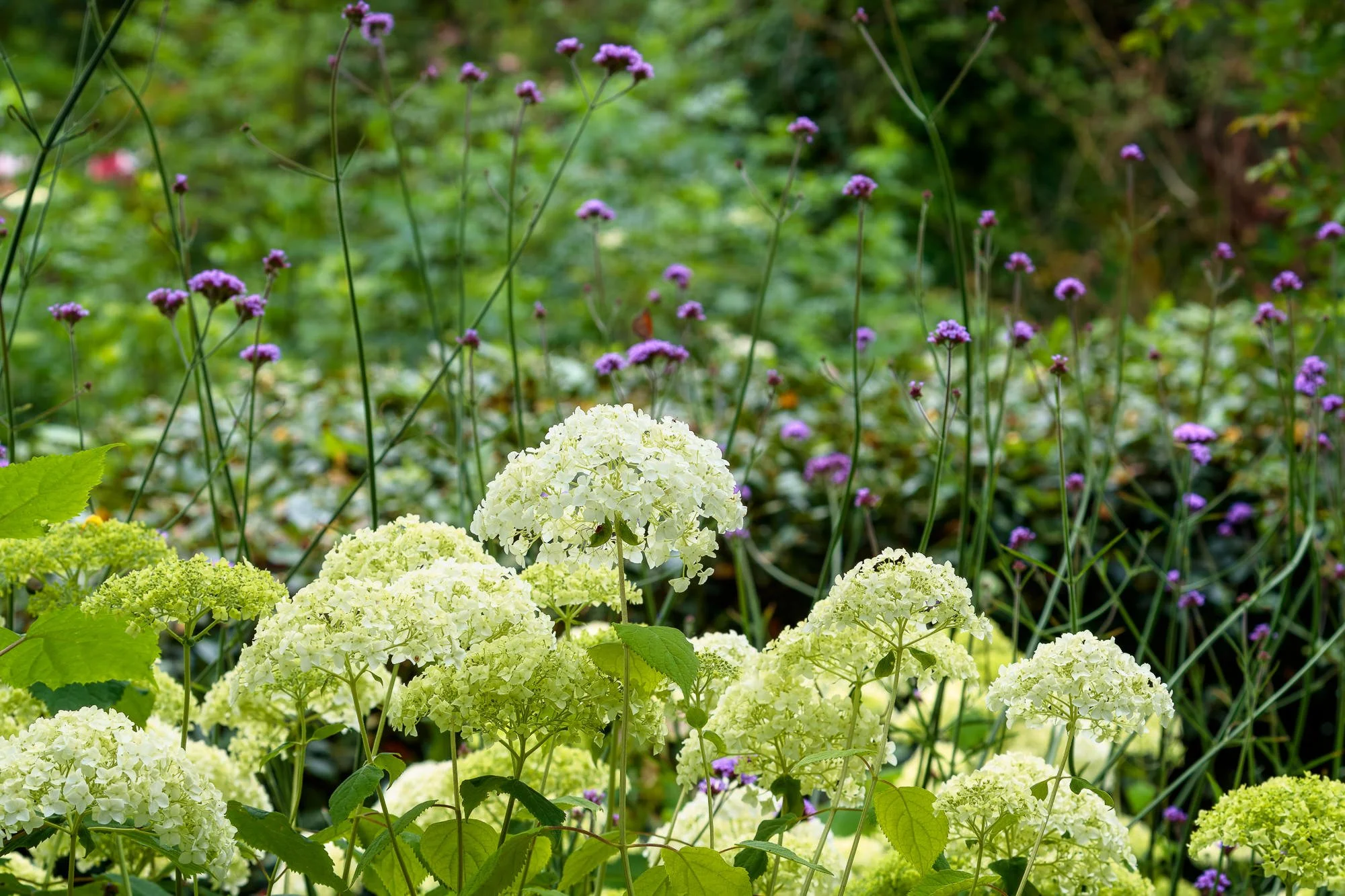
Nobody expects hydrangeas to cope unaided in such conditions – I certainly don’t fancy a mophead’s chances in full sun on this hillside. And yet, barring slight discolouration to the flowers, good old floppy ‘Annabelle’ managed to recover each night ready to do battle the next day, despite being adventurously placed on a sunny slope.
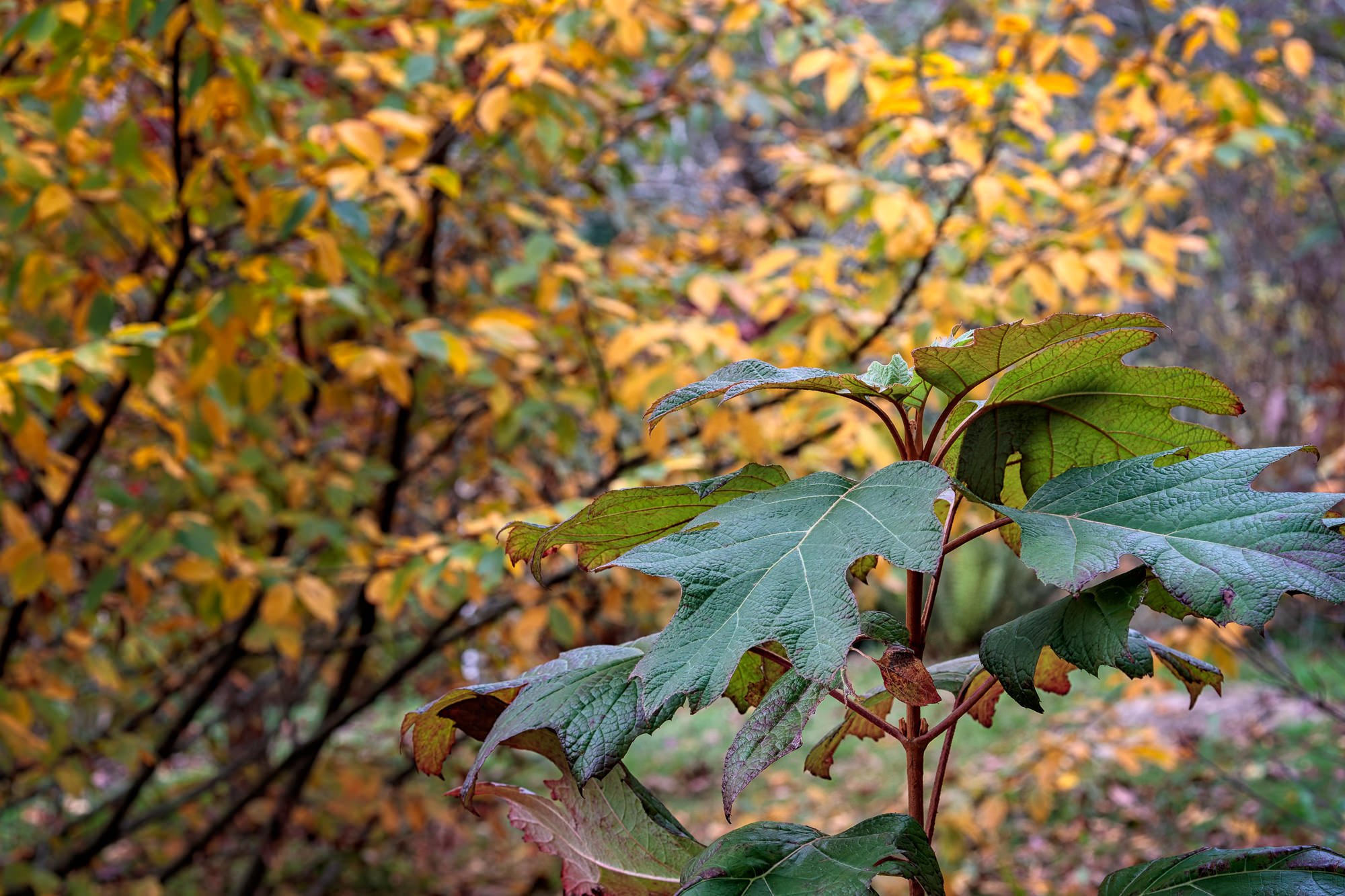
As did the various oak-leaved hydrangeas – the extra heat seems to have spurred them into more growth than normal and certainly improved the autumn colouring. Most surprising of all was a particularly floriferous H. villosa that took the full force of the sun for about four hours each afternoon and didn’t drop a leaf all season. The only explanation I can come up with is that it must have sent its roots in search of moisture in a nearby compost heap. Which shows remarkable resourcefulness bordering on cheating.
Plucky perennials
Even a blind squirrel finds an acorn every once in a while. And somehow I seem to have stumbled across a few perennials that have come through the summer unscathed. The garden would be a lesser place without them.
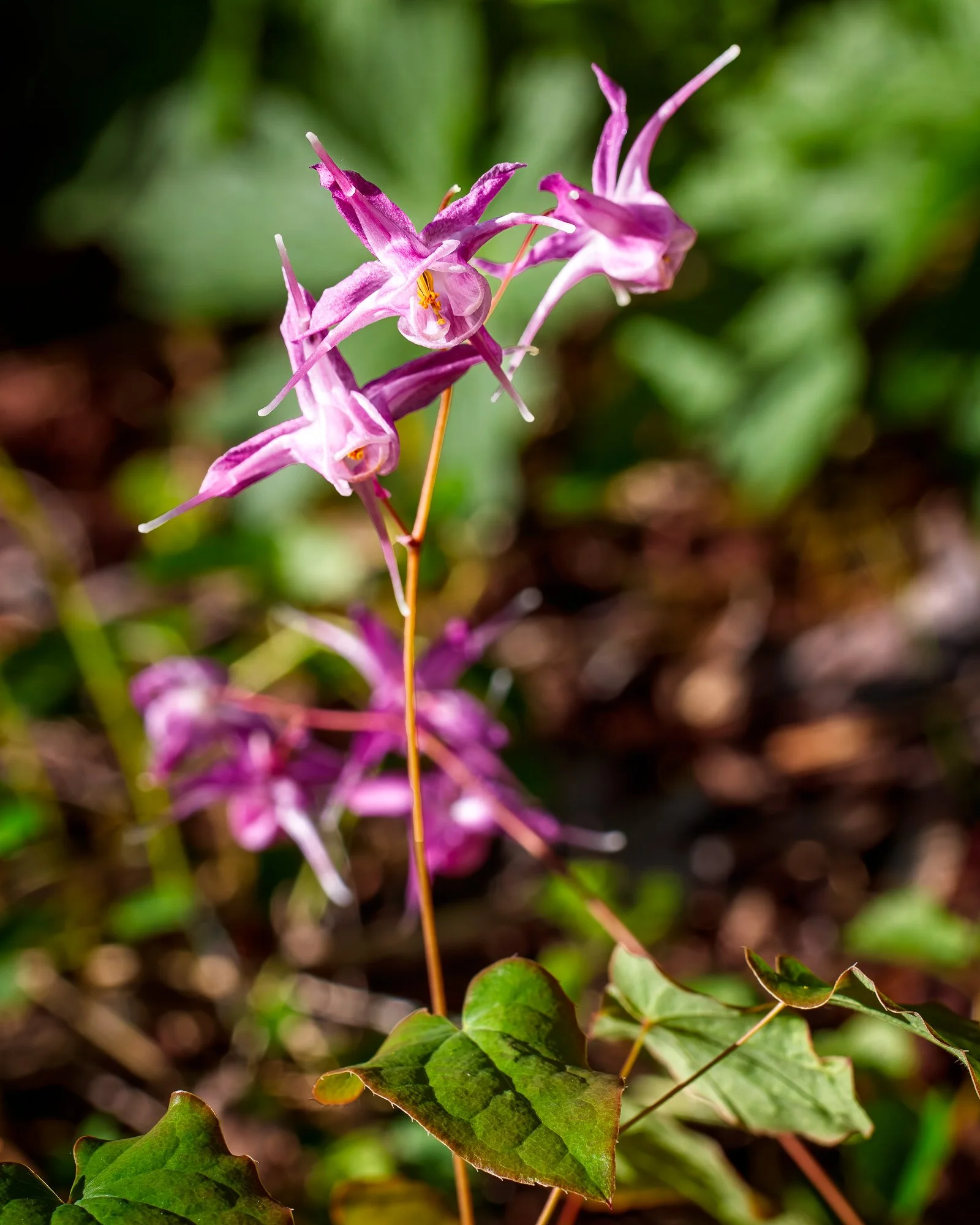
I’m convinced there must be a factory somewhere in deepest, darkest China churning out new epimediums every year, and I end up buying most of them. We all know that Epimedium x versicolor ‘Sulphureum’ is a real toughie and will happily spread amongst the roots of greedy trees. But the newer, more delicate looking hybrids such as ‘Lilafee’, ‘Domino’ and ‘Pink Elf’ scarcely demand better conditions. Sure, they flower earlier in the season so don’t have summer interest per se, but any plant that looks perfectly content and glossy right through the hottest summer on record and doesn’t need any attention from me is a keeper. ‘Amber Queen’ even managed to bulk up in full sun once the katsura dropped its leaves in August. The books all insist that they prefer moist soil, but they seemed happy enough to me in bone-dry dust.
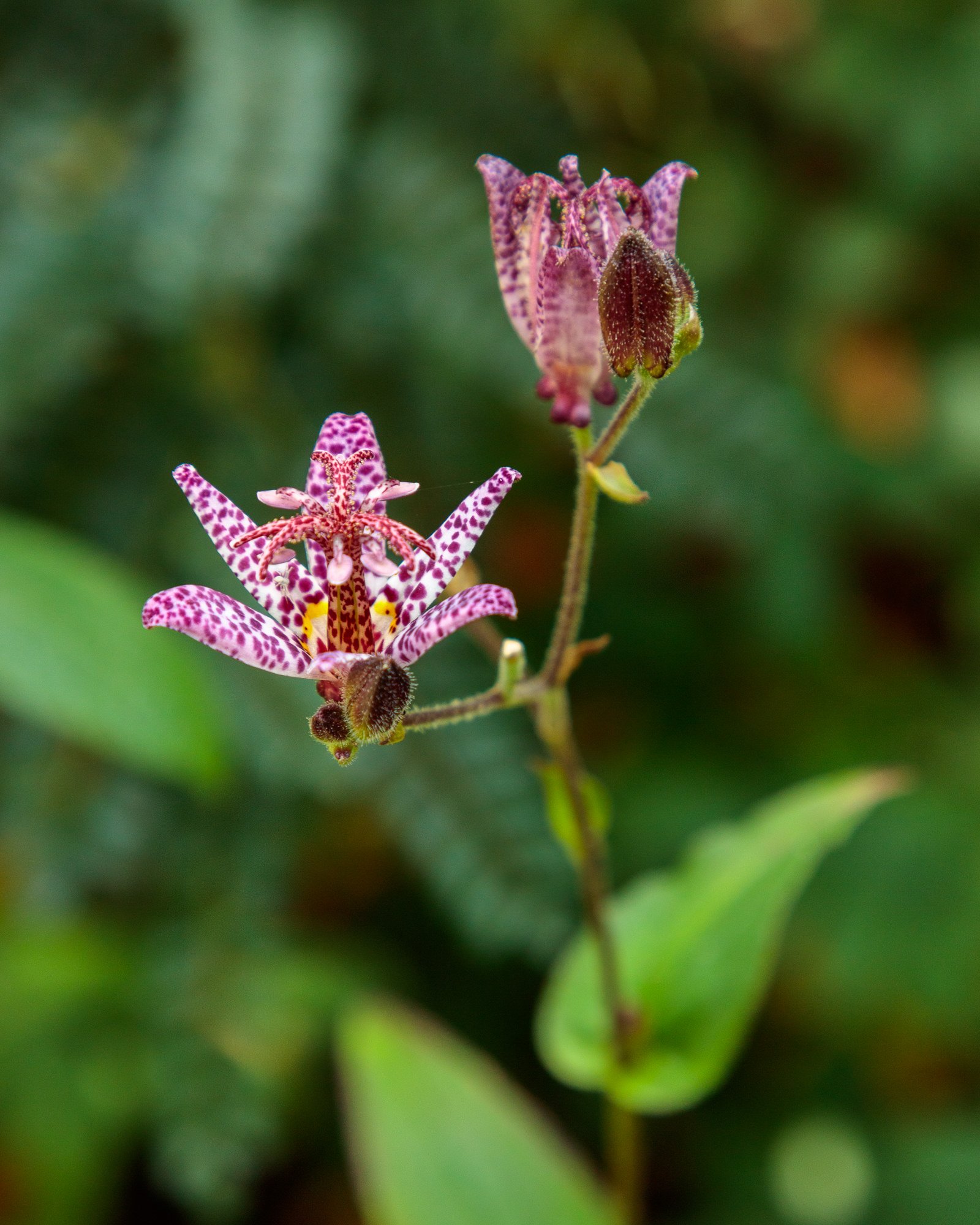
Another group of plants that supposedly need a moist, cool root run are the toad-lilies. Admittedly I try to give mine a shady spot, but that means that they’re competing with tree roots and they do just fine. Tricyrtis hirta looked completely unfazed under a Judas tree, while T. macropoda and T. ‘Empress’ both frolicked among the roots of a Magnolia grandiflora. All the others dotted around the terraces did a sterling job as well, flowering before the first of the autumn rains arrived. Much like the magnolias and agapanthus, I suspect toad-lilies’ resilience in drought conditions can be put down to their fleshy roots, the camel’s hump of the plant world.
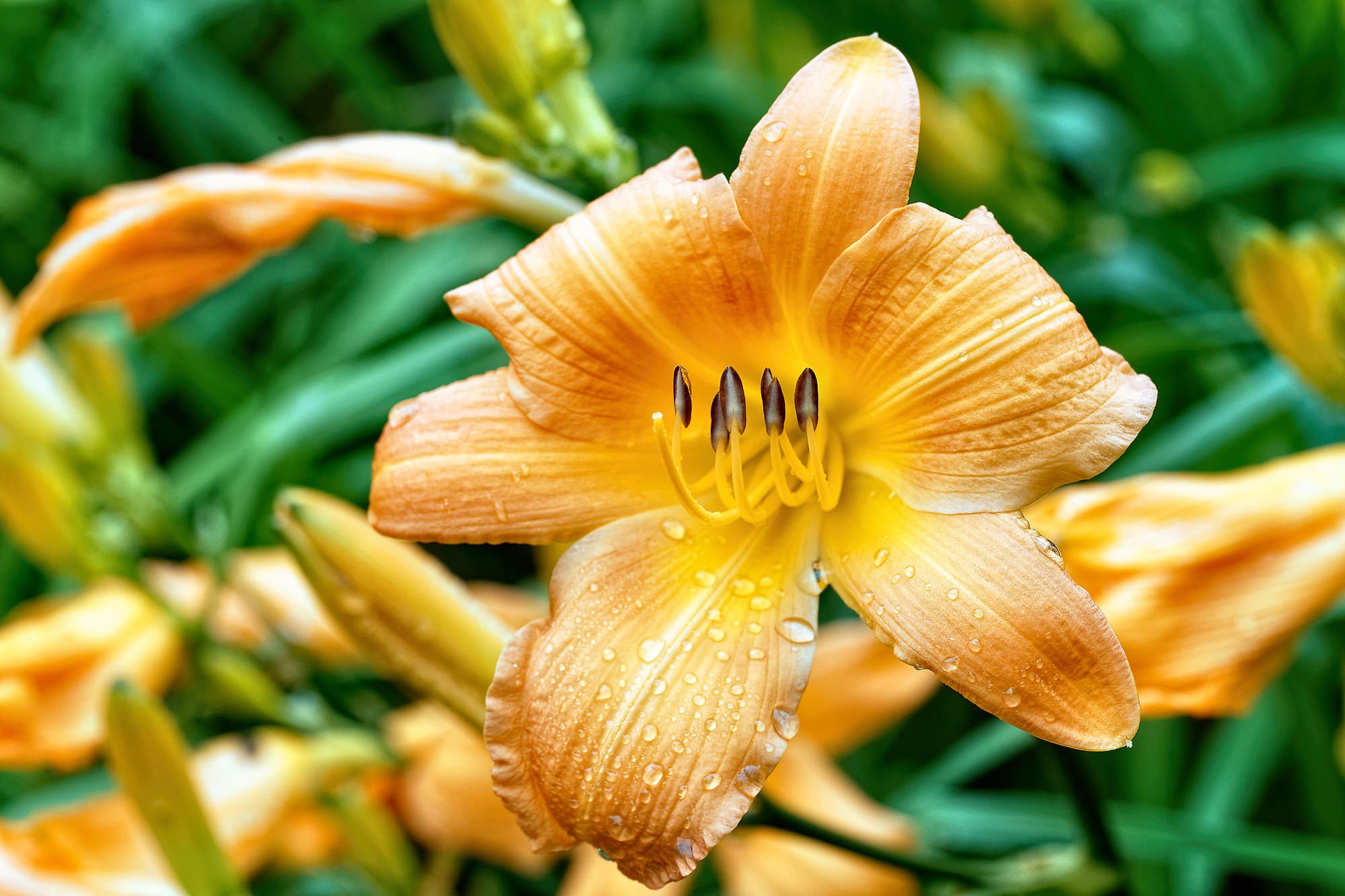
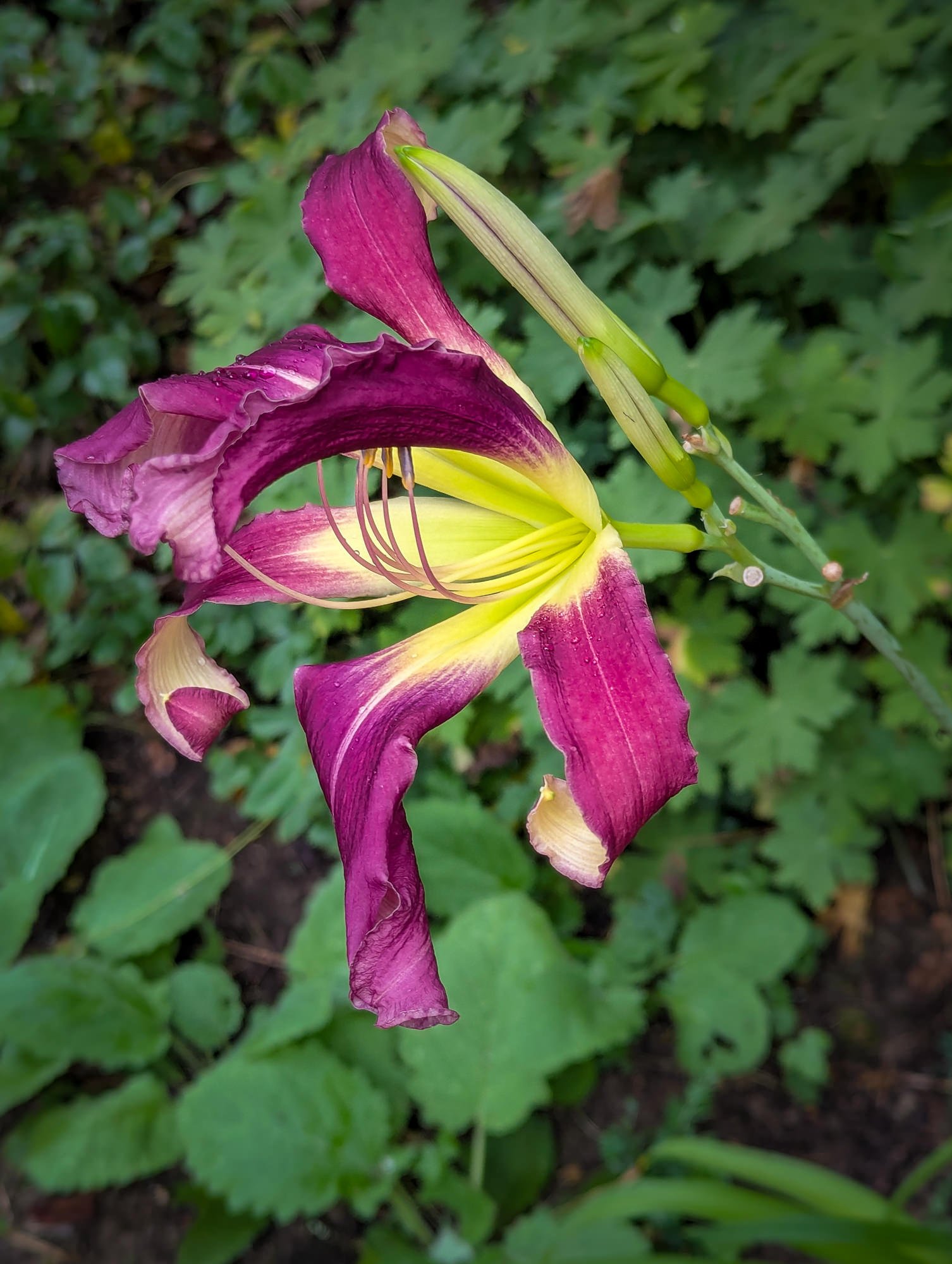
Which brings me neatly onto day-lilies which share a similar root structure. I’m definitely late to the party on this one but am now making up for lost time. From trusty old Hemerocallis ‘Catherine Woodbury’ to the startling ‘Edge of Chaos’ (which neatly sums up my gardening style), day-lilies are as close to indestructible as perennials get. They might not give of their best in the hottest, driest, sunniest spot but they’ll hang on in there. Even when a couple of gaps unexpectedly opened up among the roses in August, the newly purchased day-lilies I stuffed the border with actually seemed grateful to get out of their pots and get on with the job of growing. More please.
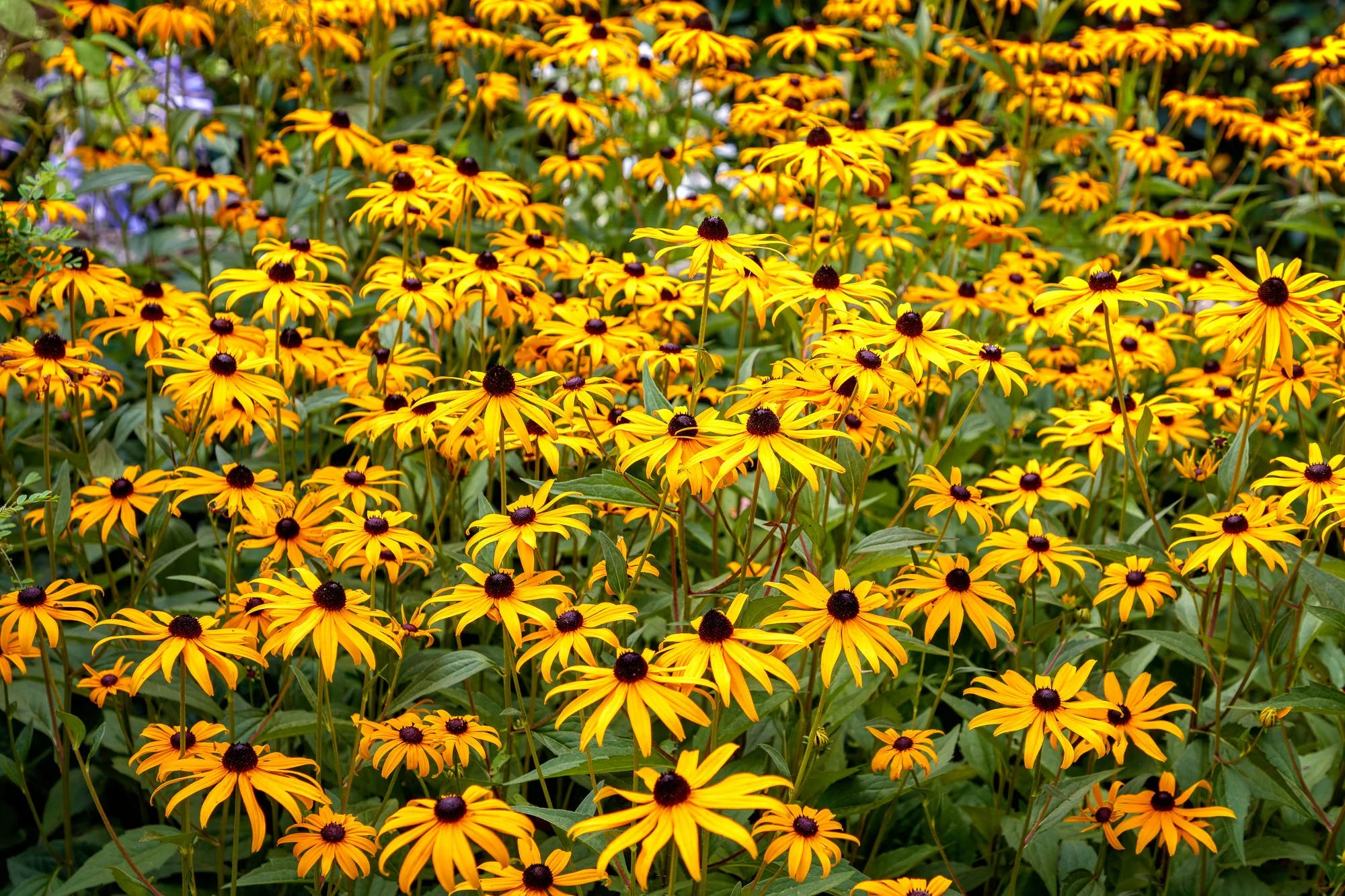
A quick shout-out to Rudbeckia fulgida var. sullivantii ‘Goldsturm’. The RHS suggests popping it in your best moist free-draining loam. Nonsense, save that stuff for your real treasures. This handsome brute will take over a border in full baking sun with no extra water whatsoever. It might droop slightly during a genuine heatwave but it soon perks back up every night, flowering freely and ready to resume its campaign of world domination. I wouldn’t be without it, but you have been warned.
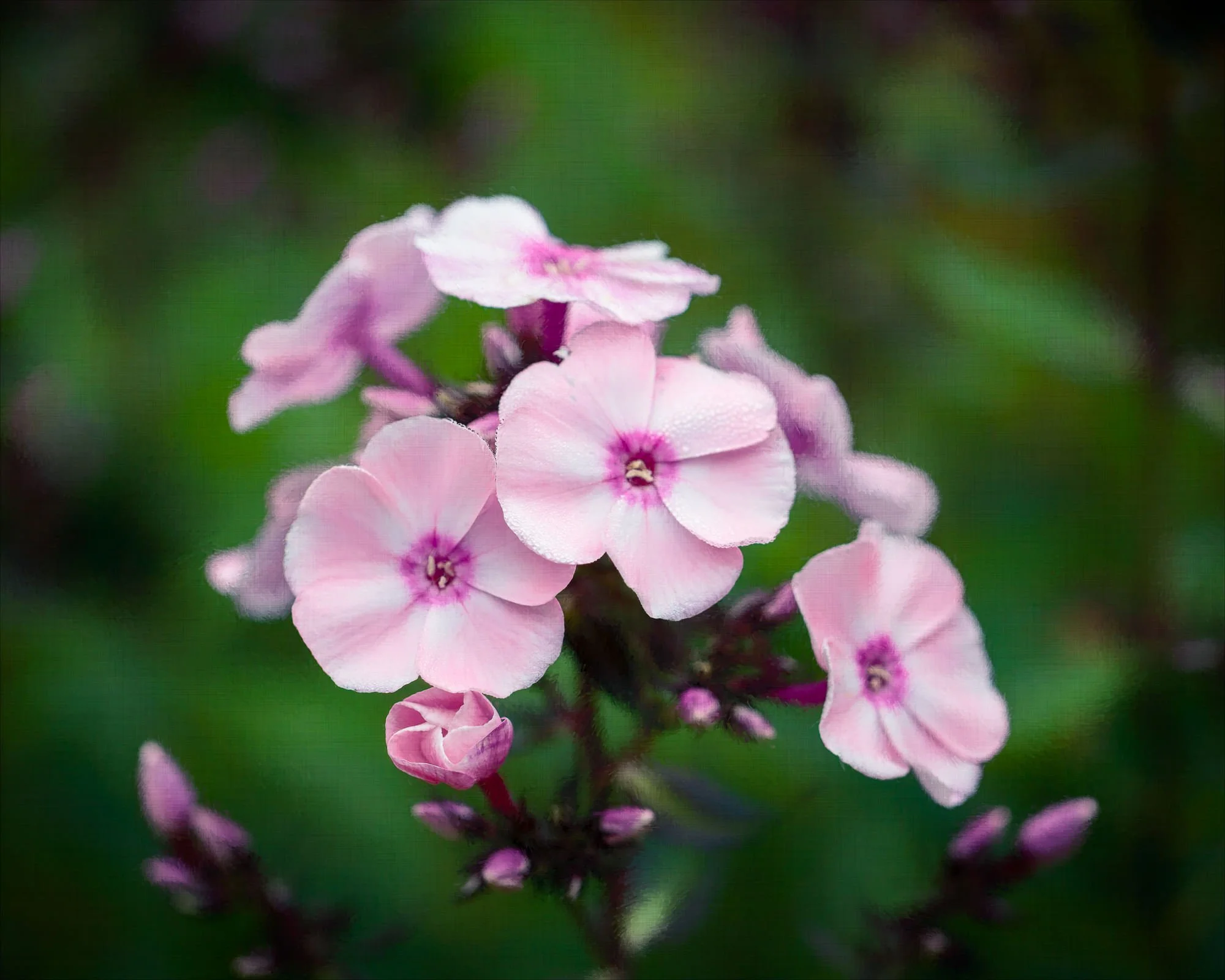
And the ones banished from the garden for letting down the team? Well, at the risk of bragging, the only abject failures have been the border phloxes (leaving gaps swiftly filled by yet more day-lilies). They’d clung on for a few years, looking decidedly peaky, but they’ve now been put out of their misery and permanently retired from the collection.
They’ve joined other youthful follies like delphiniums, astrantias and lobelias. I often wonder what I was thinking when I look back at some of my original planting plans. At least I knew even then to draw the line at meconopsis. Something tells me this past summer would definitely have bought them a one-way ticket to that great poppy field in the sky.