A dedicated follower of fashion
16 July 2026
By: James Lennox
Fashion can be a fickle mistress. Your two and a half acre walled garden is the toast of the horticultural press – lauded as an innovative take on new perennial planting in the last place you'd expect to see it, the wild and windy east coast of Scotland. Swathes of grasses, late season prairie stalwarts, asters, heleniums, salvias aplenty – the London-based garden media crowd couldn't believe their luck, an undiscovered gem just begging to be splashed across a double page spread.
Fast forward fifteen or so years and the garden is still there doing its thing in the face of stiff competition and an even stiffer breeze. The Piet Oudolf look has been embraced far and wide, spawning untold pale imitations. Naturalistic planting schemes were once startlingly original, a reaction in part to the grande dame school of '80s gardening. But what once felt radical now feels almost par for the course. So how is Cambo, one of the early adopters, holding up? Does it still pack a punch?
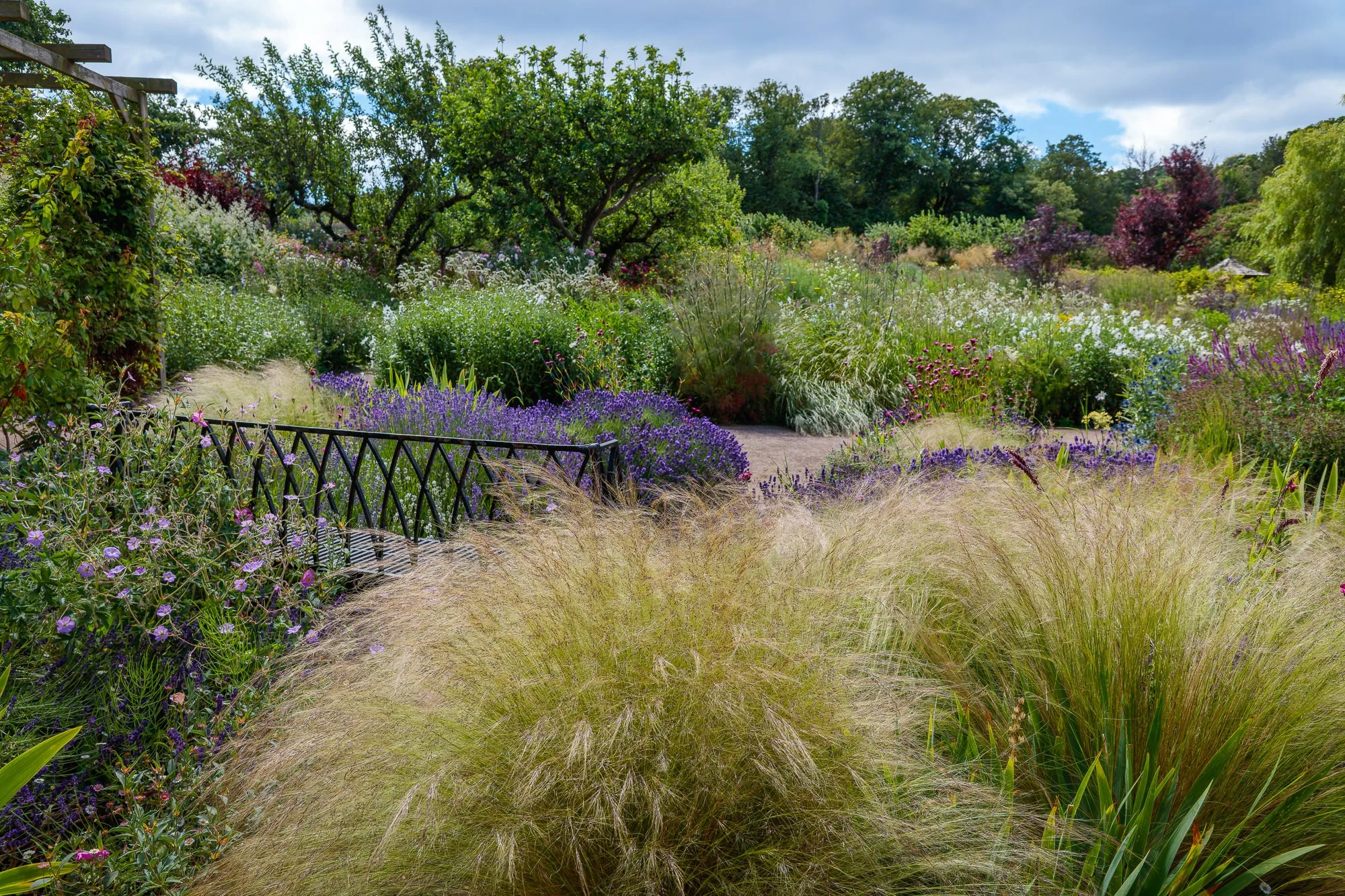
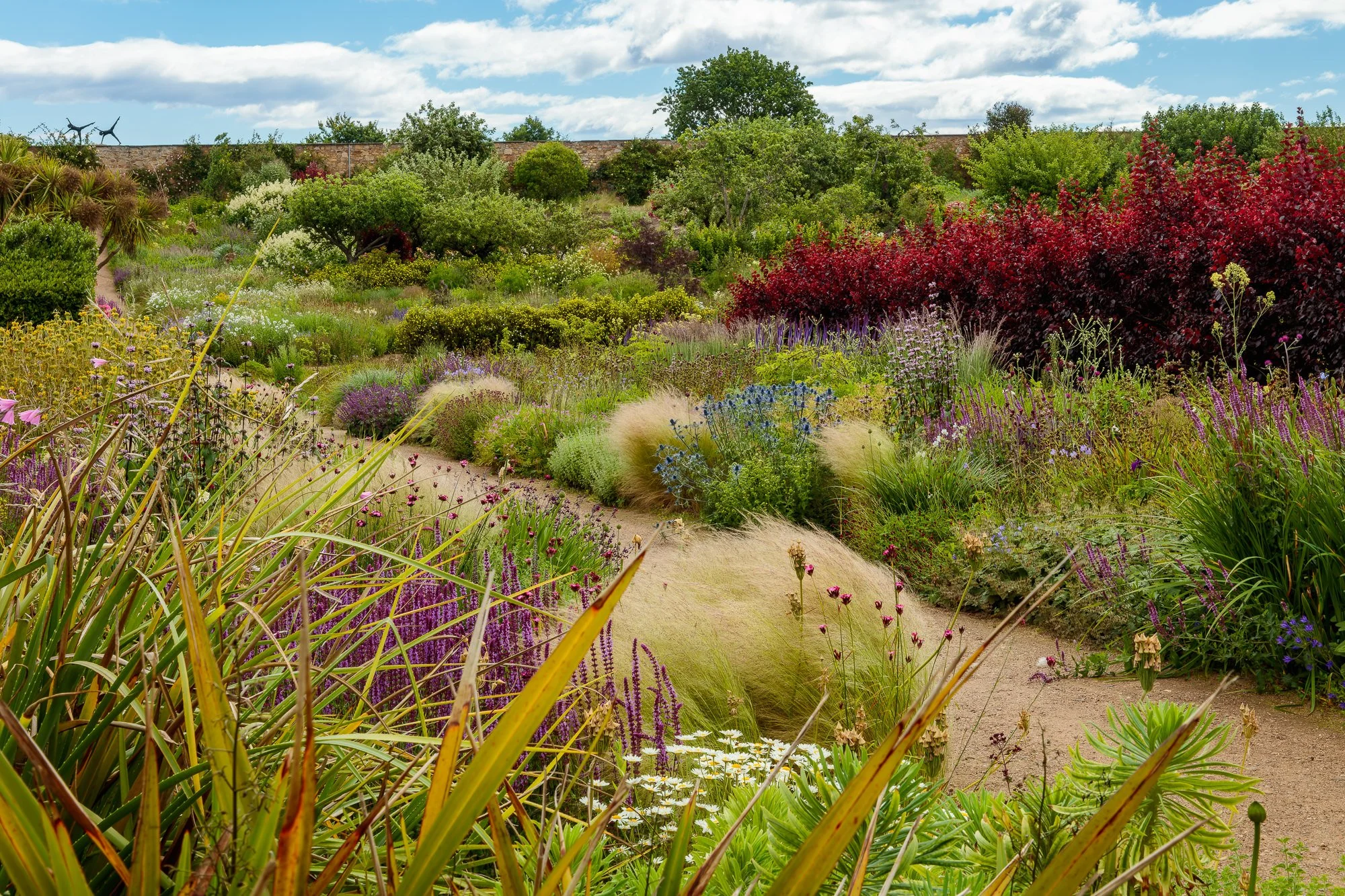
Yes and no. The site itself dictates much of what is possible. The walled garden occupies two long slopes divided by a burn running through the middle, an unusual topography but one exposed to almost relentless wind. (Did I mention it was a bit blowy the day I visited?) If ever there was a place where ornamental grasses earn their keep it's here. Stipa, miscanthus and calamagrostis were bravely standing their ground while their broader-leaved companions (not to mention the poor, double-flowered roses) were looking decidedly storm-tossed. On the whole, the garden wisely works with its conditions rather than against them.
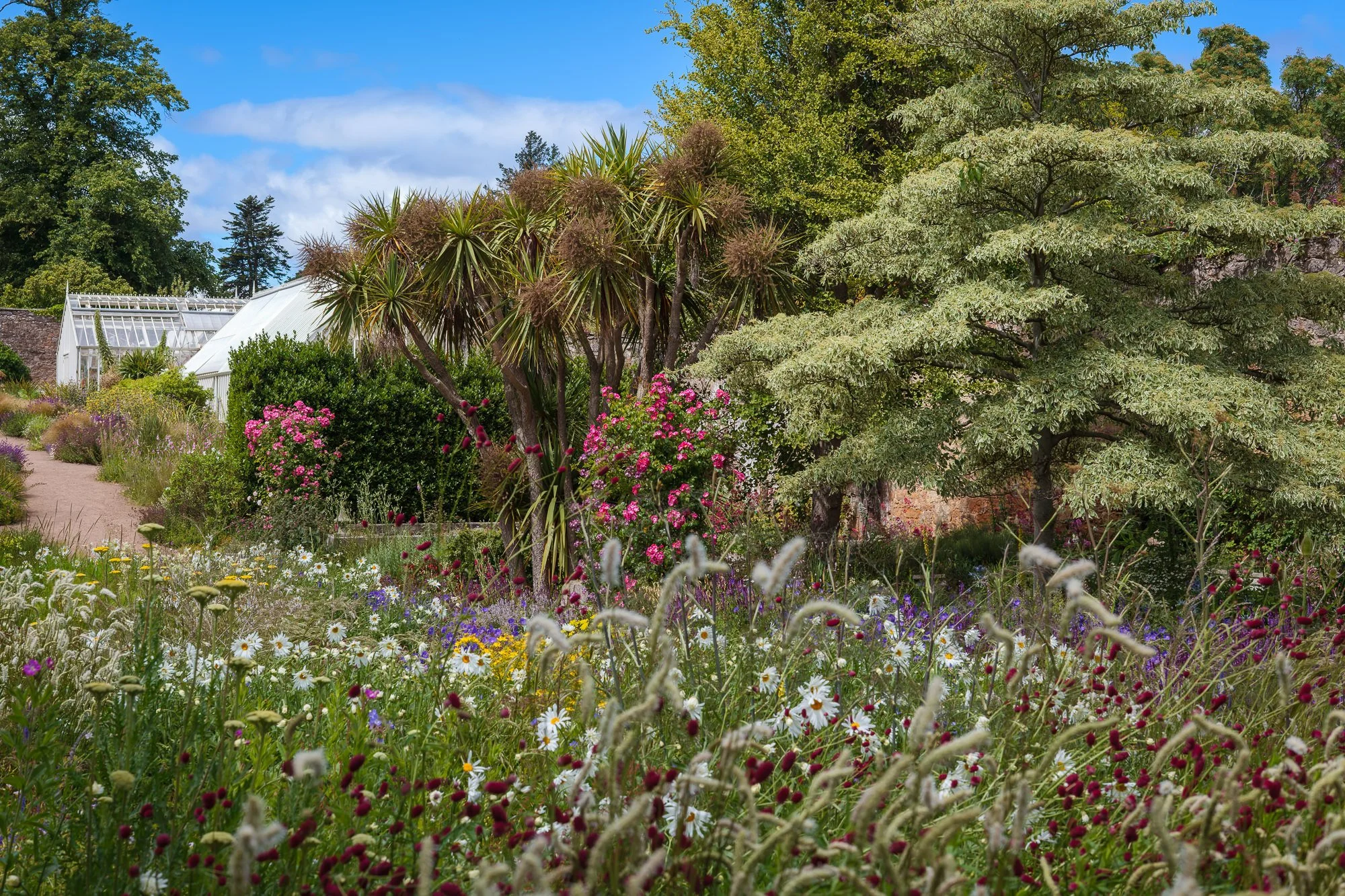
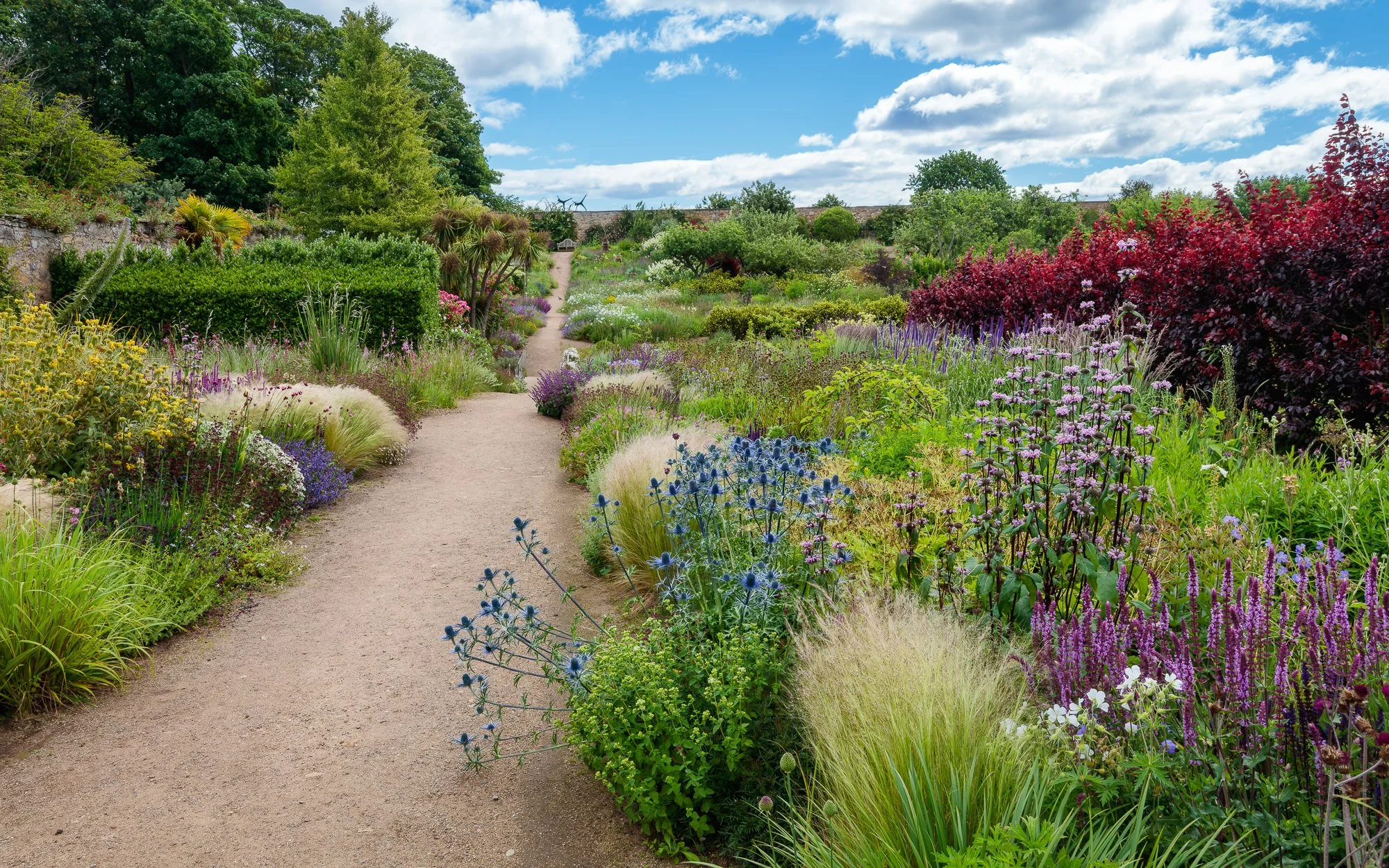
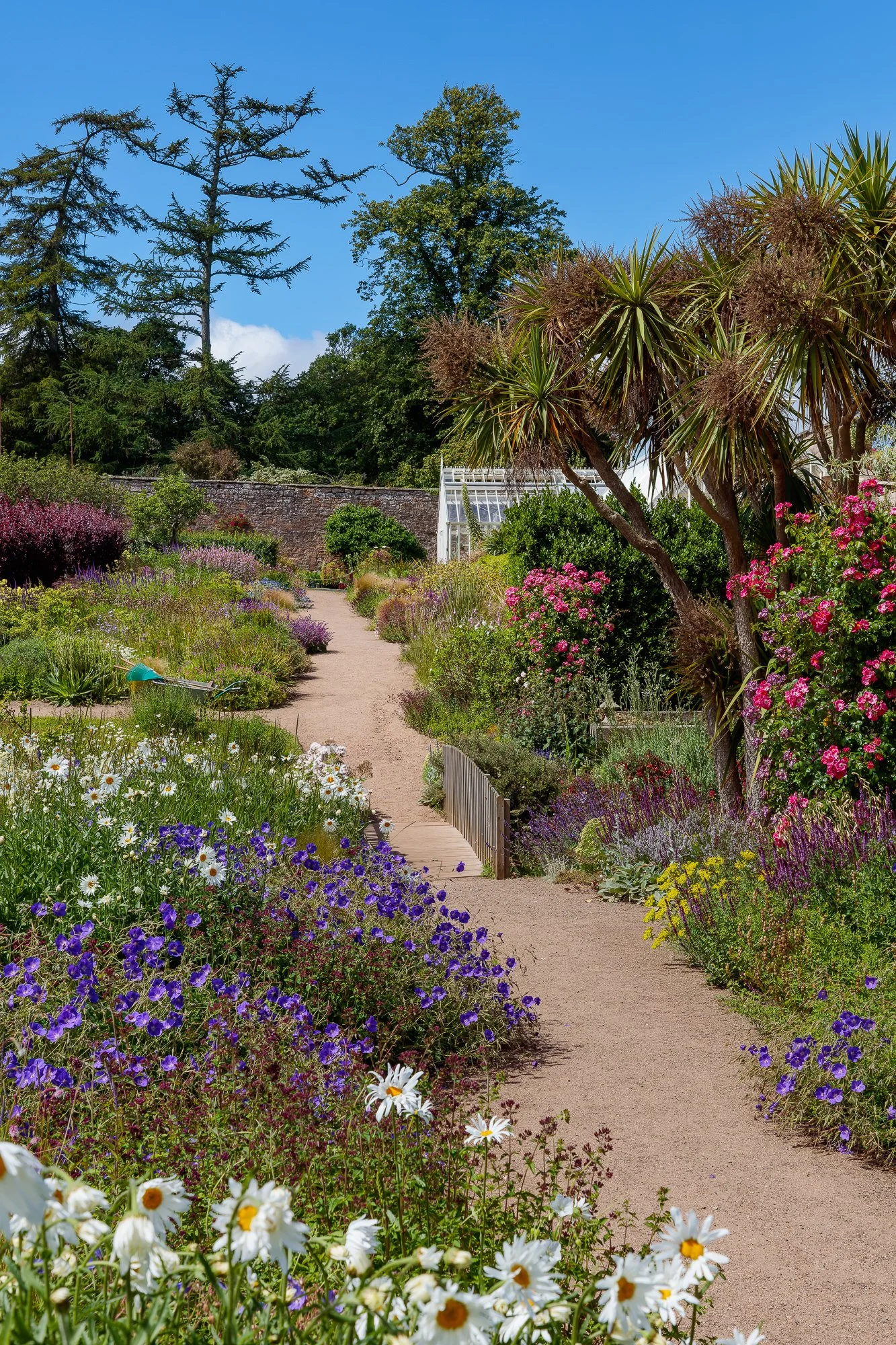
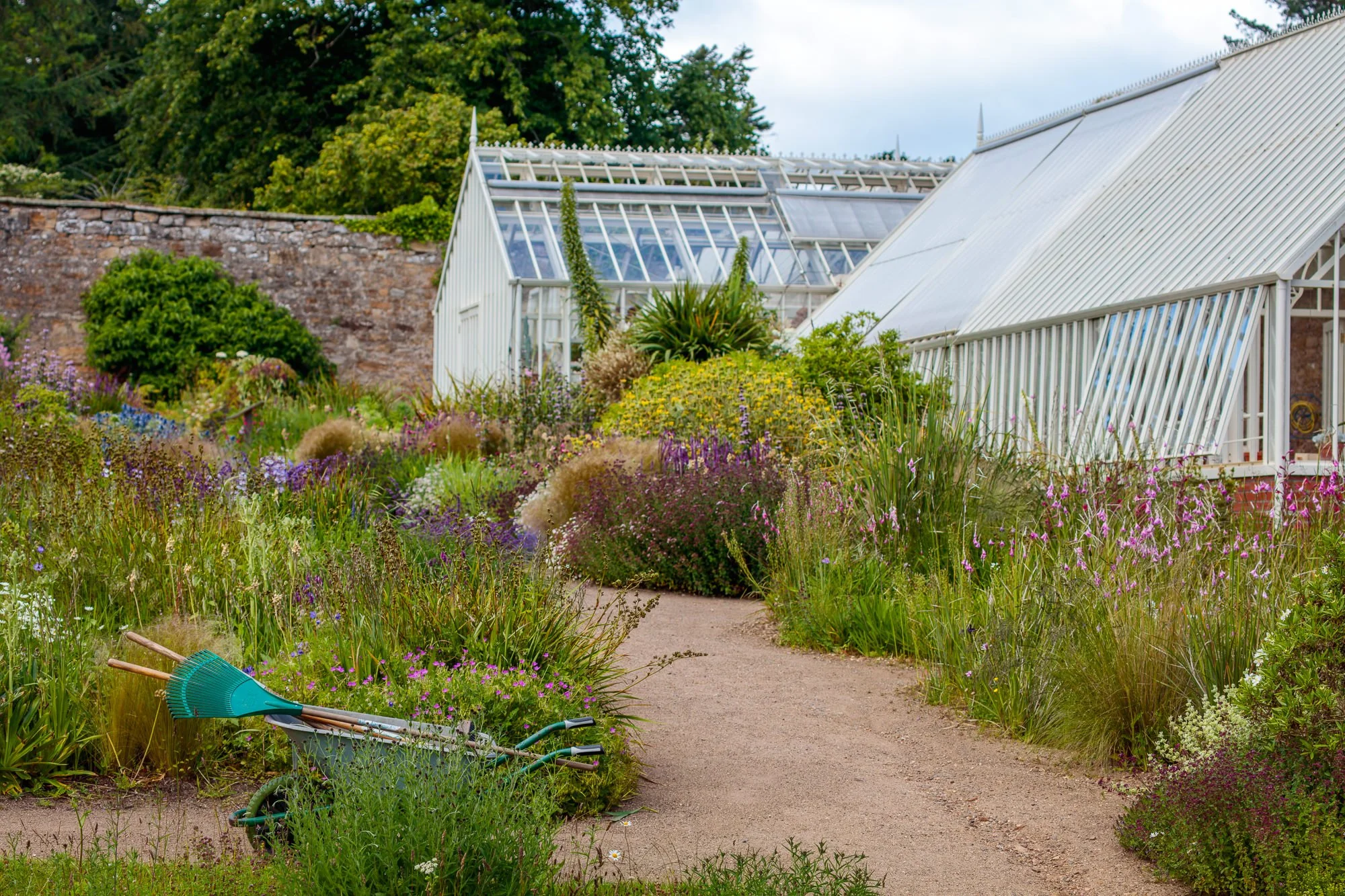
Without doubt, the most successful area of planting is either side of the long path running from the greenhouse at the top of one slope all the way to the sculpture of two cartwheeling Chinese acrobats surmounting the far wall. (The only instance of sculpture in the entire space and I mistook it at first for a cheeky wind turbine peeking into the garden.) Deep, confident planting seemed to be coping, nay thriving, in these coastal conditions. After all, it's not every day you spot an Echium pininana in Fife, a much more welcome sight than the scrappy cordyline further down the slope. Just because you can grow something doesn't mean you should.
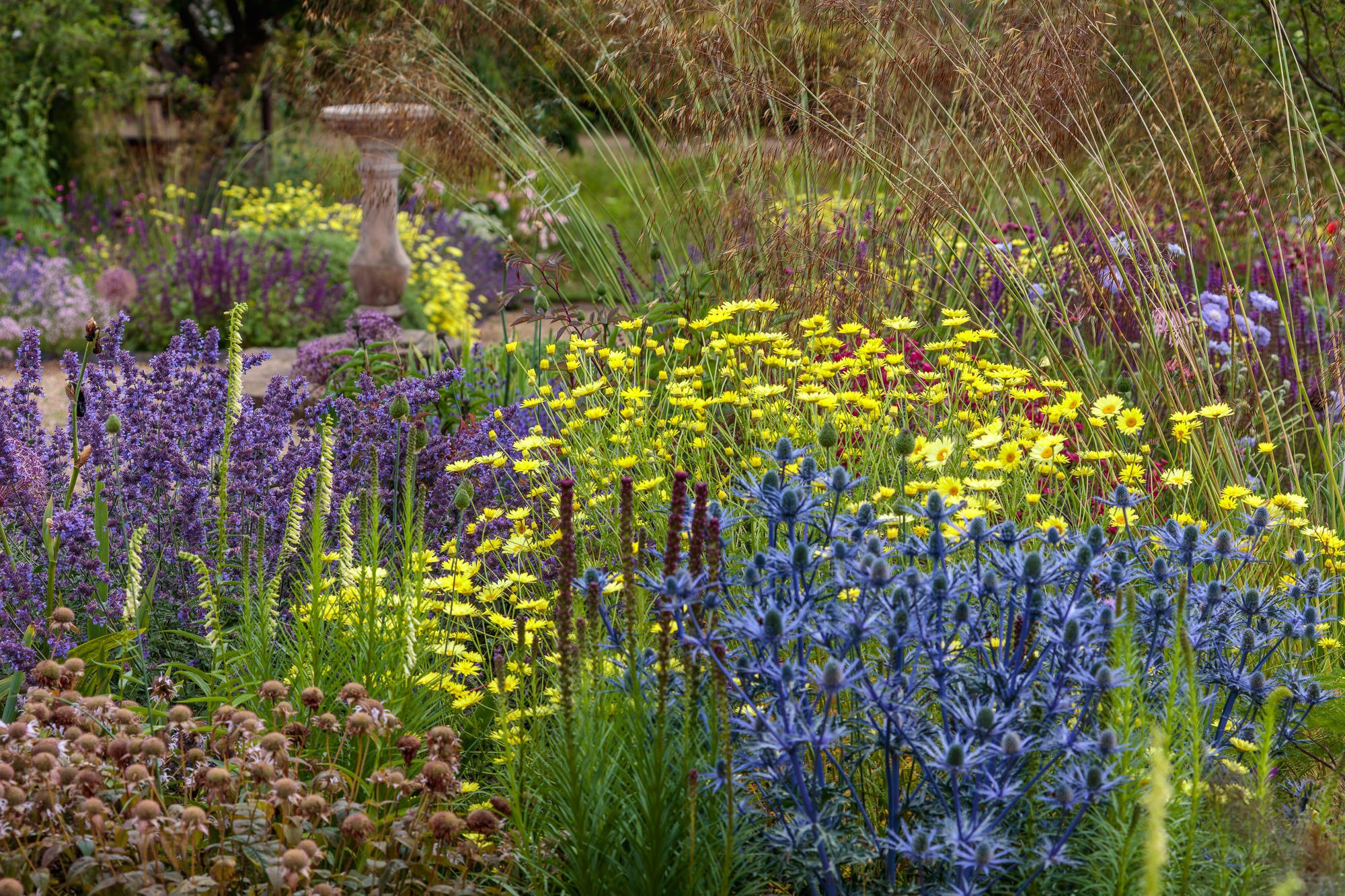
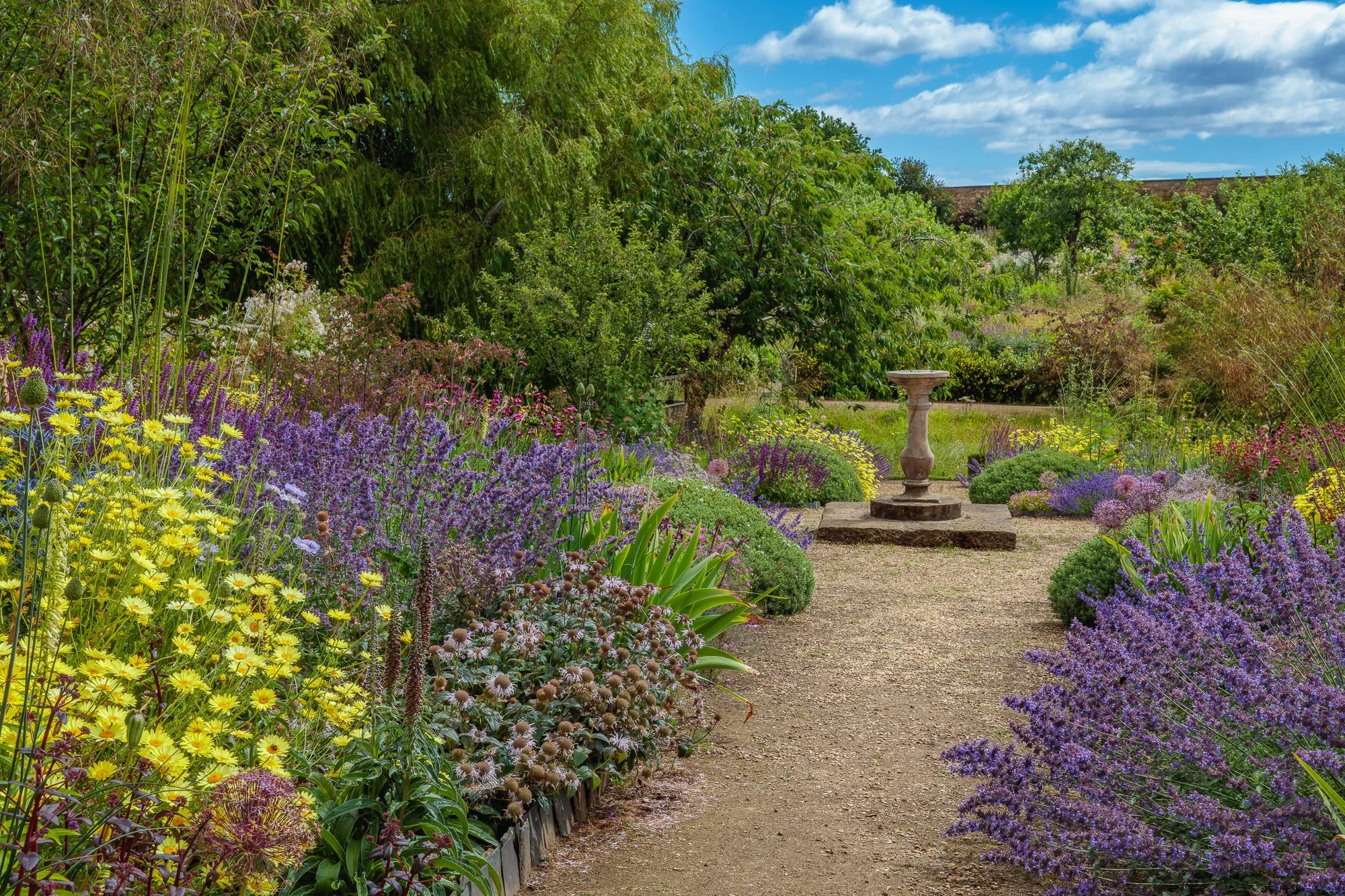
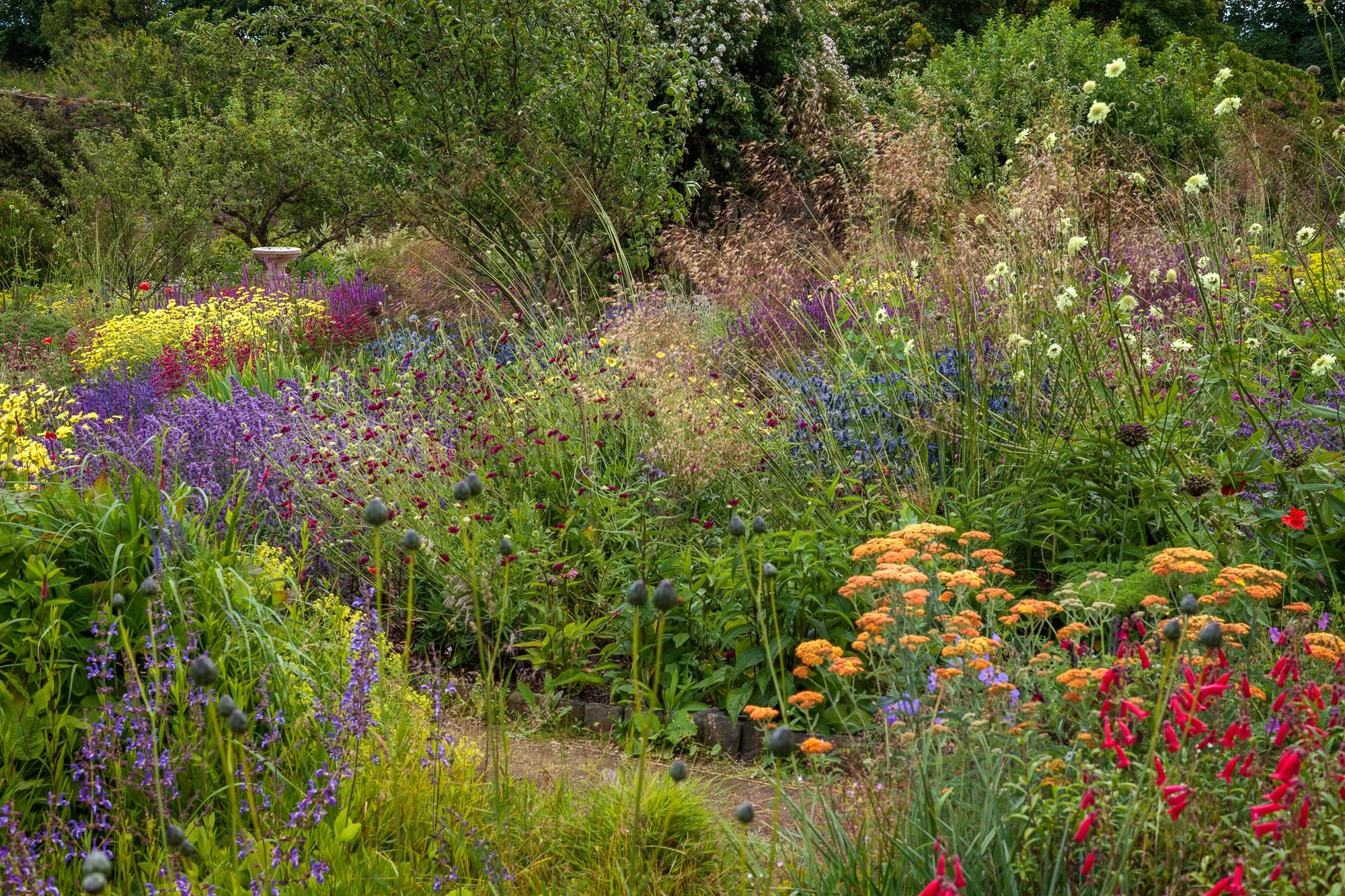
The exuberant planting around the sundial is equally memorable. Anthemis, eryngiums ('Picos Blue' to remind me of home?), achilleas, penstemons and sanguisorbas add a certain technicolour gaudiness that is only kept in check by the grasses and supporting greenery. It's feel-good brazenness to gladden the heart - saturated colour, bold combinations and unapologetic visual drama. It is the opposite of subtle and enormously effective. This is one of the garden's strongest, freshest compositions.
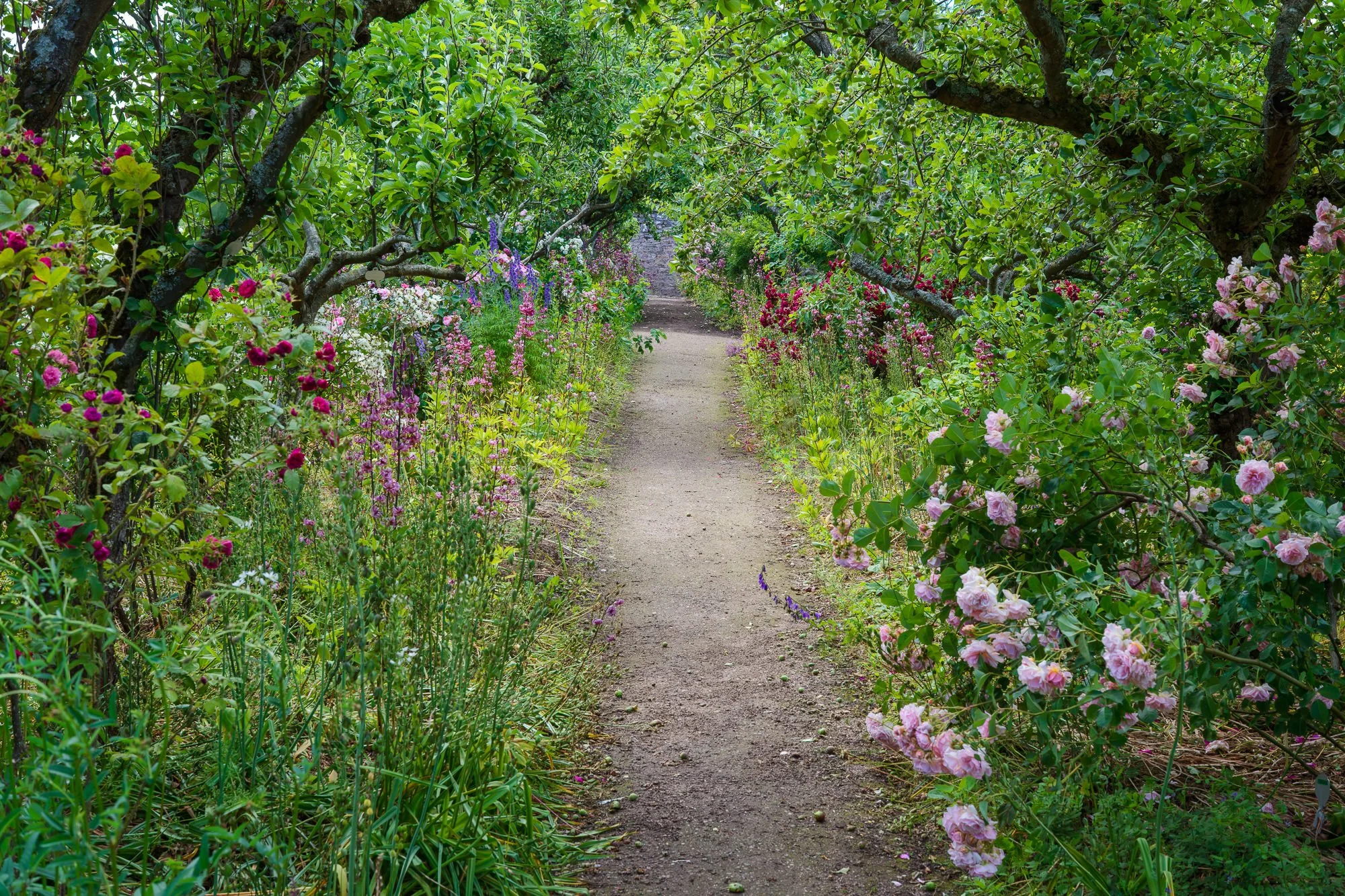
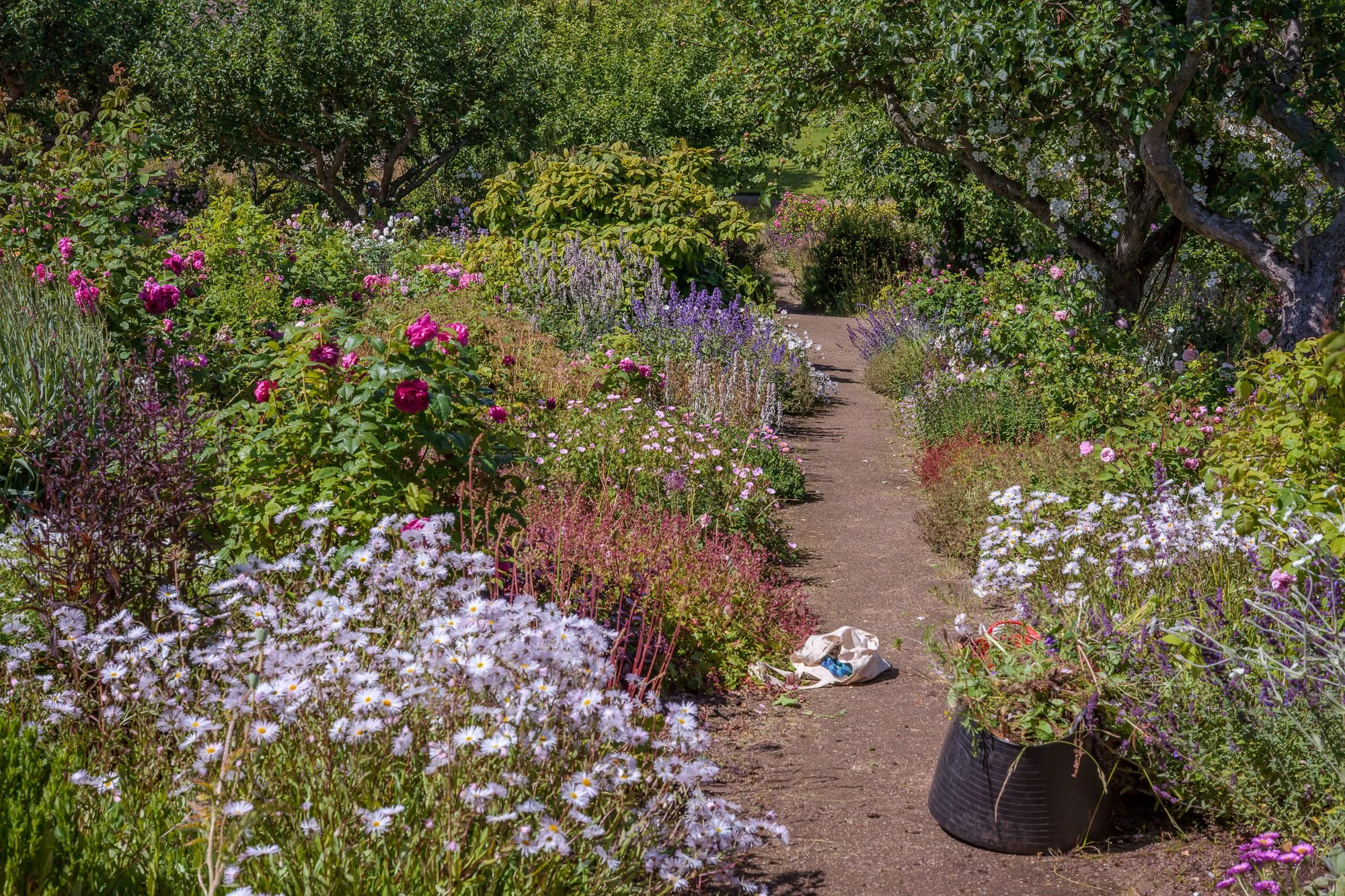
Elsewhere, there are similar flashes of inspiration. Old apple trees underplanted with shrub roses and lilies make for an unexpectedly successful combination, proving that orchards need not be carpeted with nothing more imaginative than rough grass. Even the cutting garden, normally a no-go zone for me with its regimented rows of sacrificial blooms awaiting the flower arranger's knife, felt blowsier and more integrated in the grand scheme than is often the case.
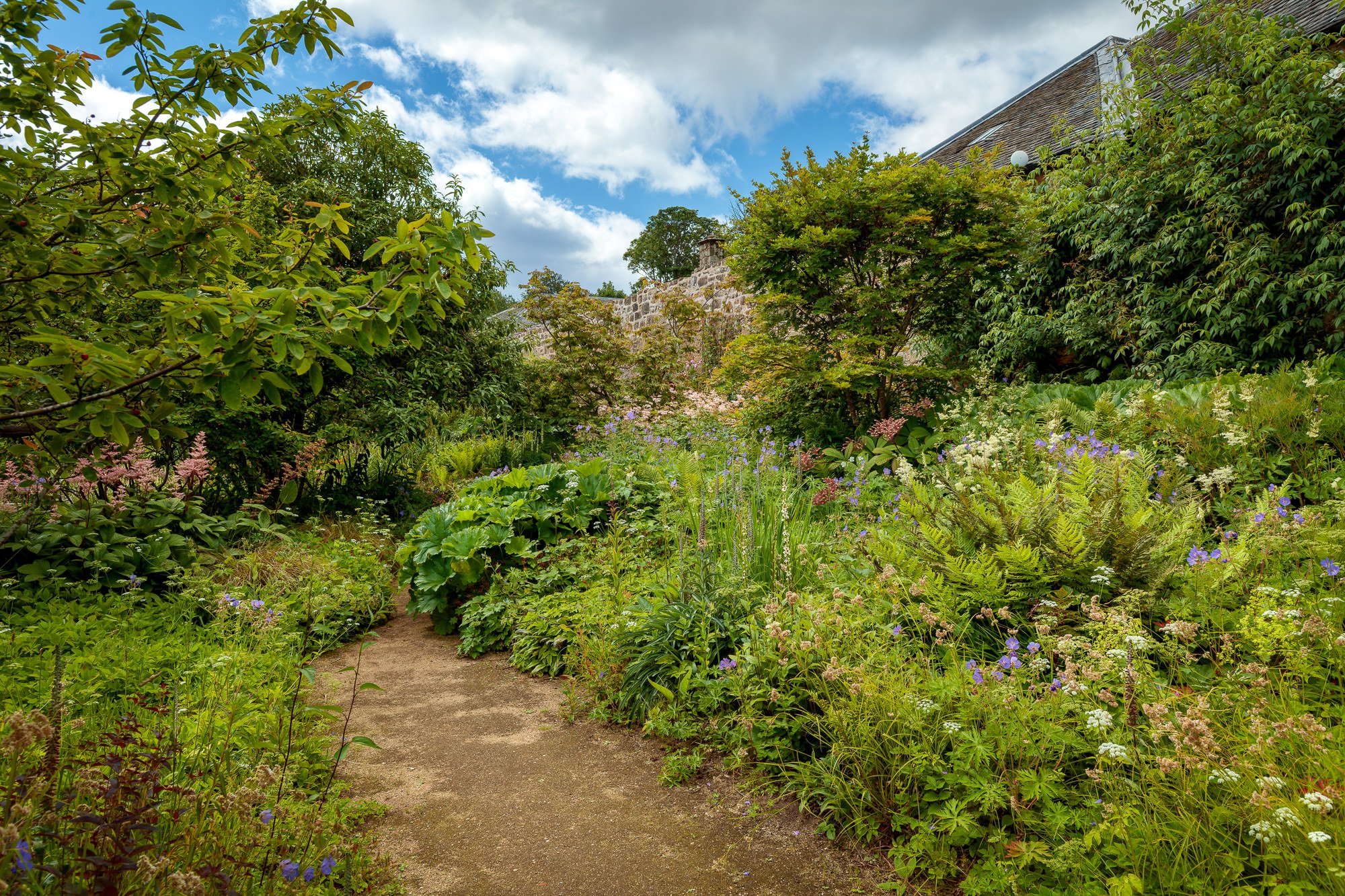
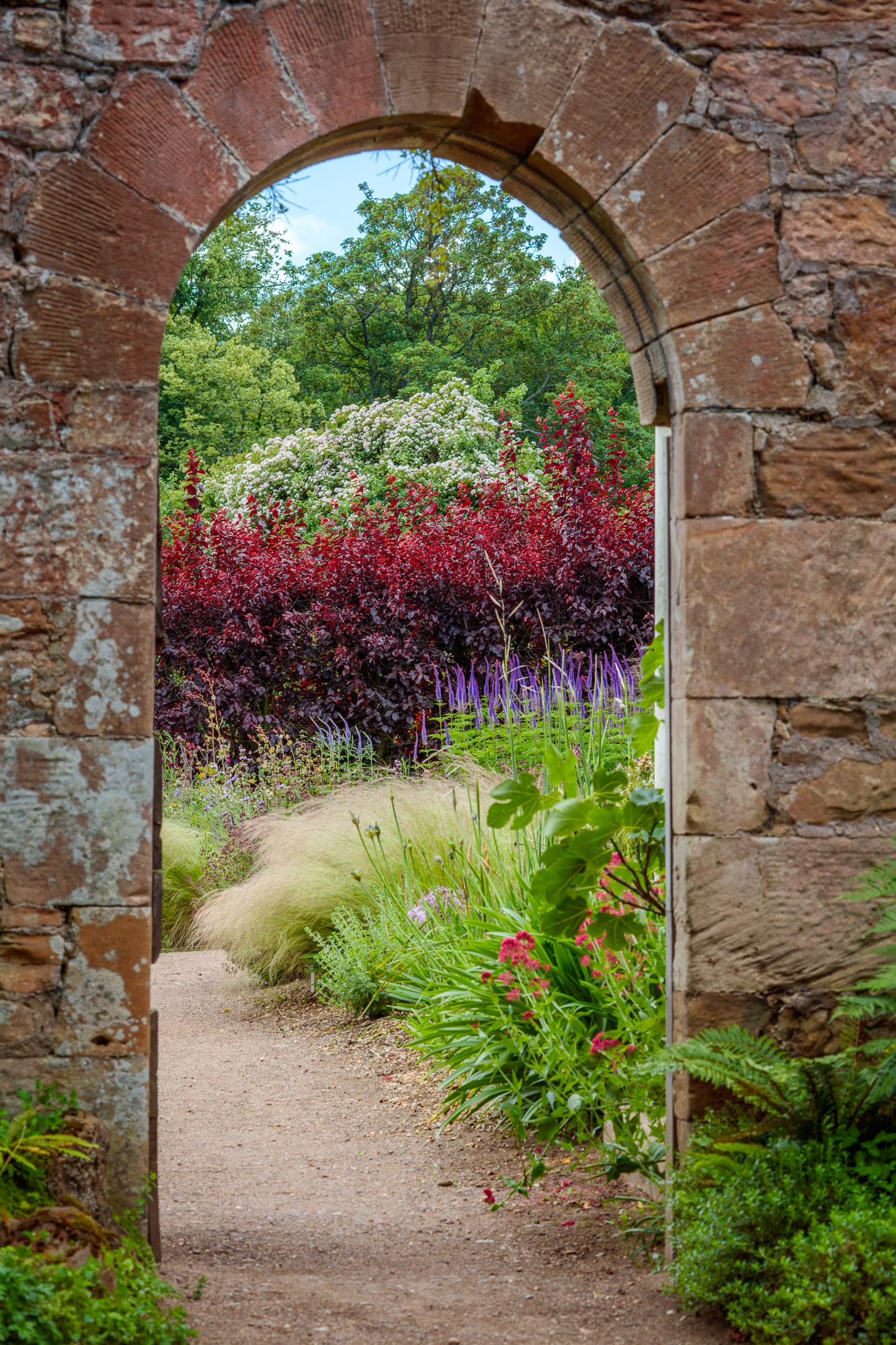
The range of woody plants is unexpected. A lilac walk with a couple of dozen different specimens runs along one wall; an Osmanthus yunnanensis appears on the far side in a woodland-style corner that caught me off guard, a particularly bold juxtaposition with the sundial planting nearby. New shrubs are being added along the north-facing wall hinting at further evolution.
Not every decision convinces, particularly the weak internal organisation of the space. The planting lacks a sufficiently confident framework to keep it in check. Rather than being a coherent whole divided into distinct spaces, the garden feels curiously ill-defined with different areas just bleeding into each other. Compare this to Scampston Walled Garden, an actual Oudolf design where each space possesses its own identity and atmosphere, where the transitions are, if anything, arguably too abrupt and self-contained rather than non-existent. It's clearly a tricky balance to strike.
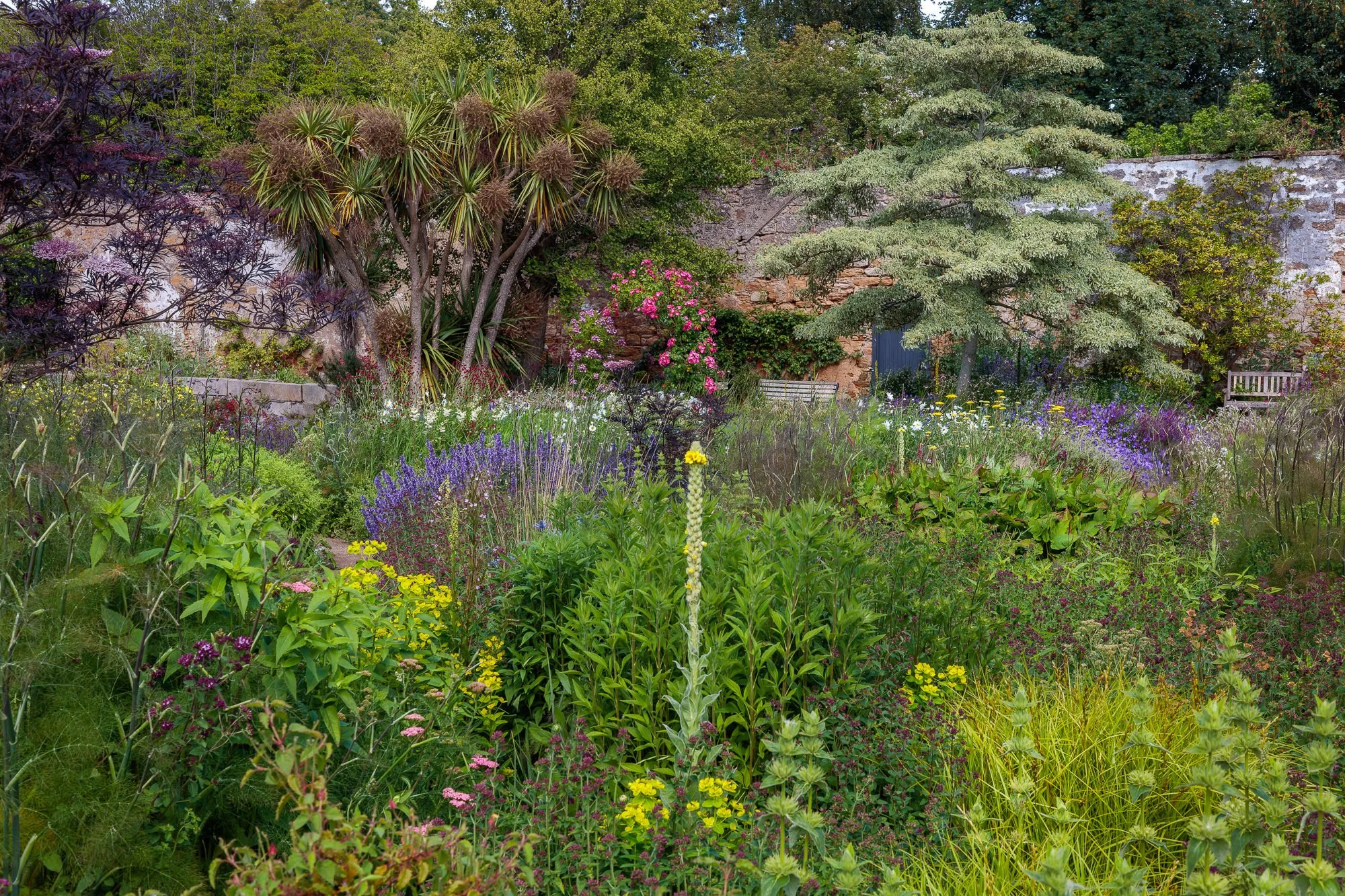
The burn at Cambo should be the garden's great organising feature, yet somehow becomes little more than a boundary between the two slopes. The chance to create a stronger sequence of spaces arranged around this one axis has been squandered. Long grass is rather unimaginatively the order of the day and a couple of rickety bridges and a tired gazebo do not inspire confidence. A timber pergola occupying the site of demolished glasshouses by the water's exit from the garden looks, itself, rather shabby and lacks the sense of permanence and scale that the setting deserves.
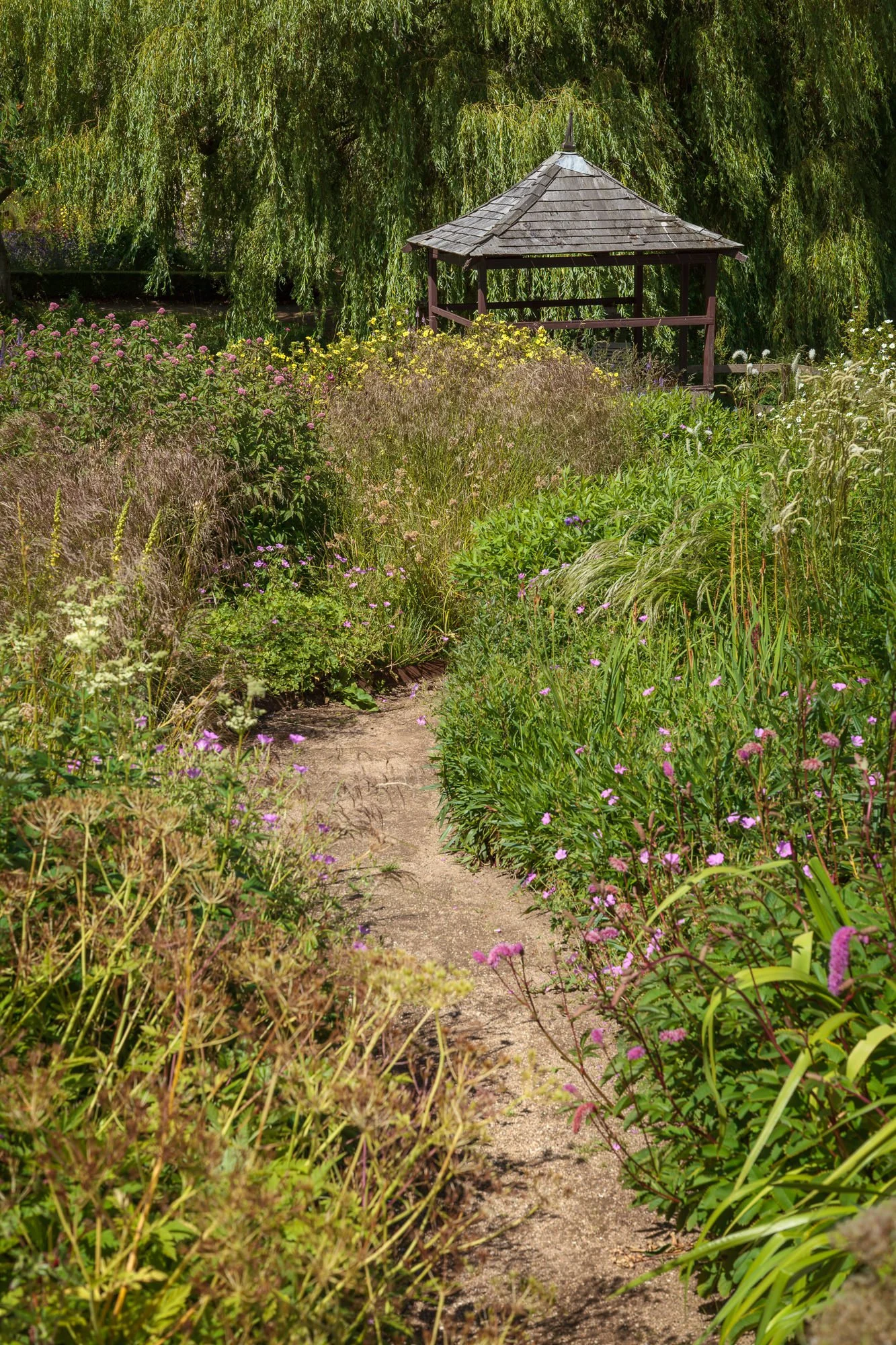
The same lack of definition, of crispness, is evident at times in the planting itself. There's nothing wrong with allowing a more relaxed feel to develop assuming always that it's the result of a conscious aesthetic decision rather than a mere cost-cutting exercise. But romantic haziness and prairie or steppe planting do not, to my mind, make compatible bedfellows – it's the sharpness that makes this style so compelling at its best. Without a firm hand the whole scheme can lose its footing and slide into something that simply looks under-maintained.
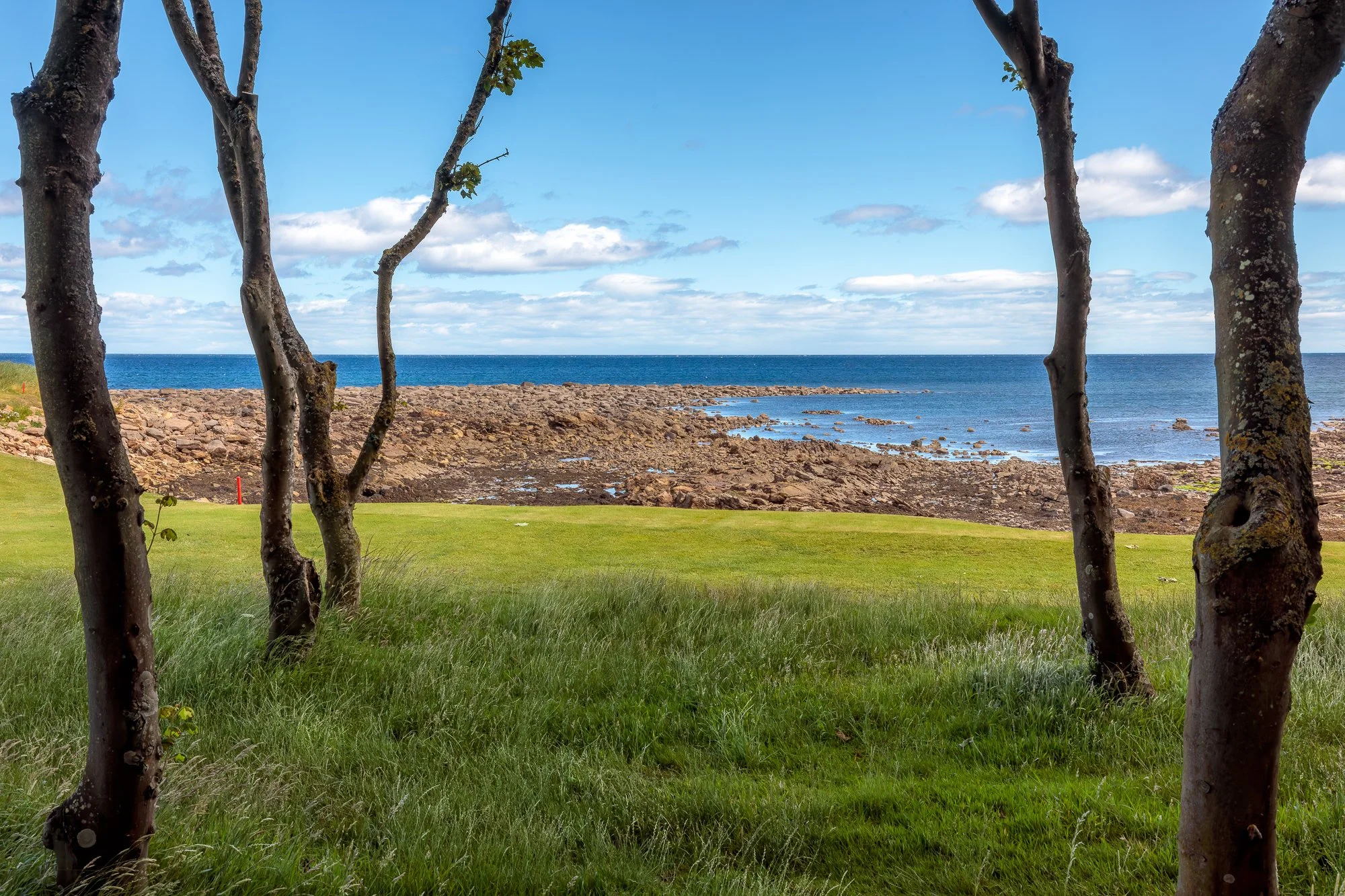
Outside the walled garden, there is the woodland that plays host to Cambo's famous snowdrop collection. It was, of course, resting in early July, so the walk downstream to the beach offered nothing more than the excitement of dodging wayward golf balls struck by Scotsmen perfecting their swings.
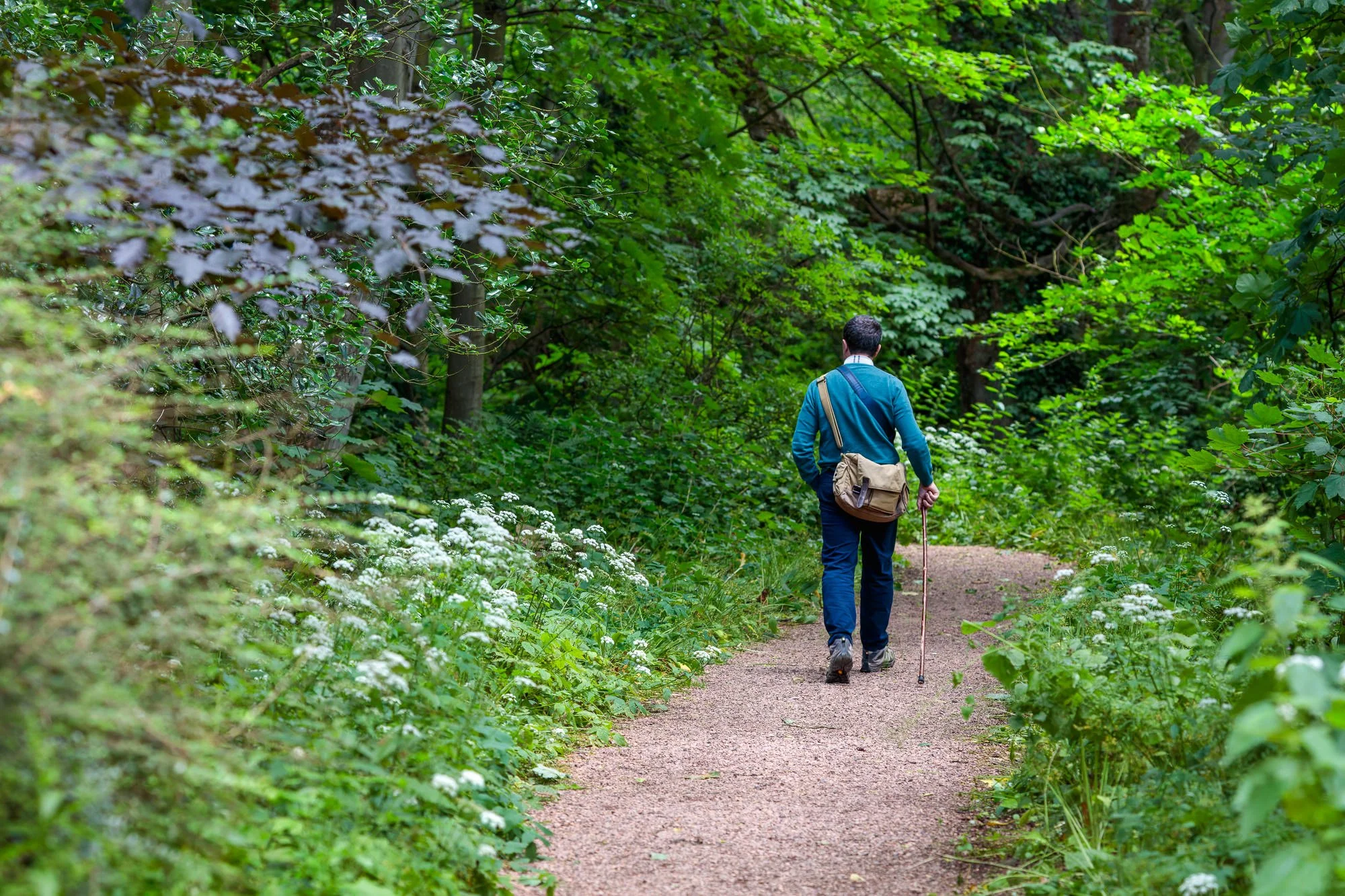
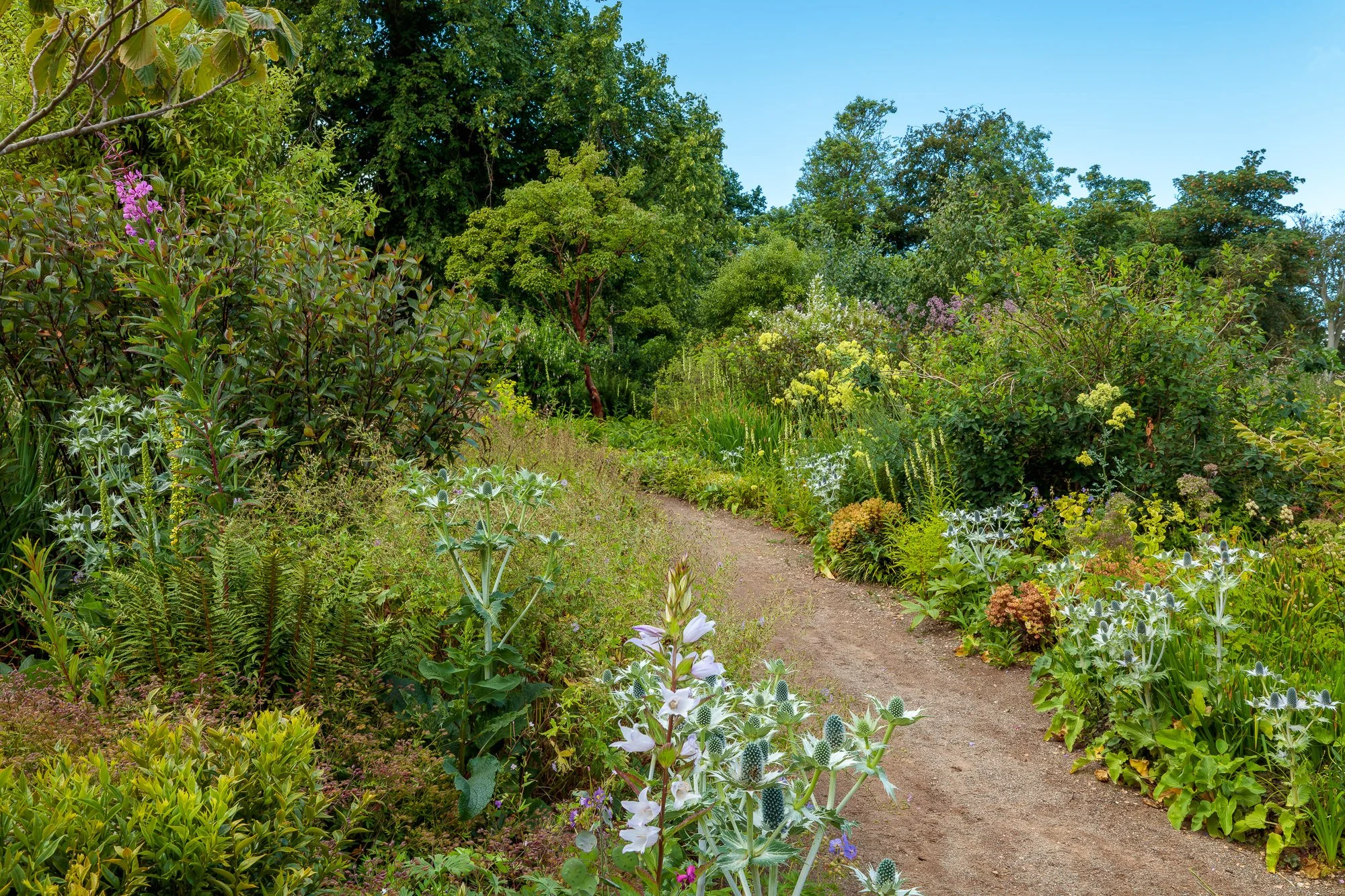
The approach to the walled garden itself was full of interest and handled expertly. The path winds through a woodland zone with epimediums and ferns at ground level to a more open, yellow-infused mixed border composed of thalictrums, euphorbias, digitalis and acers with a podocarpus and hoheria thrown in for good measure.
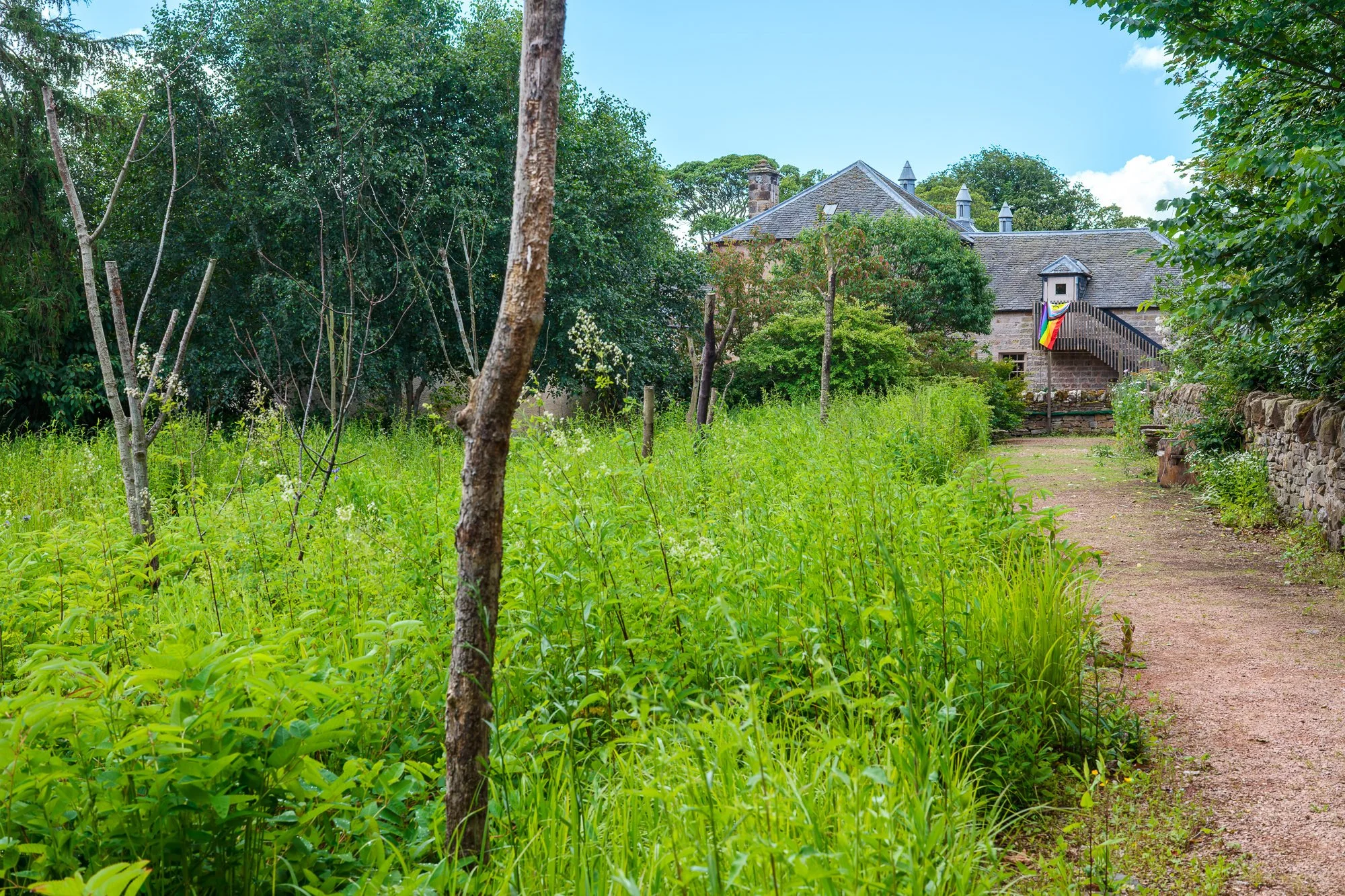
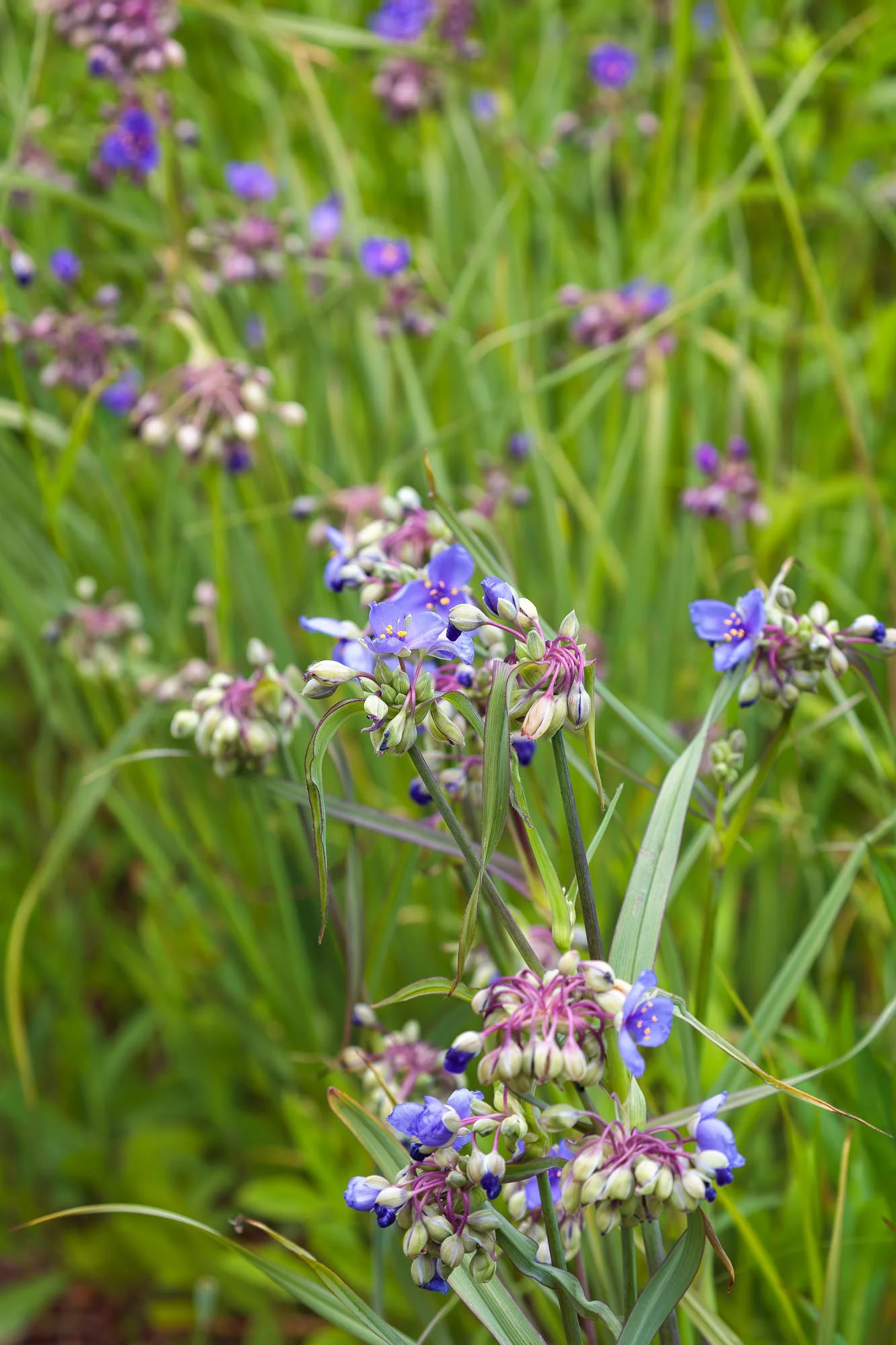
There's even room for a rather diminutive North American prairie which was showing promise (I'm a sucker for a tradescantia) but with planting yet to reach its late summer crescendo. Narrow paths and towering eupatoriums hint at an immersive experience to come.
Perhaps my biggest gripe with Cambo is that it felt ever so slightly bland. Some gardens tell you immediately whose garden you're standing in. Branklyn Gardens could only have been created by alpine specialists obsessed with the latest Himalayan discoveries. Carolside Gardens is the result of one woman's passion for old roses. The personalities of their creators are woven into every border and every decision. You leave feeling as though you've met the gardener as much as you've visited the garden.
Cambo is rather different. It is certainly one of Scotland's most ambitious gardens. The horticultural standards are high, the range of plants impressive and there is no shortage of visual impact. Yet I came away having appreciated it more than I liked it. Cambo is very much a visitor attraction, complete with café, shop, events and the wider enterprises of the estate. There is absolutely nothing wrong with commercial motivations, but it does give the place a subtly different feel.
Rather than discovering someone's intensely personal vision, there are moments when you feel you are walking through a professionally executed interpretation of how Scottish gardens, too, can move with the times. It's an impression re-inforced by the all conquering ubiquity of this style of gardening where Branklyn and Carolside feel like increasingly rare holdouts against the prevailing wind.
Fashions come and go. The style of garden on show at Cambo is still very much in the ascendant, preferably with a side-order of biodiversity added to the new perennial mix. But the gardens that stand out from the crowd are those that could only have been made by one particular person in one particular place. Cambo is undoubtedly accomplished, but I can't help wondering whether, in striving to be one of Scotland's finest examples of contemporary naturalistic planting, it might have sacrificed a little of its own individuality along the way.
More information here: https://www.cambogardens.org.uk