Rainy season
17 March 2026
By: James Lennox
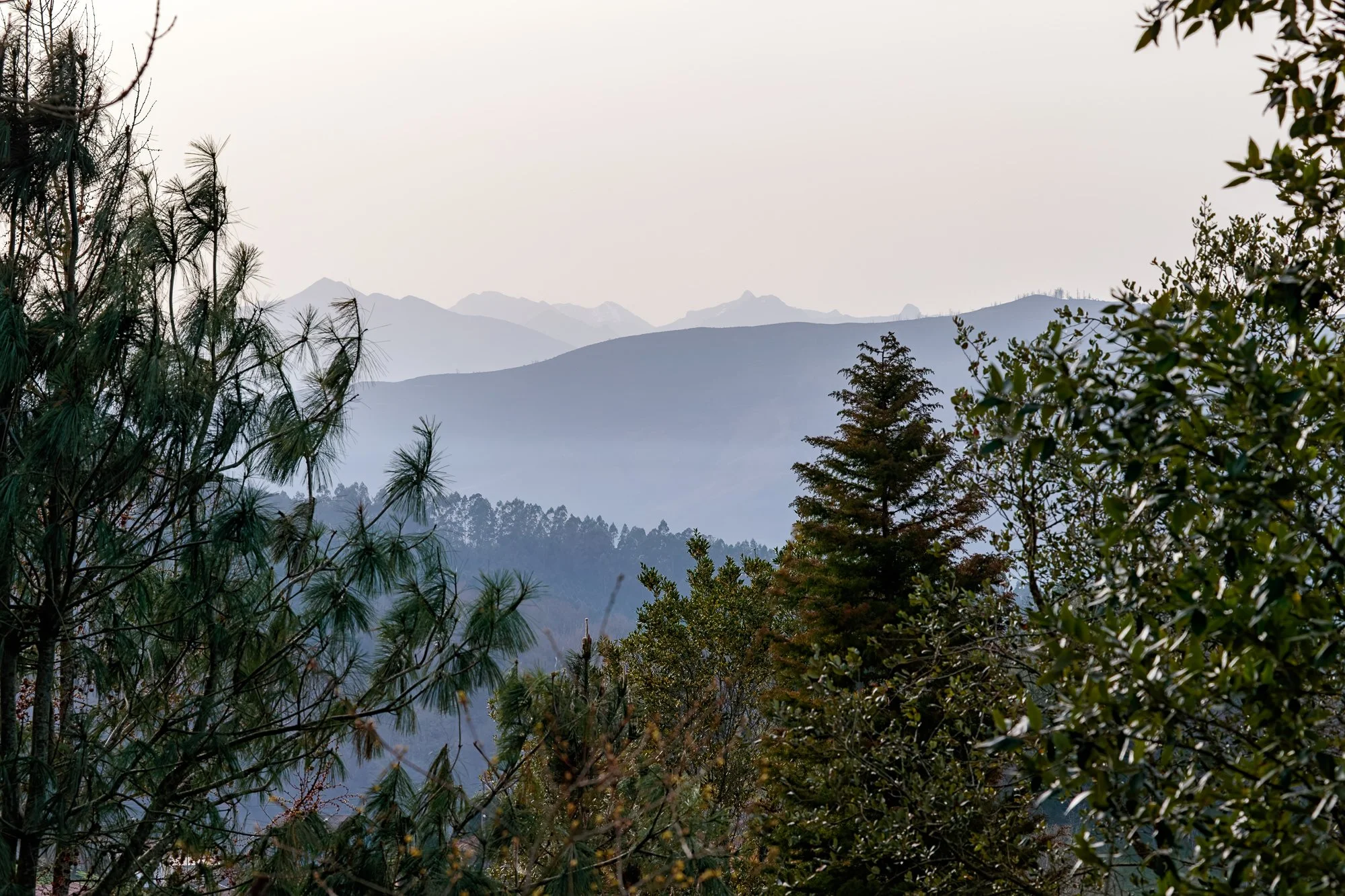
What’s good for the garden isn’t necessarily good for the gardener. I love steady rain as much as the next man gardening against the odds on a steep dry hillside in northern Spain. Particularly after the drought year of 2025. But two months of solid rain has left the borders water-logged, every grass path a treacherous mud-slide, and me chomping at the bit to meet the new season head-on.
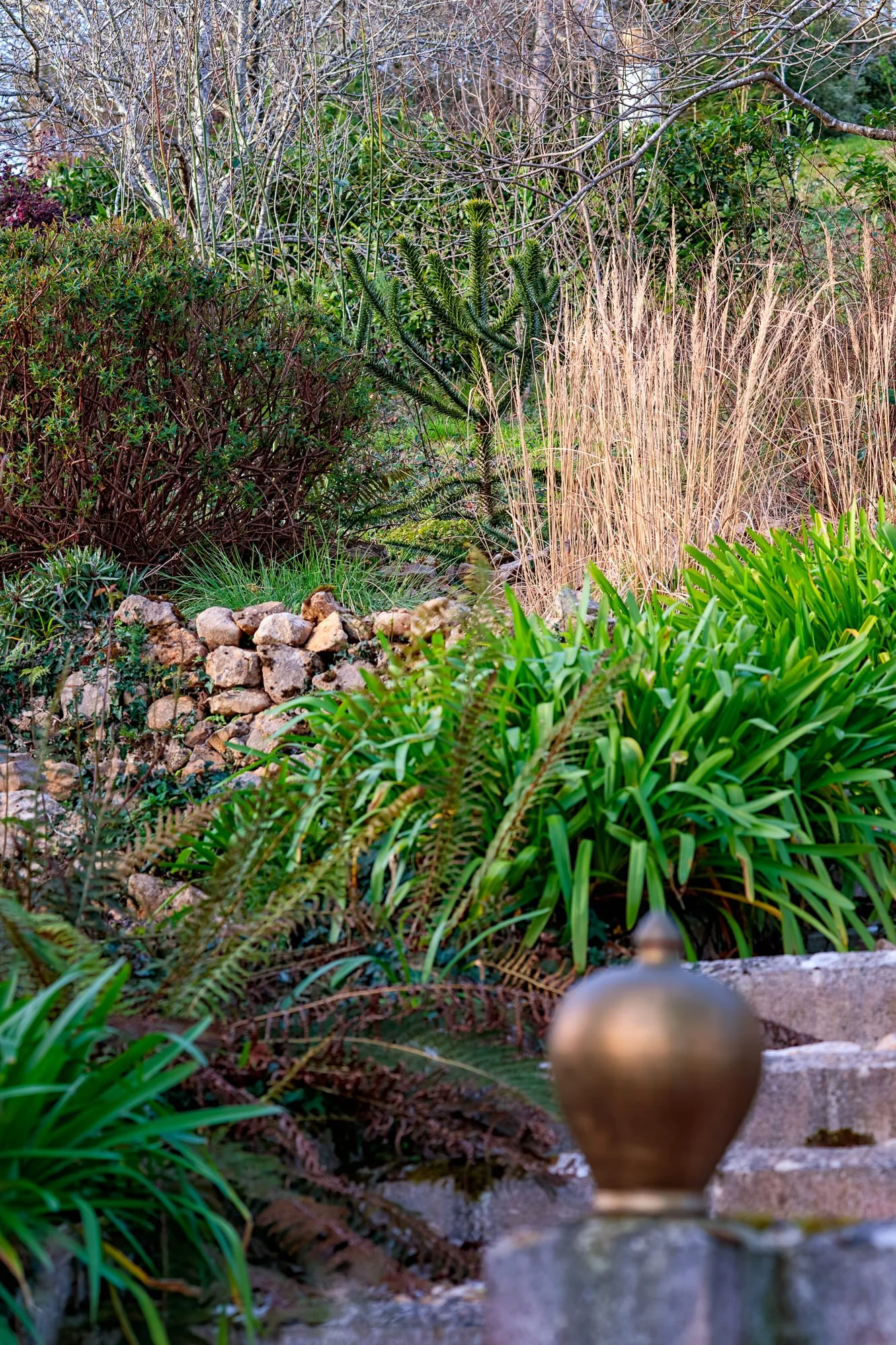
While the piano-playing has been coming along a treat, the relative lack of physical activity has left me battling early-onset middle-aged spread. The garden, meanwhile, has definitely hit its unruly teenage years, clinging to the same favourite unwashed t-shirt and dreaming of its first piercing or, heaven forbid, tattoo. A spot of firm parenting was in order.
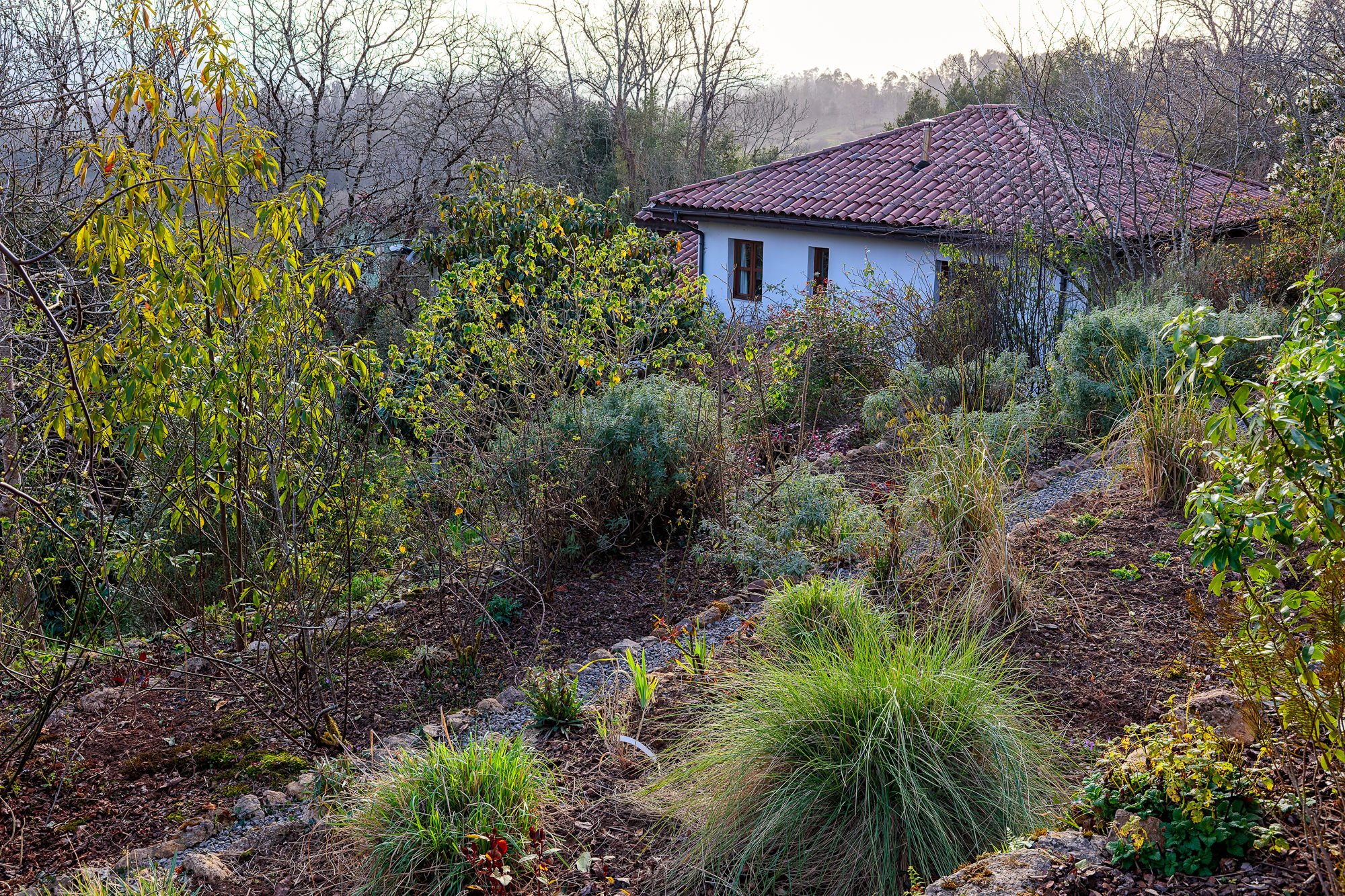
Every gardener lies somewhere on a continuum stretching between two extremes: the old-school soldier (trusty tweeds, oiled and sharpened tools, moustache regardless of sex), planning every attack with military precision, determined to subdue, if not defeat, the enemy in the field; and the hippified peacenik, permanently attired in rose-tinted spectacles and shapeless tie-dyed creations (again, regardless of sex) floating serenely through bramble-strewn meadows, trying to find a flat patch of weeds that won’t object to a yoga mat being unfurled.
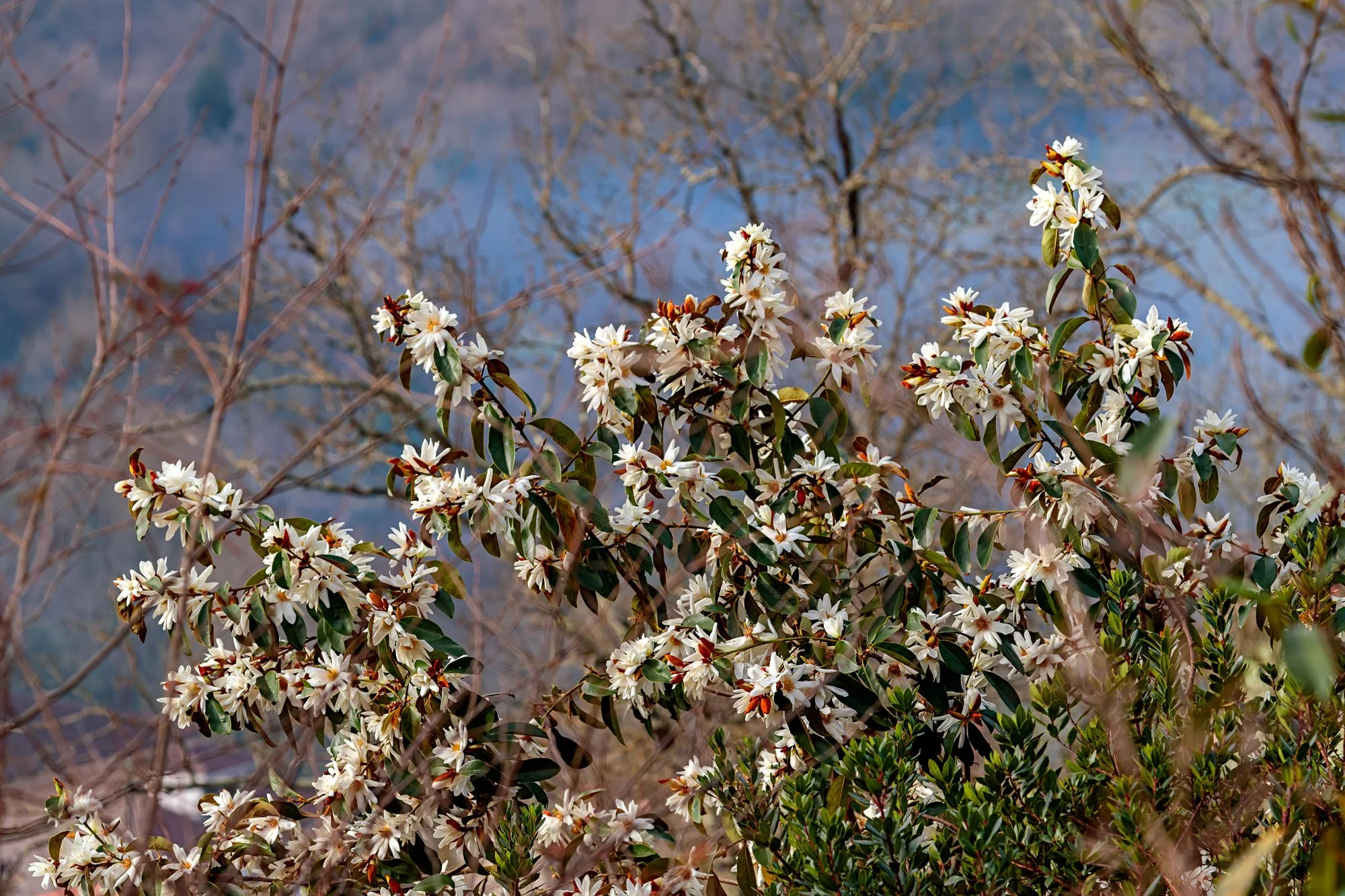
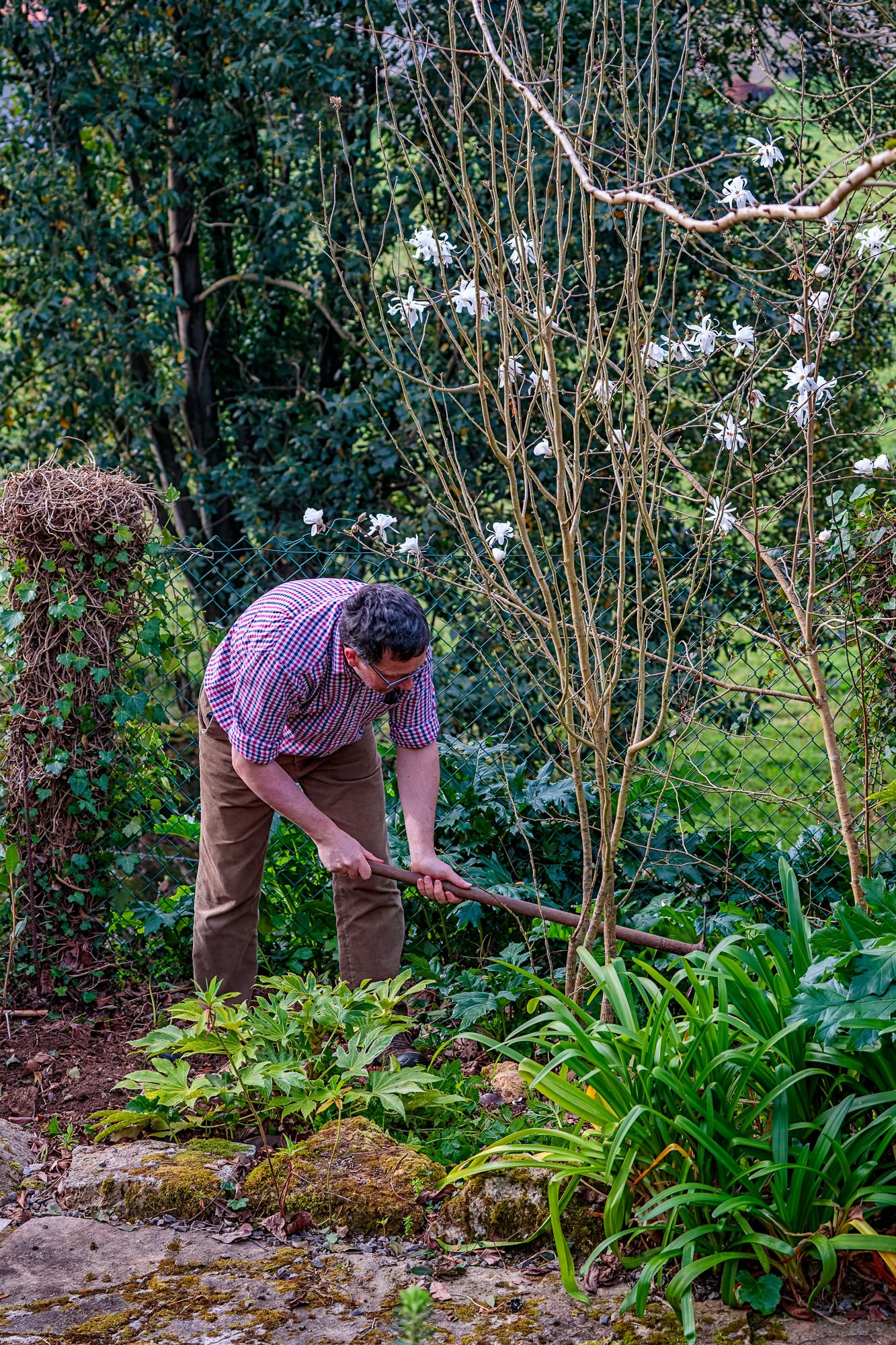
After months of giving free-rein to my inner hippy, it was time for the brigadier to lead a few carefully-planned sorties between downpours to lick the place into shape. Nothing drastic, you understand, just a case of showing these plants who’s boss while I’m still allowed and before the re-wilding johnnies finally achieve absolute cultural supremacy. The under-gardener/conscripted cannon-fodder was less keen, citing the risk of drizzle on his camera.
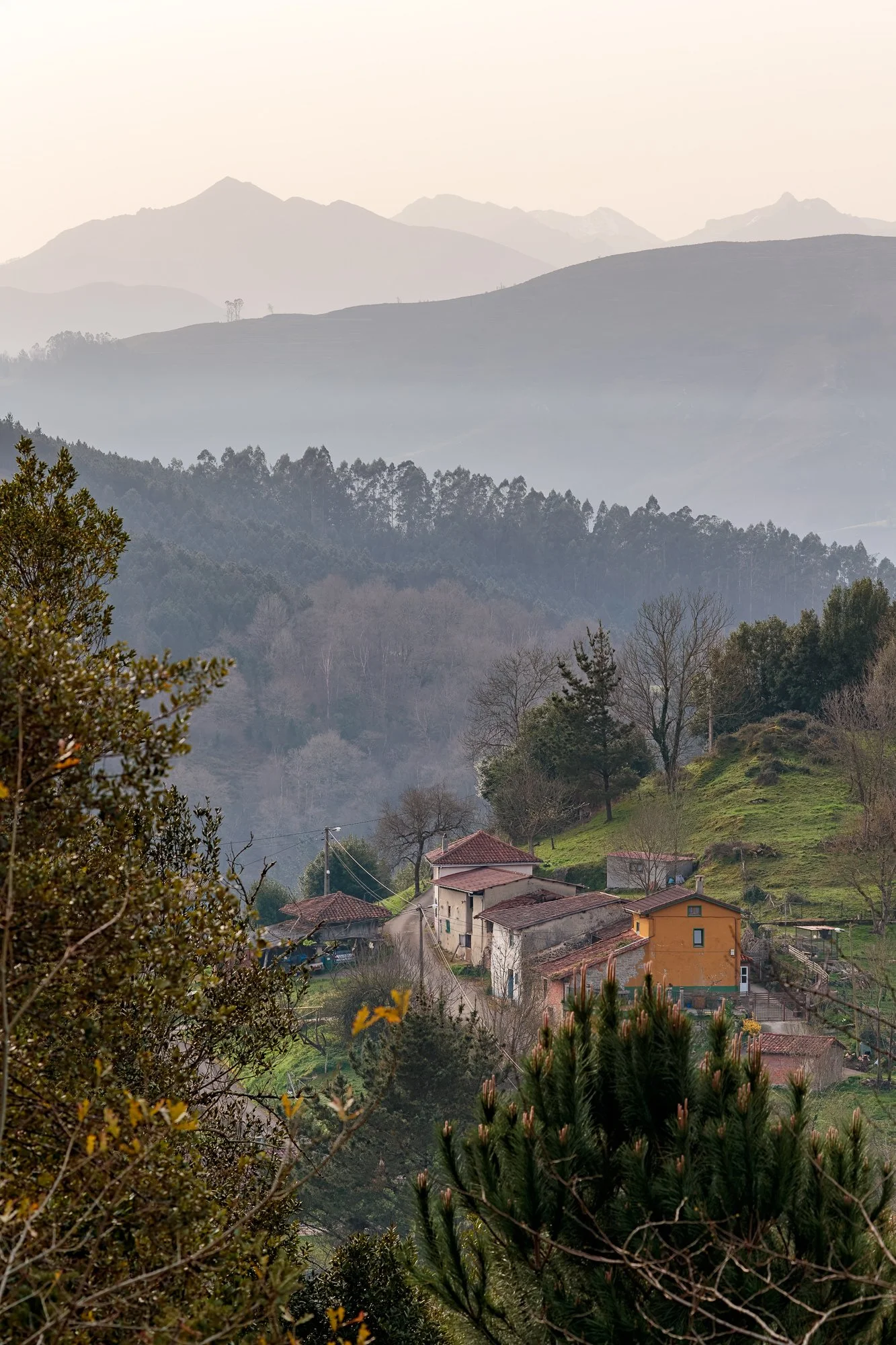
Dealing with the still-expanding rose collection is a two stage process – those in more formal areas are carefully pruned before Christmas. Wilder, blowsier specimens in the outer reaches are taught a lesson in January. Or February. Or even March but that’s definitely cutting it fine vis-à-vis new growth.
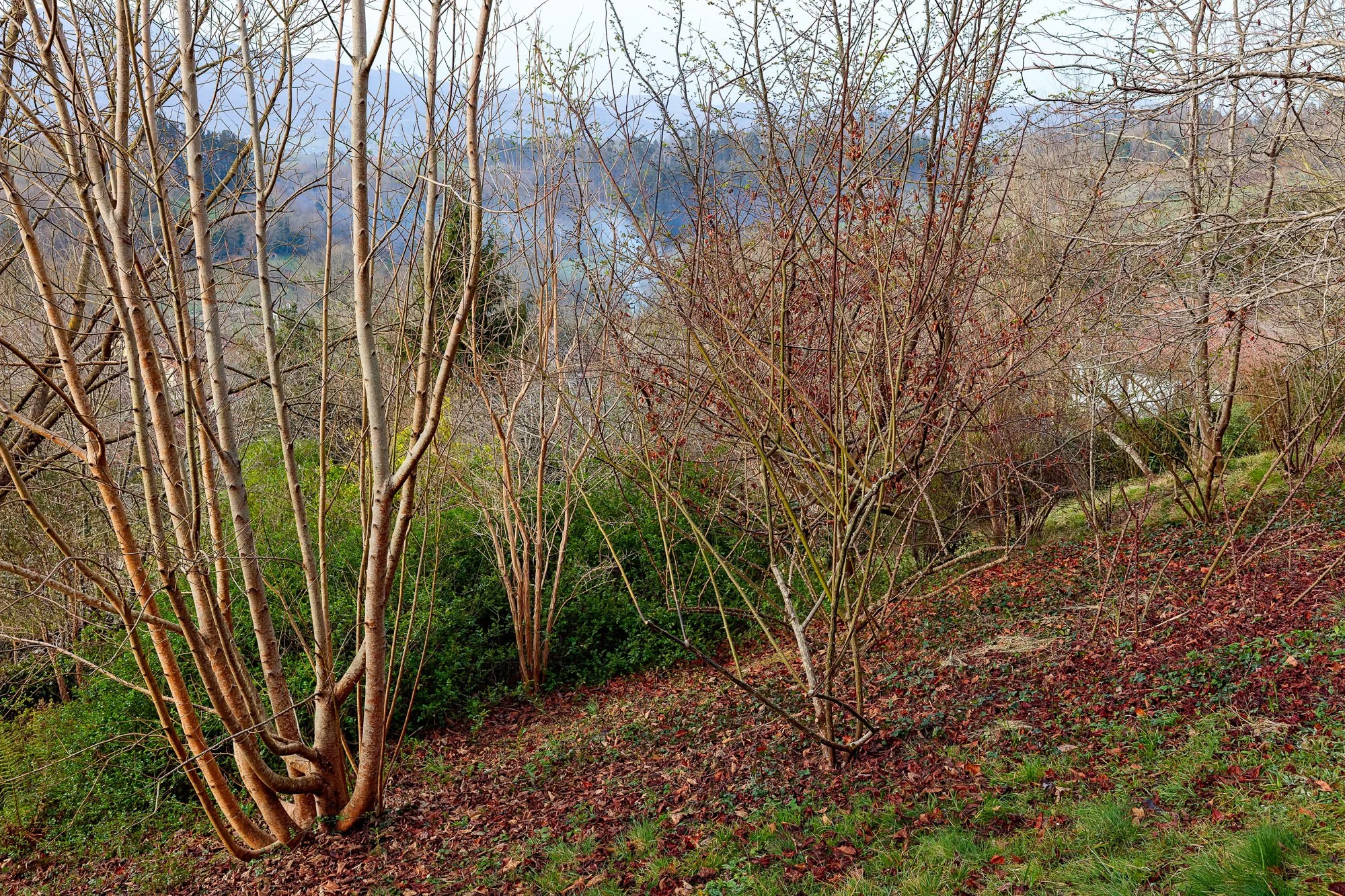
Rosa x odorata ‘Mutabilis’ was heaving itself into a handkerchief tree, R. ‘Pleine de Grâce’ was obscuring a Persian ironwood, and R. ‘Cerise Bouquet’ was just behaving badly along the Avenida, layering itself about with gay abandon (a regular occurrence on a hillside where horizontal branches, particularly those weighed down with flowers, end up touching the ground sooner or later). They are all absolute thugs here, so secateurs, loppers and even a pruning saw were all pressed into action.
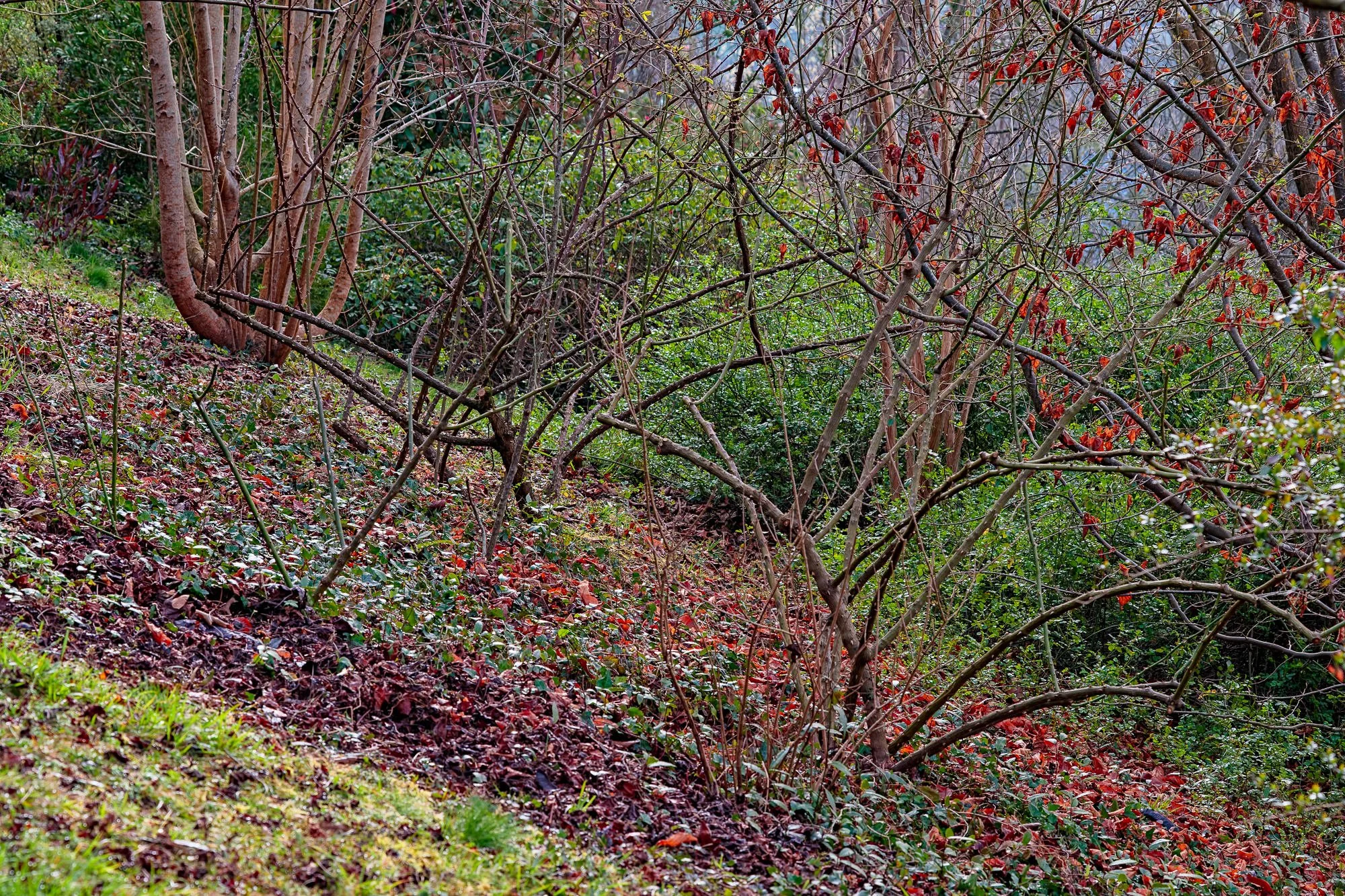
For the first few years, other shrubs are allowed to do their own thing. I rejoice when they manage to survive and, if they don’t, am relieved that I didn’t waste too much time on a lost cause or hasten their demise by interfering. But once their roots are down and they start to look less shop-bought up-tight and more relaxed, if not downright shaggy, it’s time to think about shaping them to meet my aesthetic needs while respecting their natural forms.
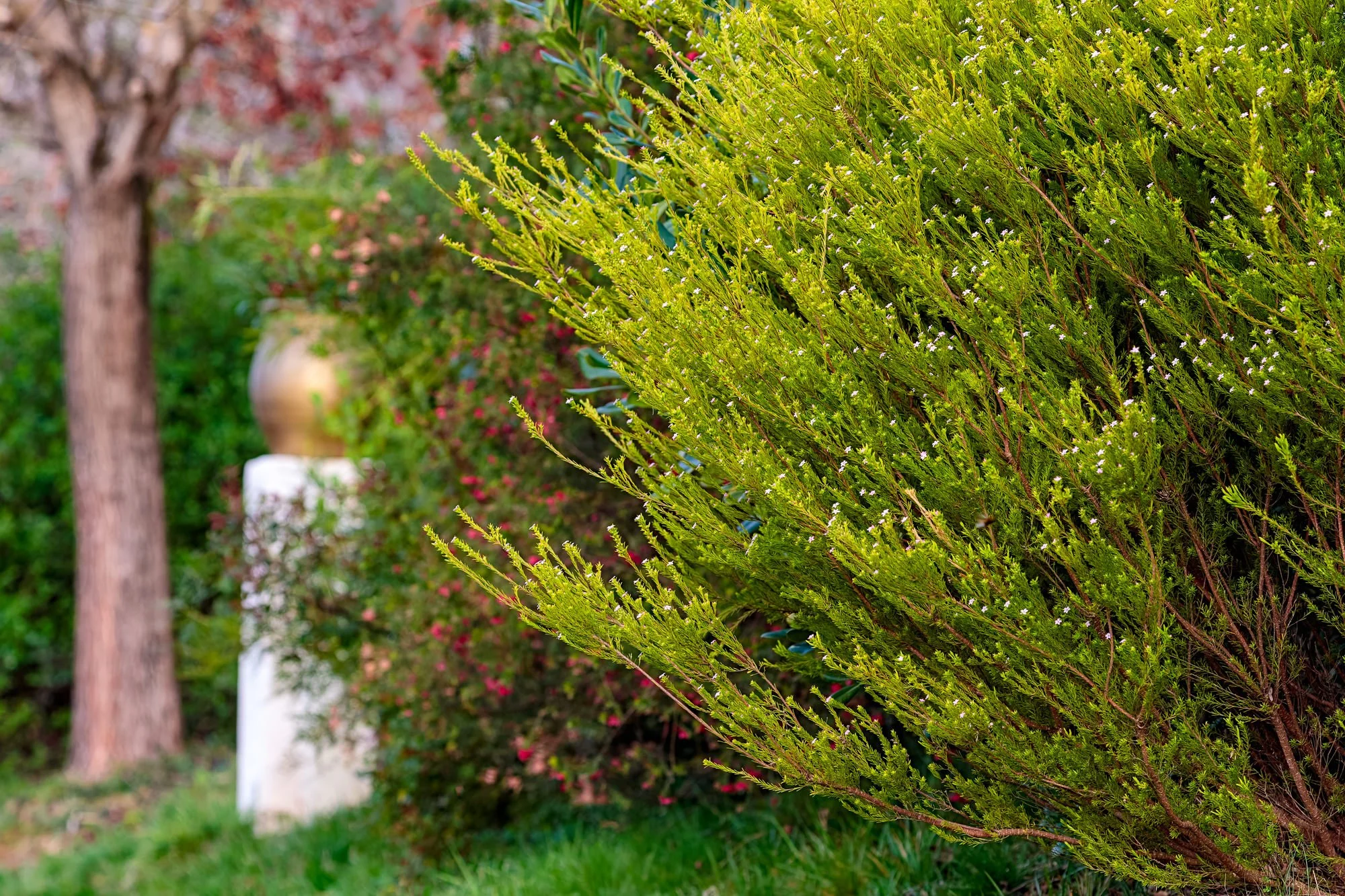
After all, the last thing I want is a group of ‘meatballed’ oddities reminiscent of an Ikea canteen’s finest. Abelias, pittosporums, smoke bushes, hollies, hydrangeas all received attention. This past year, more than previous ones, has taught me that it’s crucial to have a contrast between tightly controlled shapes and looser ones – too much green fuzziness just becomes a blur without a few sharp lines. I’ve been spurred on by the success of various pieces of bay topiary dotted around the place – for once I remembered to trim them at the right time (end of October) to have crisp outlines right through the winter.
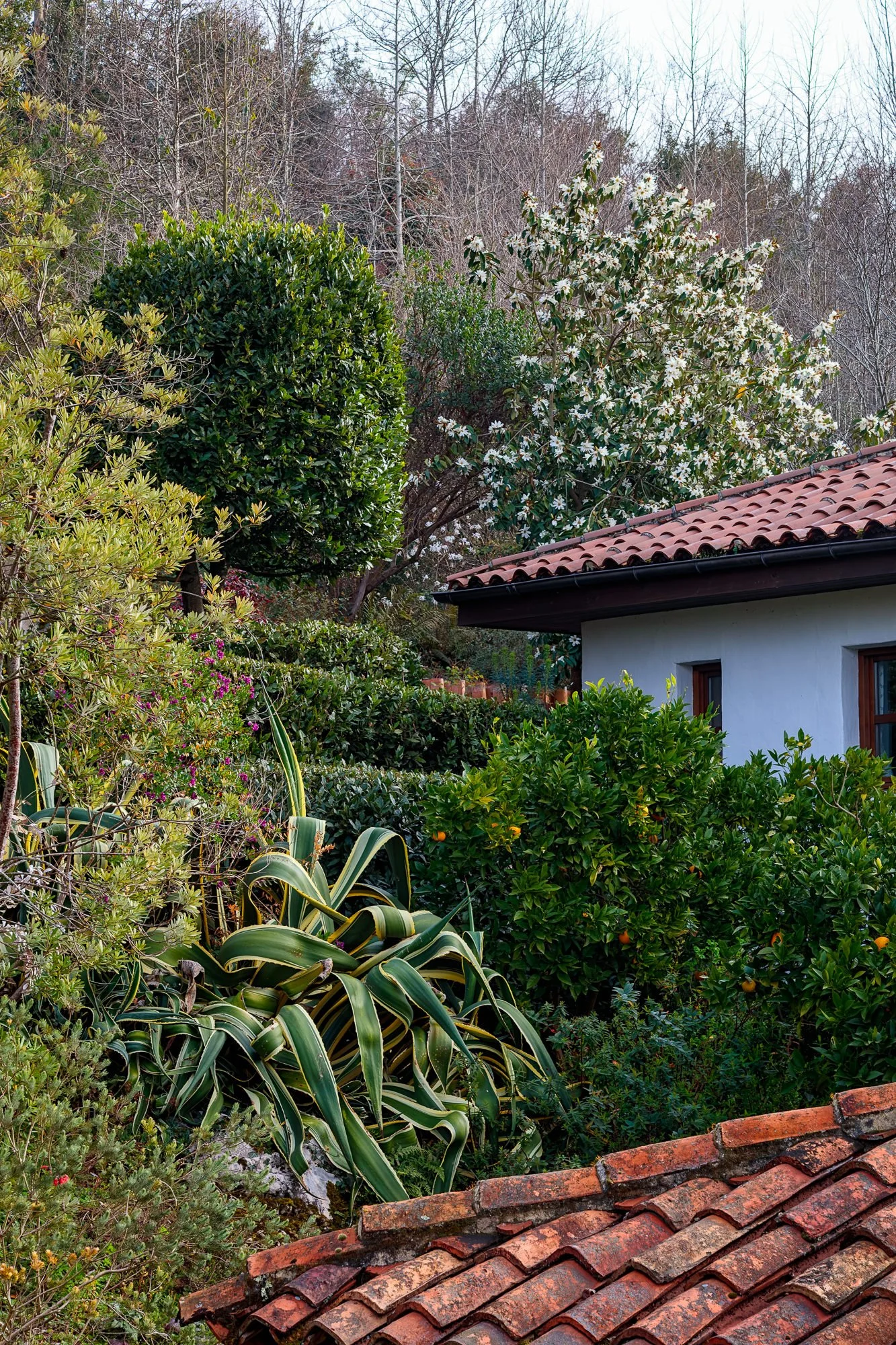
When you’re hauling masses of material to the compost heap, the last thing you want to have to do is duck and dive under low-hanging branches. Crown-lifting is one of the most satisfying jobs for winter – trees suddenly look more mature, vistas are opened up, access is improved, more bark is exposed. My approach is little and often – catch 'em while they’re young and no more than one rung of branches a year from any tree.
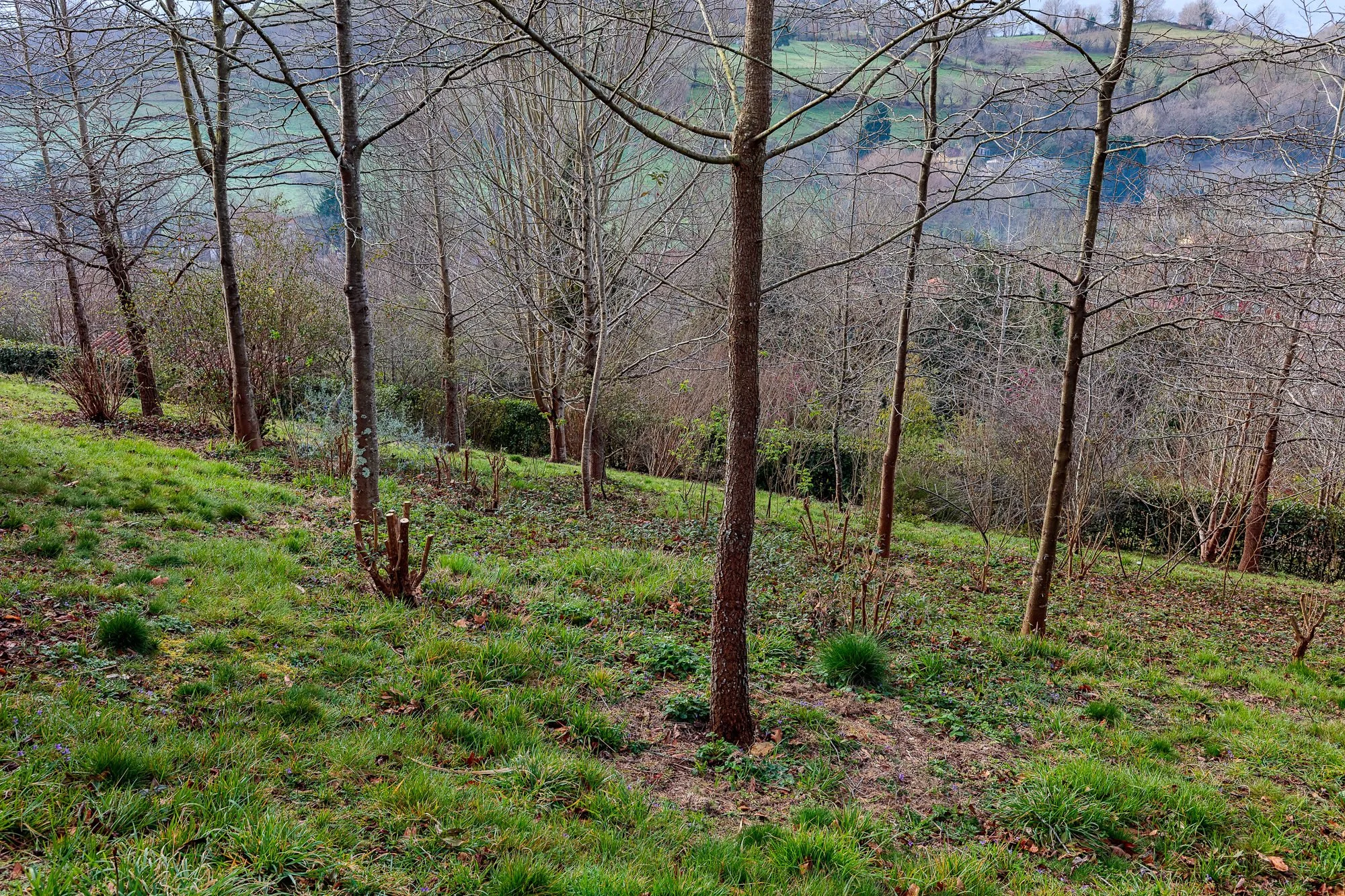
The sweetgums on the Avenida always need a little intervention (I always forget how much branches droop with the weight of leaves, never mind flowers or fruit), as do the oaks, honey locusts (no-one appreciates a thorn at eye-level), tulip trees, redwoods – they’re all shooting up and out at a crazy rate. Some judicious pruning helps them look more statuesque, less haystack-ish. And this year, I finally got round to tackling the Chilean myrtles (Luma apiculata) in the orchard, a reward for them coping so brilliantly and unexpectedly with last year’s drought. Here’s hoping they continue to thrive with fewer branches.
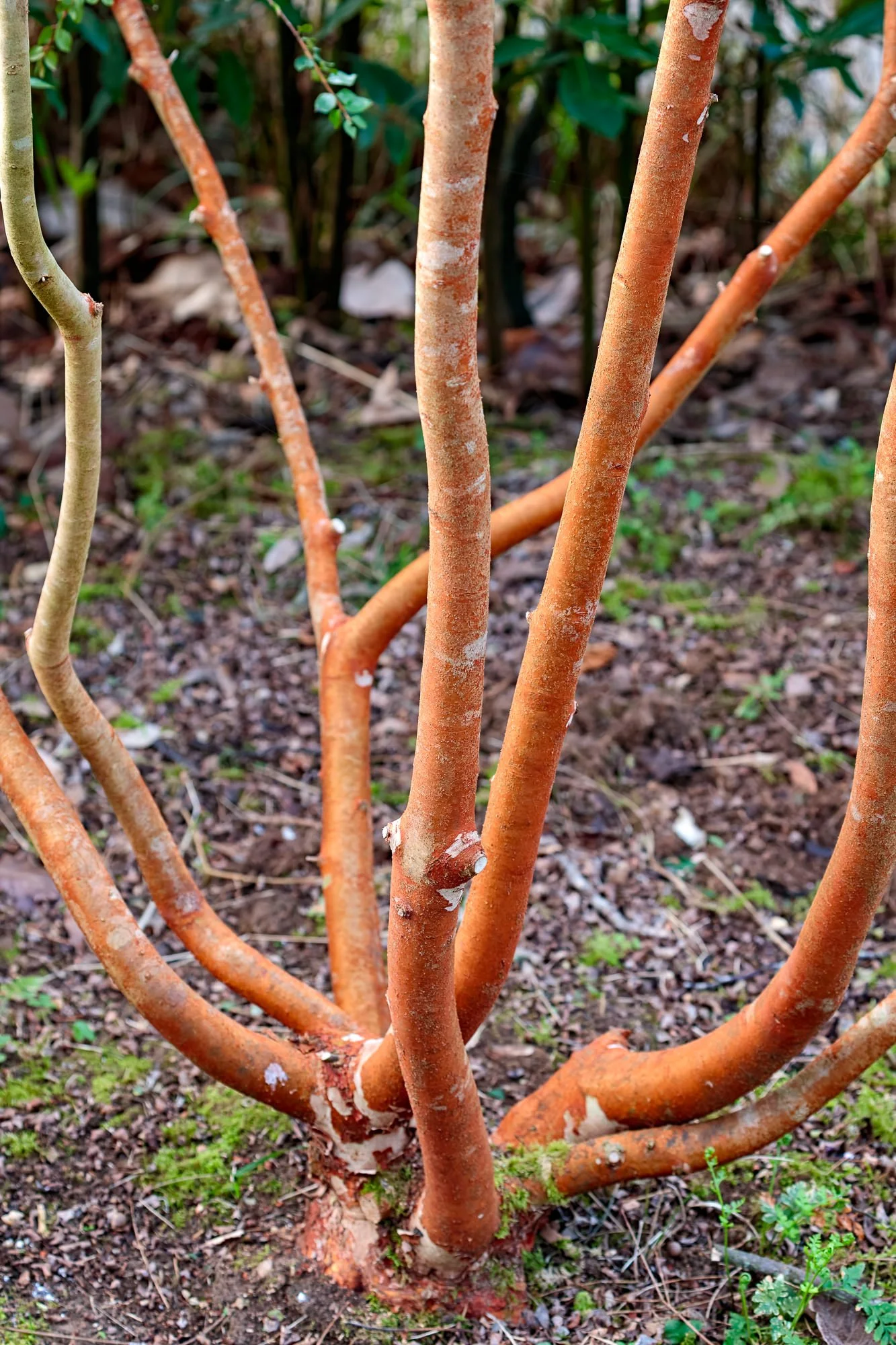
Even though I declared planting season over in January, I might have been somewhat premature. After all, you can’t keep a good plantaholic down, or stop him from expanding the repertoire even further. I mostly stuck to my rule of no new trees or shrubs in the new year (what’s the odd camellia between friends?), but no frosts and copious rainfall meant I couldn’t resist banging in more, many more, herbaceous beauties. Of course, dormant perennials don’t make for the most photogenic new additions to the garden (despite the best efforts of my under-gardener-cum-photographer).
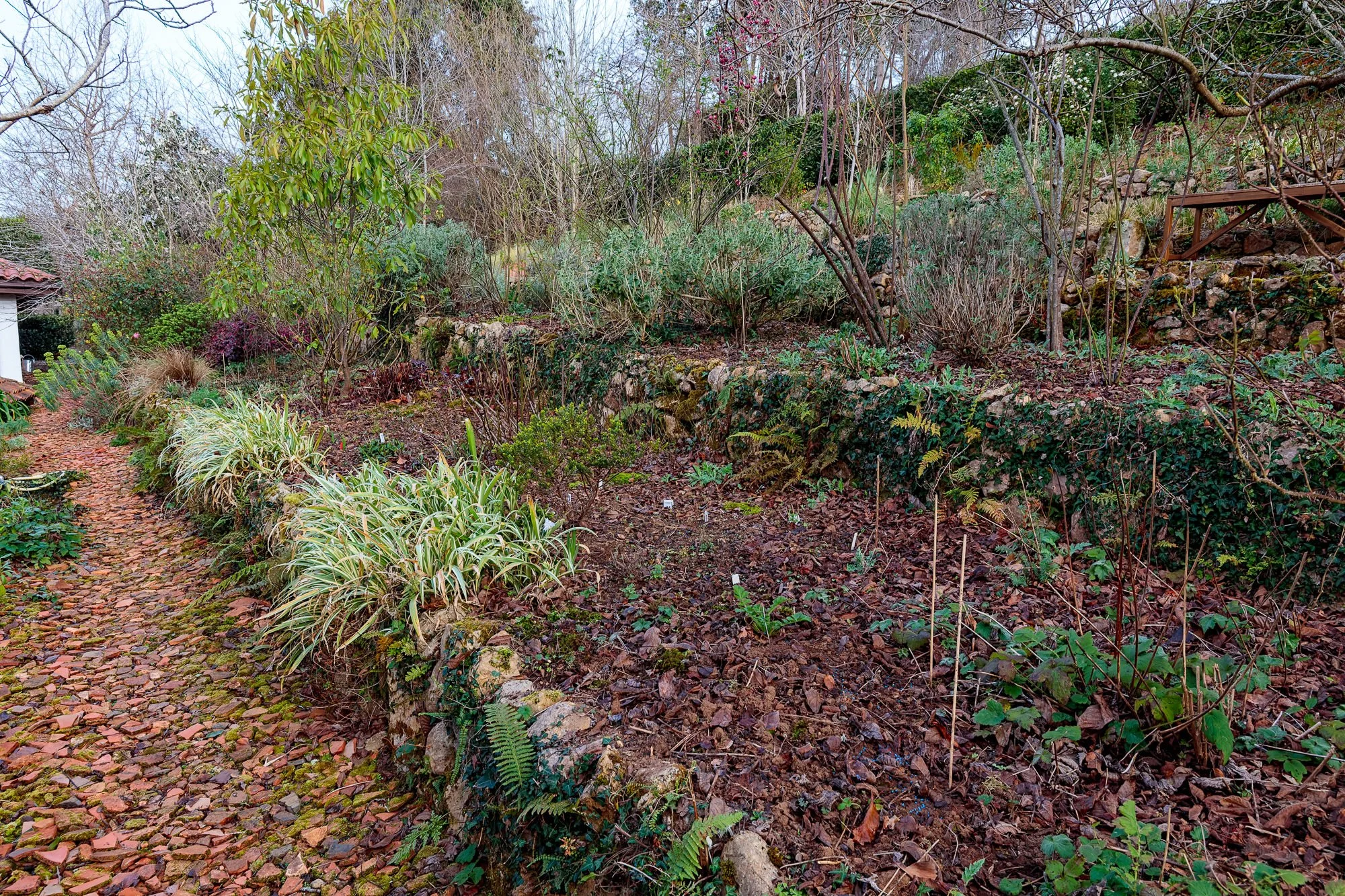
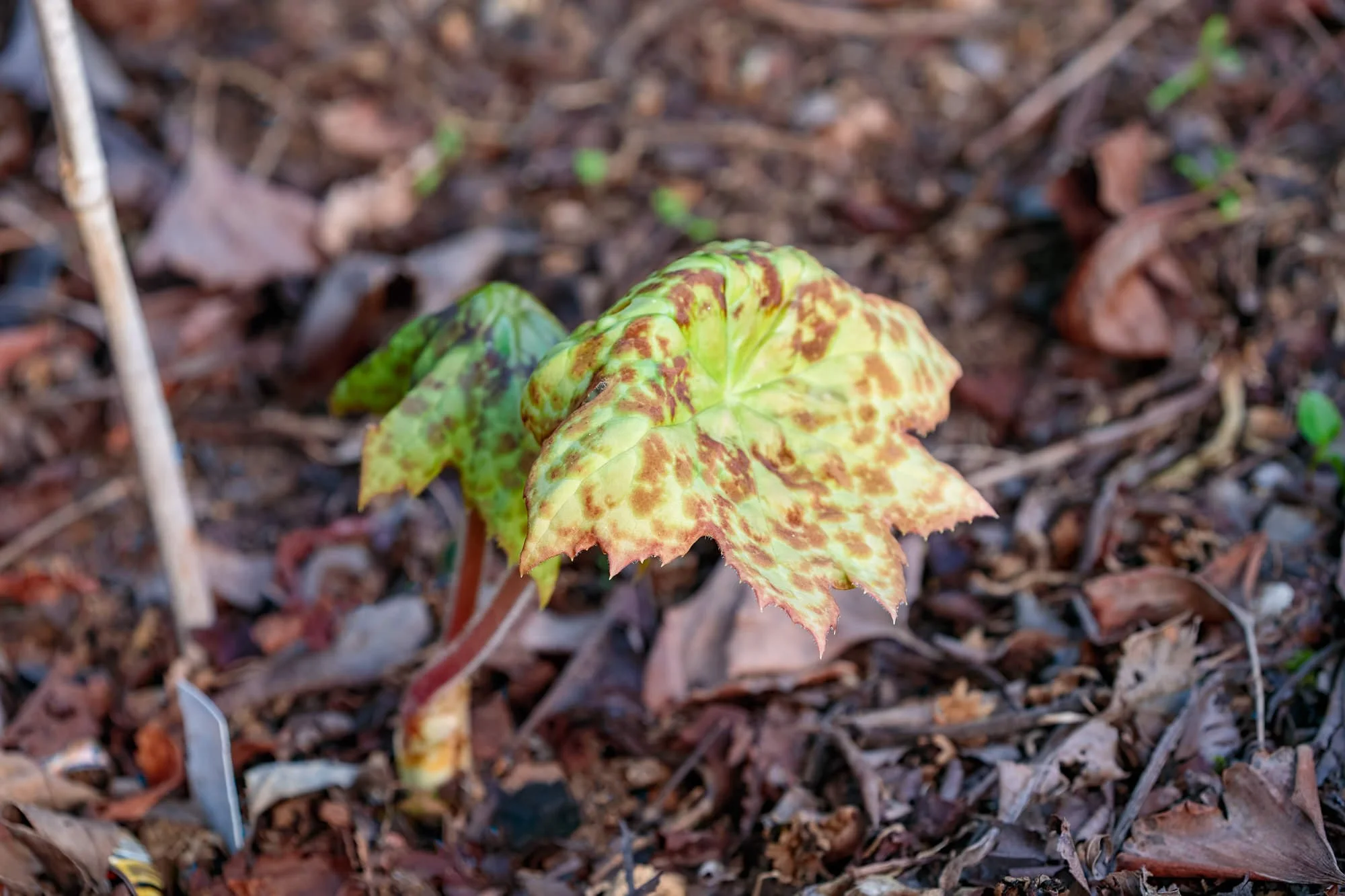
In fact, they’re almost invisible, resulting in the borders looking like they’re playing host to an invasion of leafless running bamboo or miniature plastic gravestones where I’ve marked the new arrivals to avoid any mishaps in the coming months. Some have earned a place merely because I’ve never grown them before and never shy from a challenge (Peltoboykinia watanabei, anyone?), others have been added to flesh out a collection (epimediums, hemerocallis, dahlias) and others because I just got carried away (tradescantias – do they like me? do I even like them?).
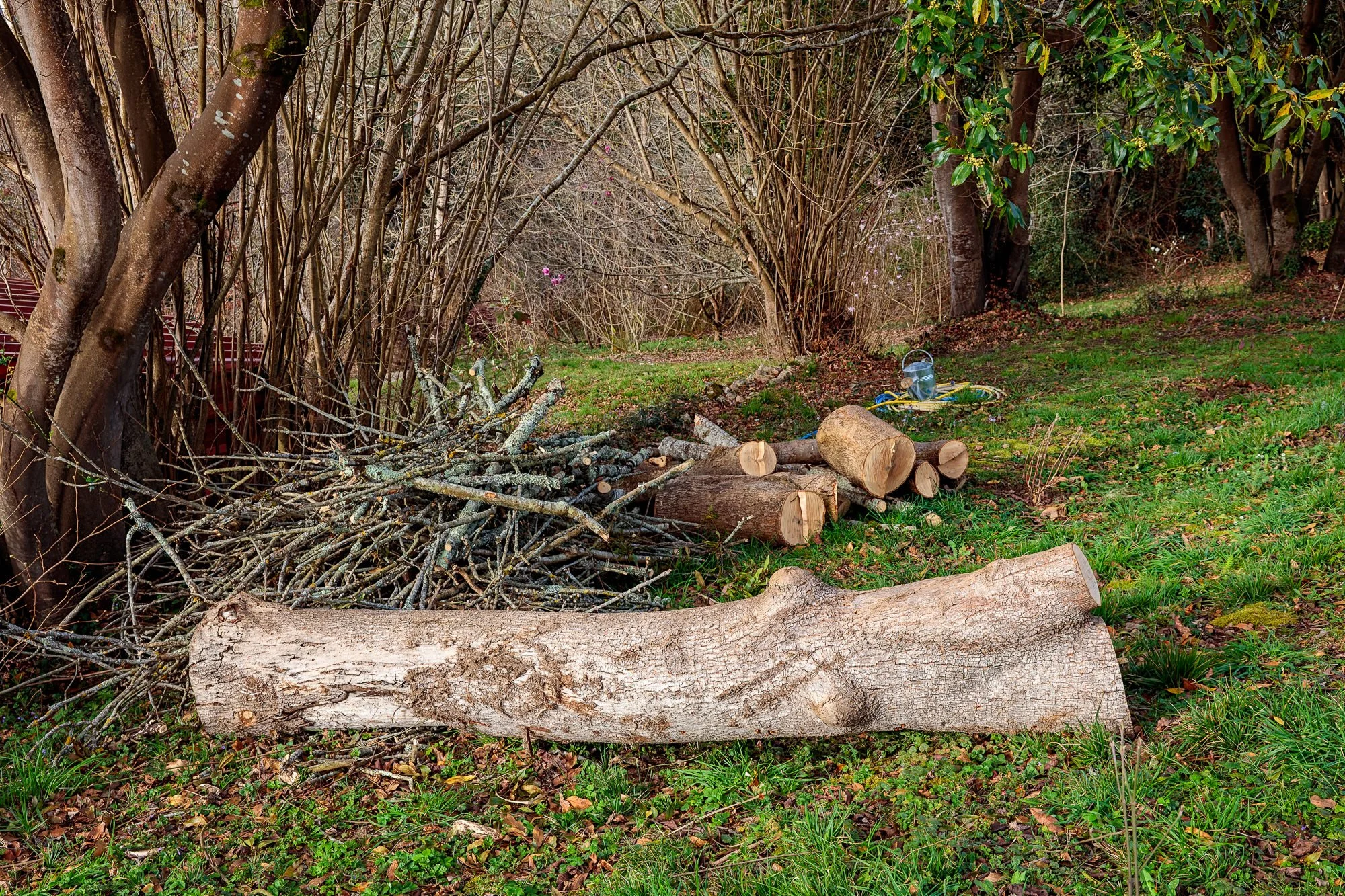
And for once, I enlisted the professionals. I’ll turn my hand to most things but felling two dead/dying trees, both 50 feet tall, one hanging over a sitting area, the other a power line, is probably beyond me. I was briefly tempted to get a friendly neighbour with a tractor, a chainsaw and a long rope to have a crack at the job but thought twice. Discretion being the better part of valour, and all that.
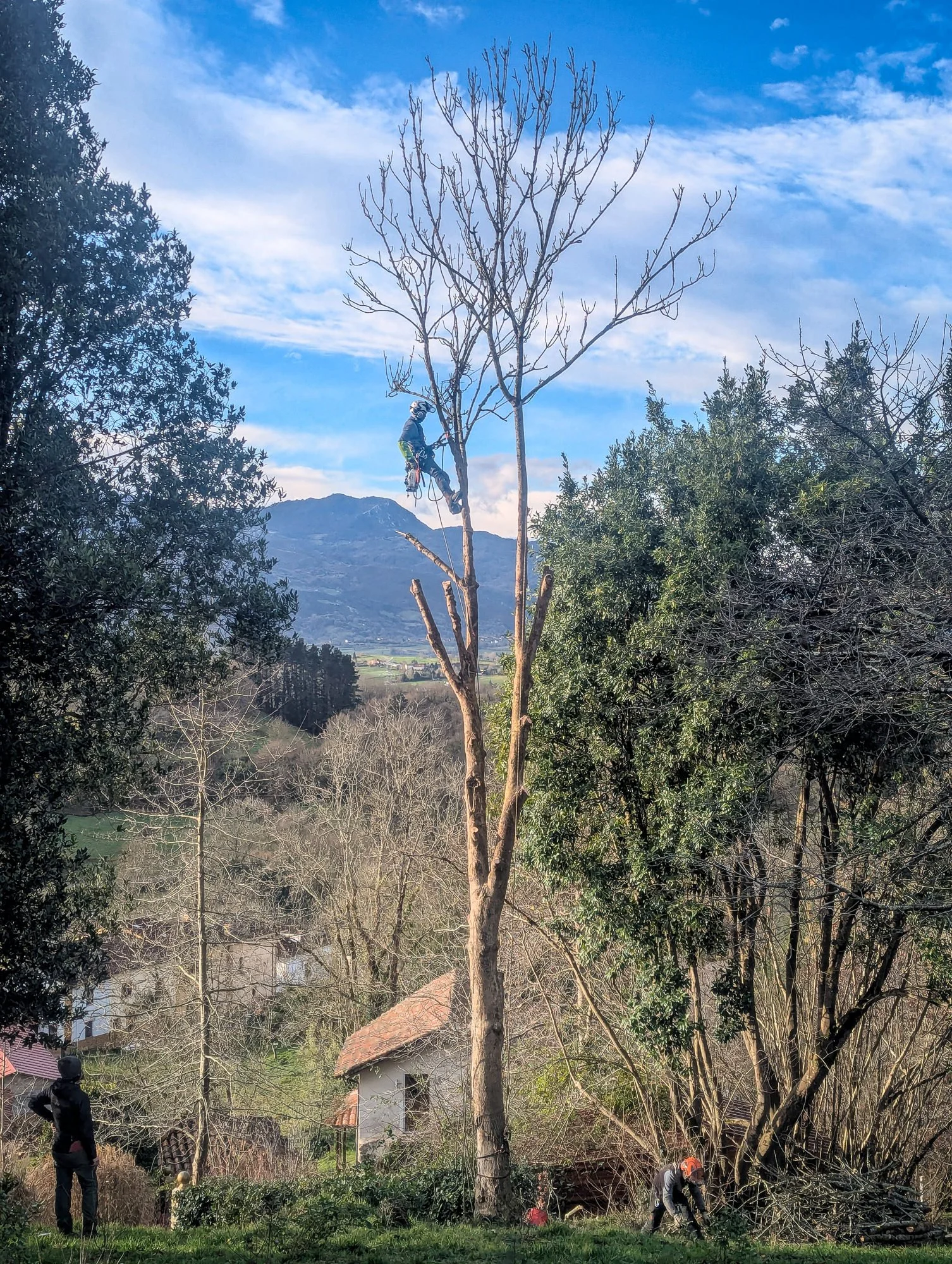
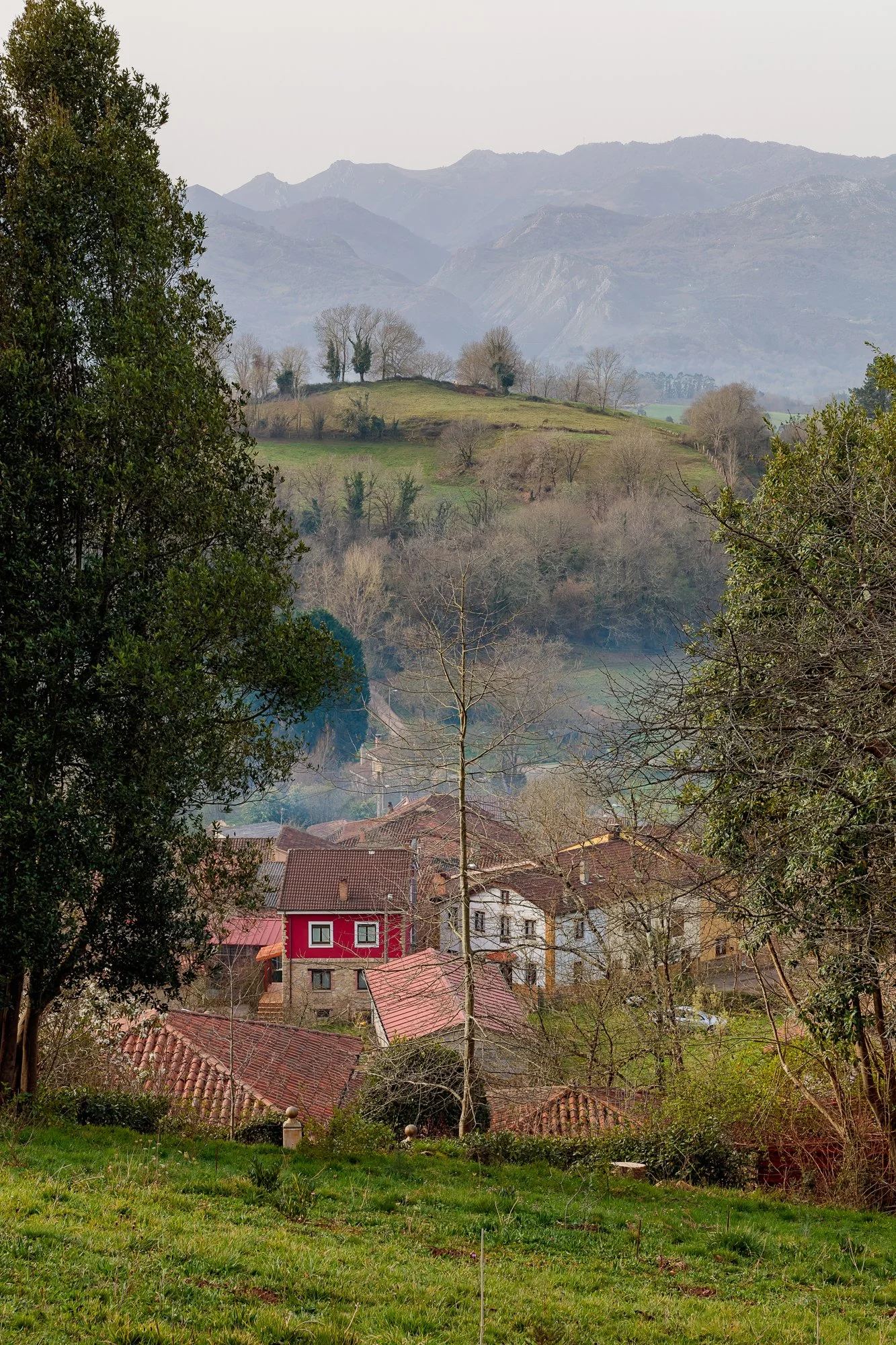
Not only have views been opened up, potential hazards been removed and next year’s central heating been taken care of, but I got to watch others working in the garden for a change. There might even be a repeat performance soon, as recent storms have done their darnedest to destroy the shelter belt on the far edge of the gully. Such is gardening life.
Seeds have been sown, wandering acanthus has been mercilessly hacked to knock it back (I’m not foolish enough to think I can eliminate it) and the exhausted but in no way demoralised troops have been withdrawn for a well-earned spot of R&R. A tactical, temporary retreat to prepare for the upcoming spring offensive.