Lur Garden
Kaleidoscopic colour in a sleepy hollow
6 June 2026
By: James Lennox
British gardeners have gifted the world two great stylistic innovations. In first place is undoubtedly the eighteenth century Brownian landscape. Often imitated but never bettered, it's occasionally scorned by those who can't see the genius of its re-imagining of the English countryside as an aesthetic object pared back to the bare essentials – rounded hills, grass, water and trees. Running it a close second, and lending itself more readily to modern-day budgets and spatial constraints, is the concept of a garden made up of separate 'rooms'.
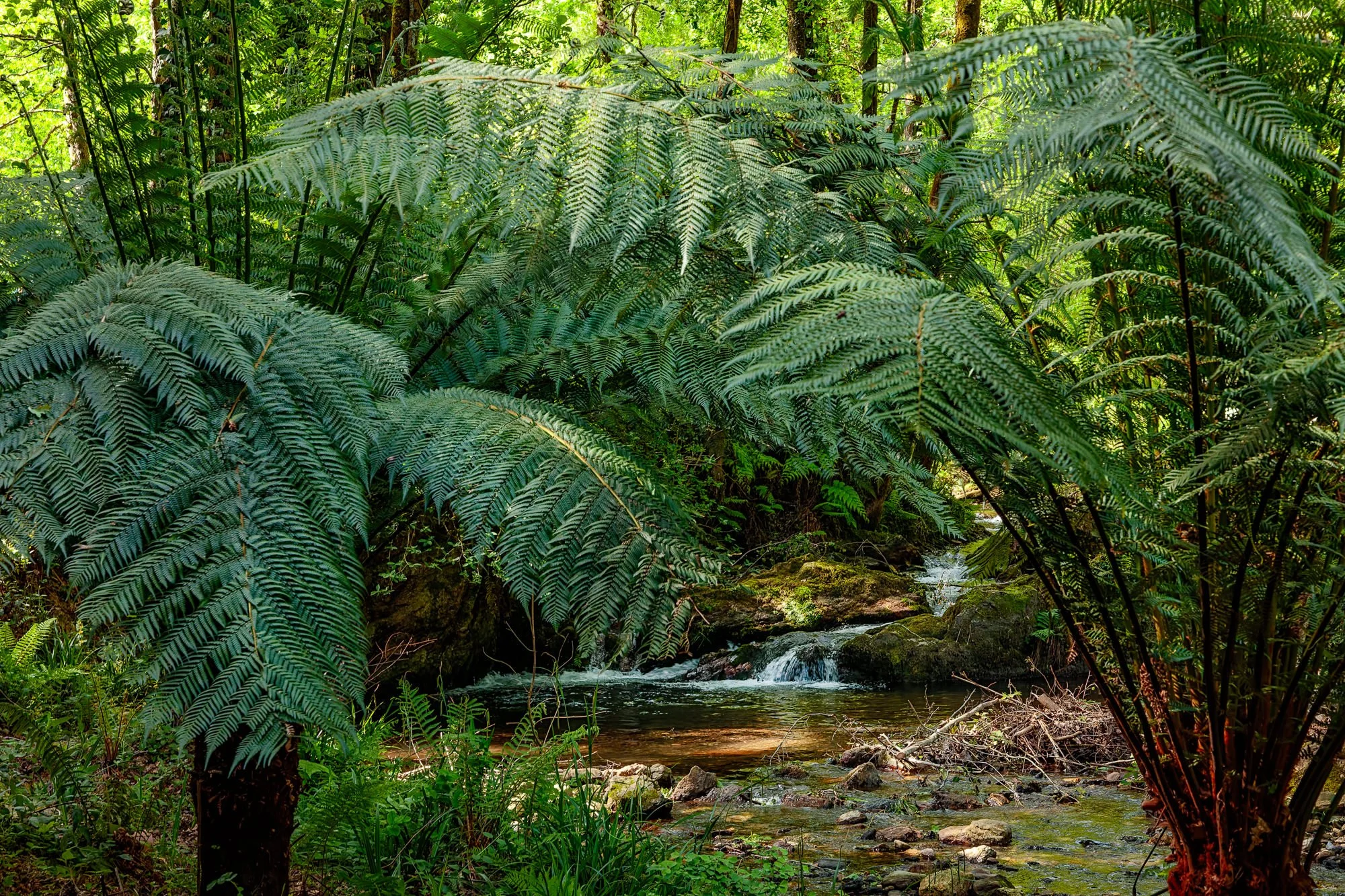
And of all the places I least expected to find an evocation of Hidcote, Sissinghurst et al., a secluded, rain-blessed valley in the Basque Country would have been top of the list. The brainchild of Iñigo Segurola, a professional gardener, designer and TV presenter, a series of distinct 'rooms' has been carved out of a valley bottom ringed by verdant hills and alongside a rushing stream that greets the visitor with a hint of the planting that lies within. Tree ferns are something of an obsession here, perfectly at home in this permanently damp, sheltered spot.
In a mere 5 acres of flat ground, Segurola has played with colour-themed spaces (red, white and yellow), genus-specific areas (bamboo, ferns, hydrangeas) and different habitats (wetlands, meadows). So far, so unexceptional. After all, every Home Counties matron worth her salt has had a stab at a White Garden dedicated to dear Vita's memory.
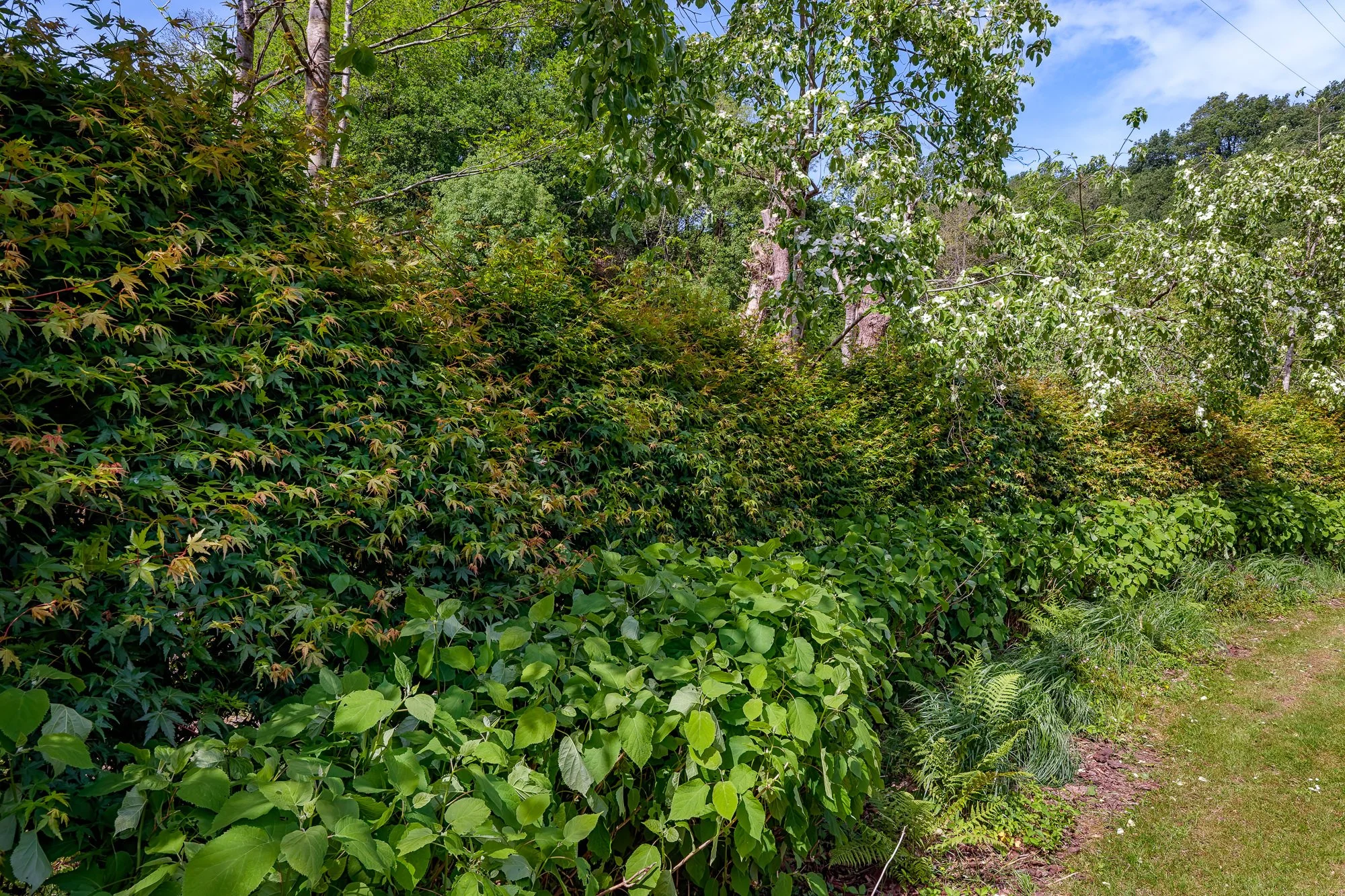
Crucially, though, concepts that might seem tired, even clichéd in an English context suddenly look fresh and new under a foreign sky, taken out of context and far removed from hints of the Yellow Book and a cup of tea for charity. Taking a traditional notion (the garden 'room'), extracting it from its usual milieu and then re-working it from a perspective steeped in a different gardening culture can clearly work wonders. Especially if hedges aren't the proto-typical yew and box, but the rather more inventive Japanese maple. Sacrilege to some, playful reinvention to others.
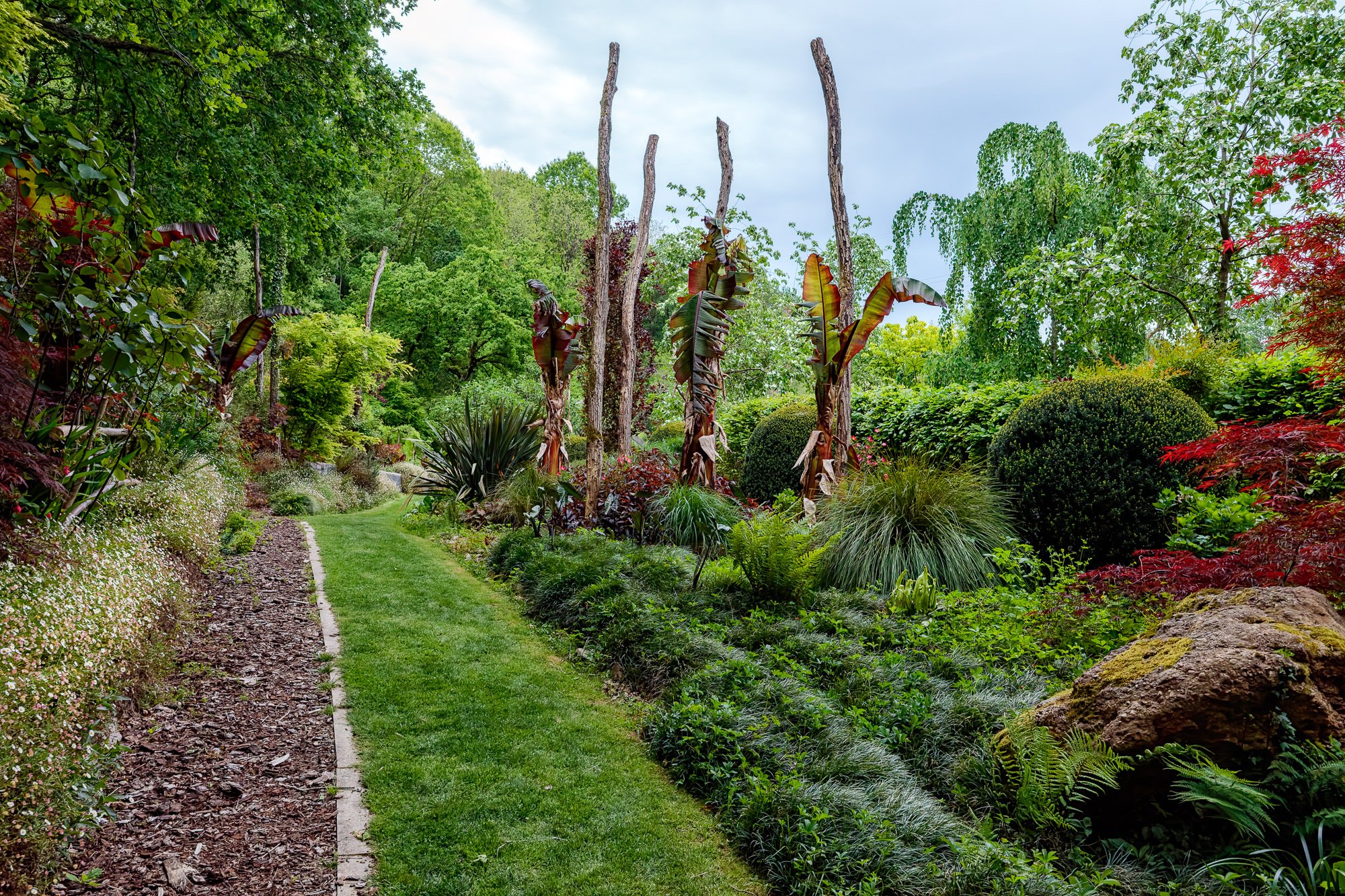
Part of the appeal of this garden to an English visitor must be the cognitive dissonance generated by a familiar concept being interpreted in a novel way. Here, it's the unconventional planting that forces you to look anew at the very idea of, for example, a red border. Where Hidcote relies on dahlias, crocosmia, cotinus and berberis for its ruddy glow, the Red Garden here lets Ensete ventricosum 'Maurelii'and Persicaria microcephala 'Red Dragon' do the heavy lifting. The central grass walkway might be the same, but the planting either side is radically different.
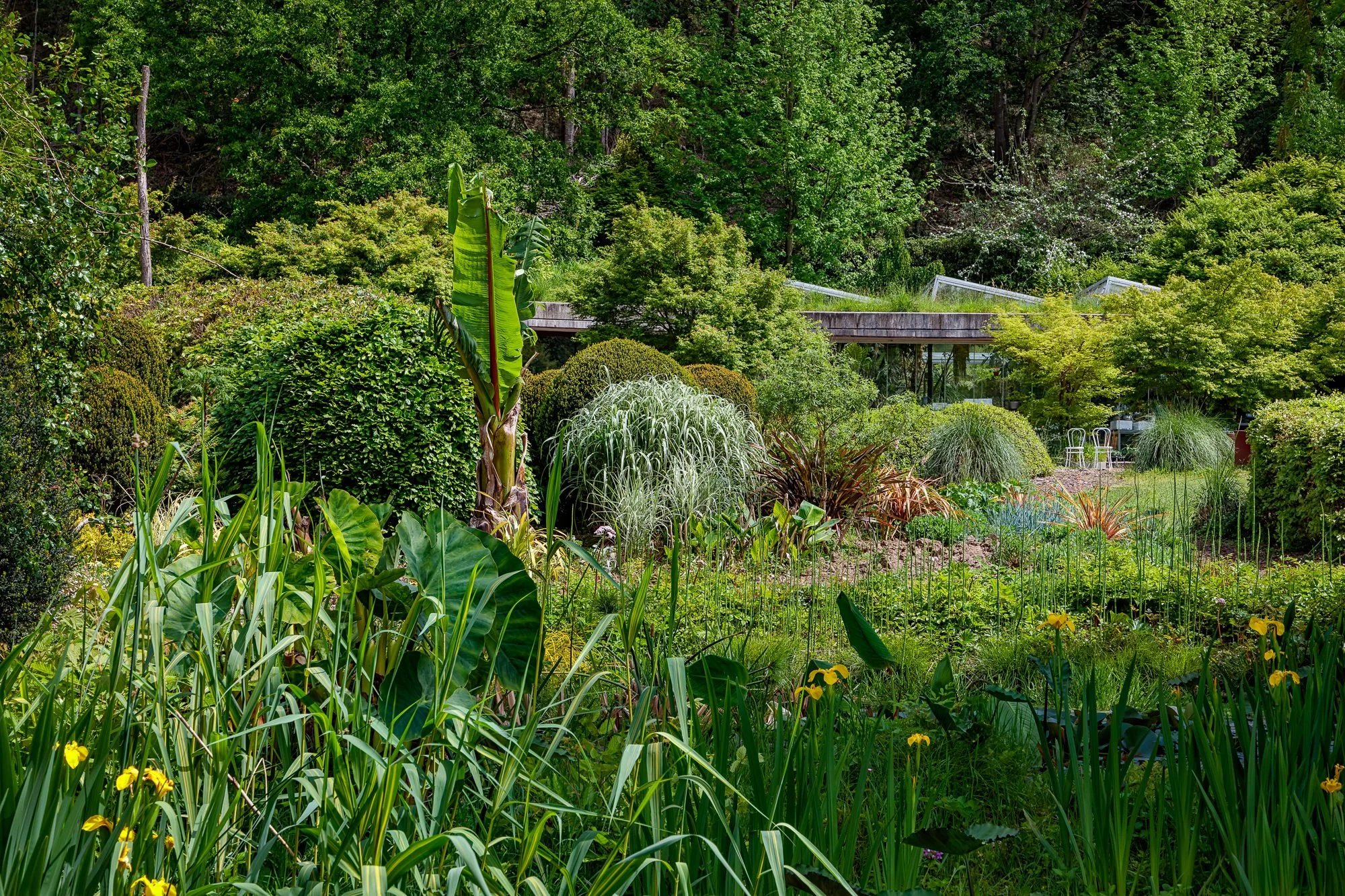
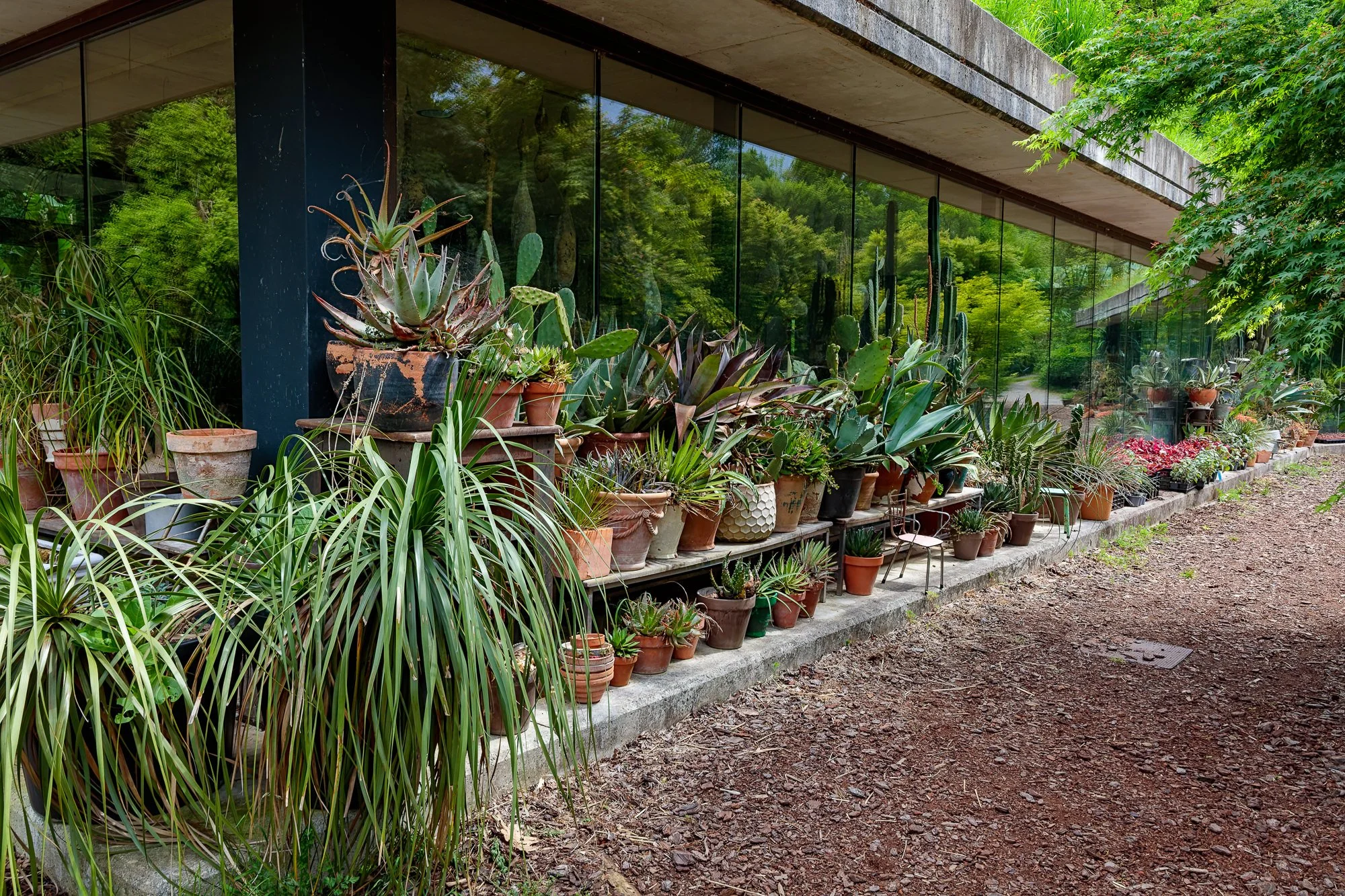
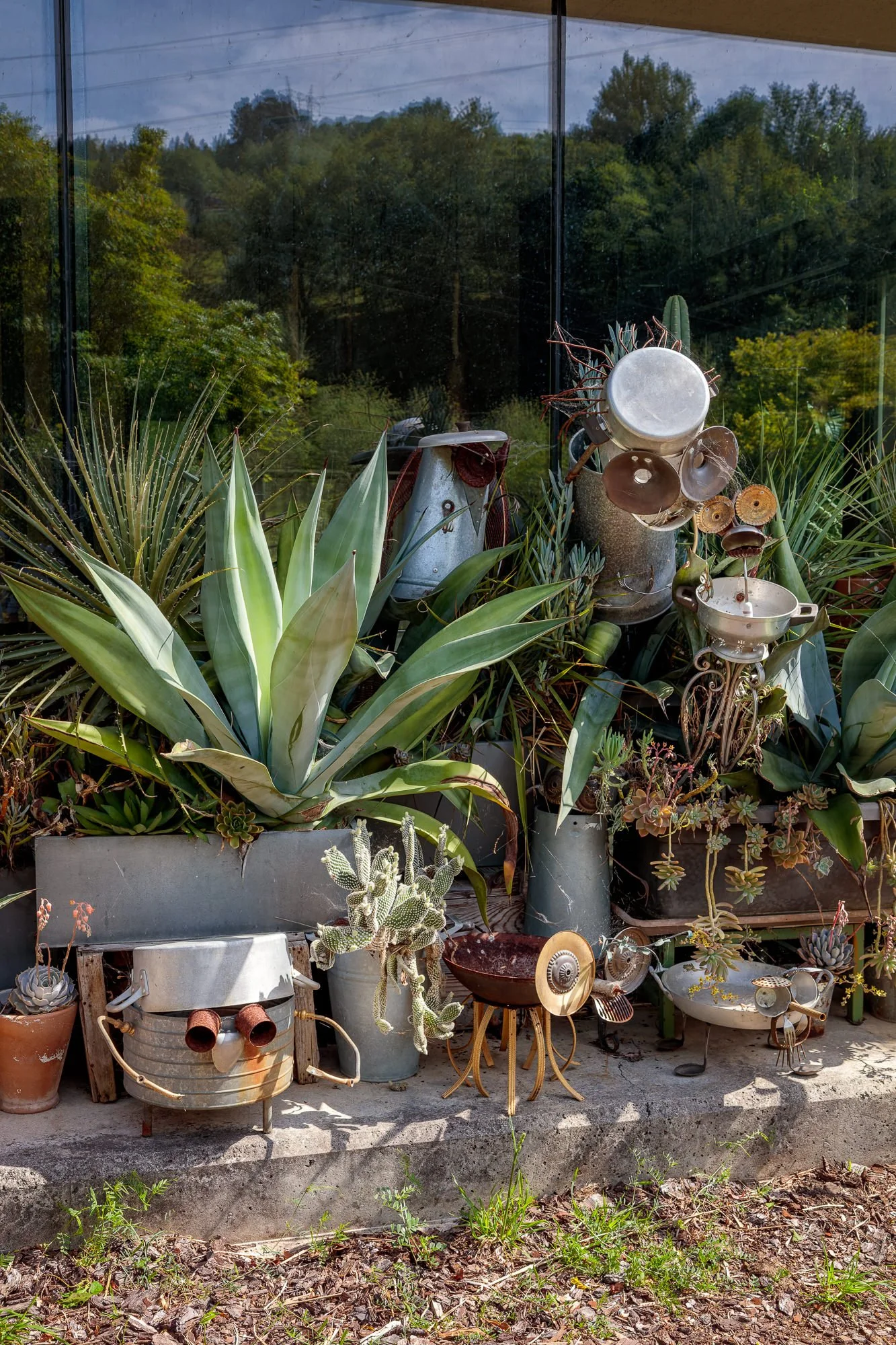
Hidcote's border culminates in twin pavilions. Here, the Red Garden leads to the striking angularity of the owner's neo-brutalist concrete and glass studio-cum-home. And if visitors needed a reminder that this is a private space, the collection of cacti, succulents and scrap metal act as eye-catching defence mechanisms. Again, another subversion, this time of more traditional garden buildings such as conservatories or orangeries.
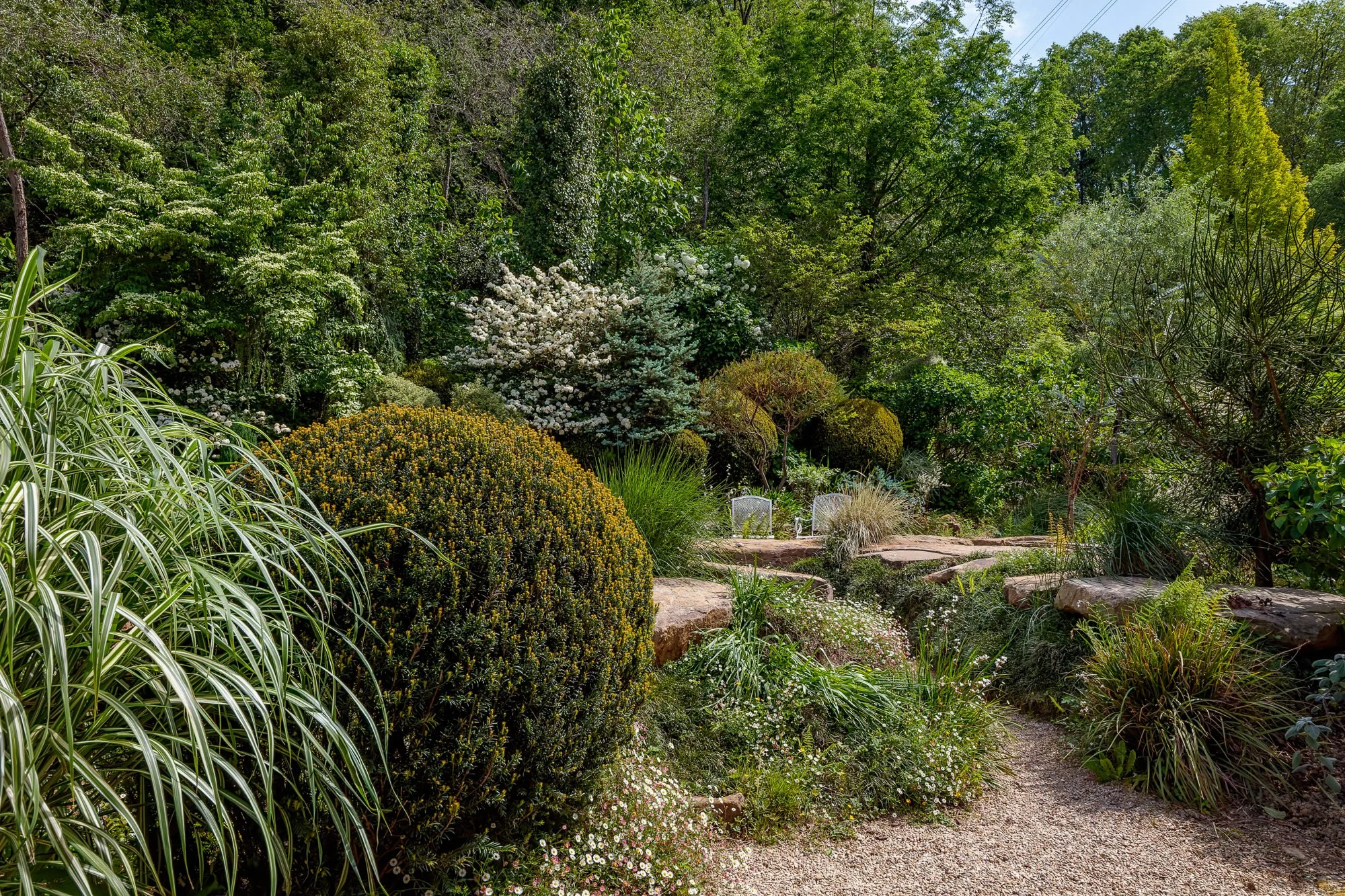
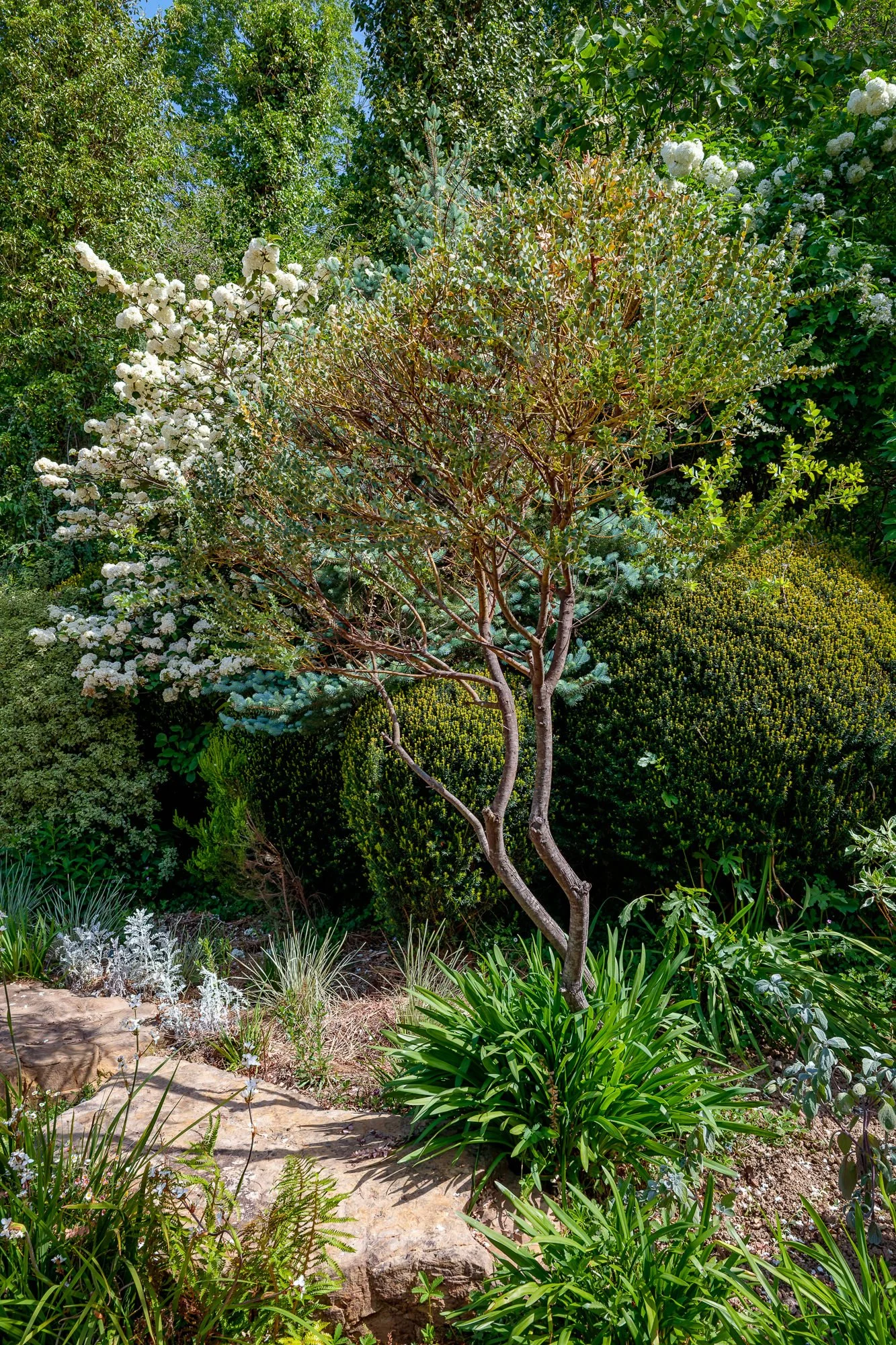
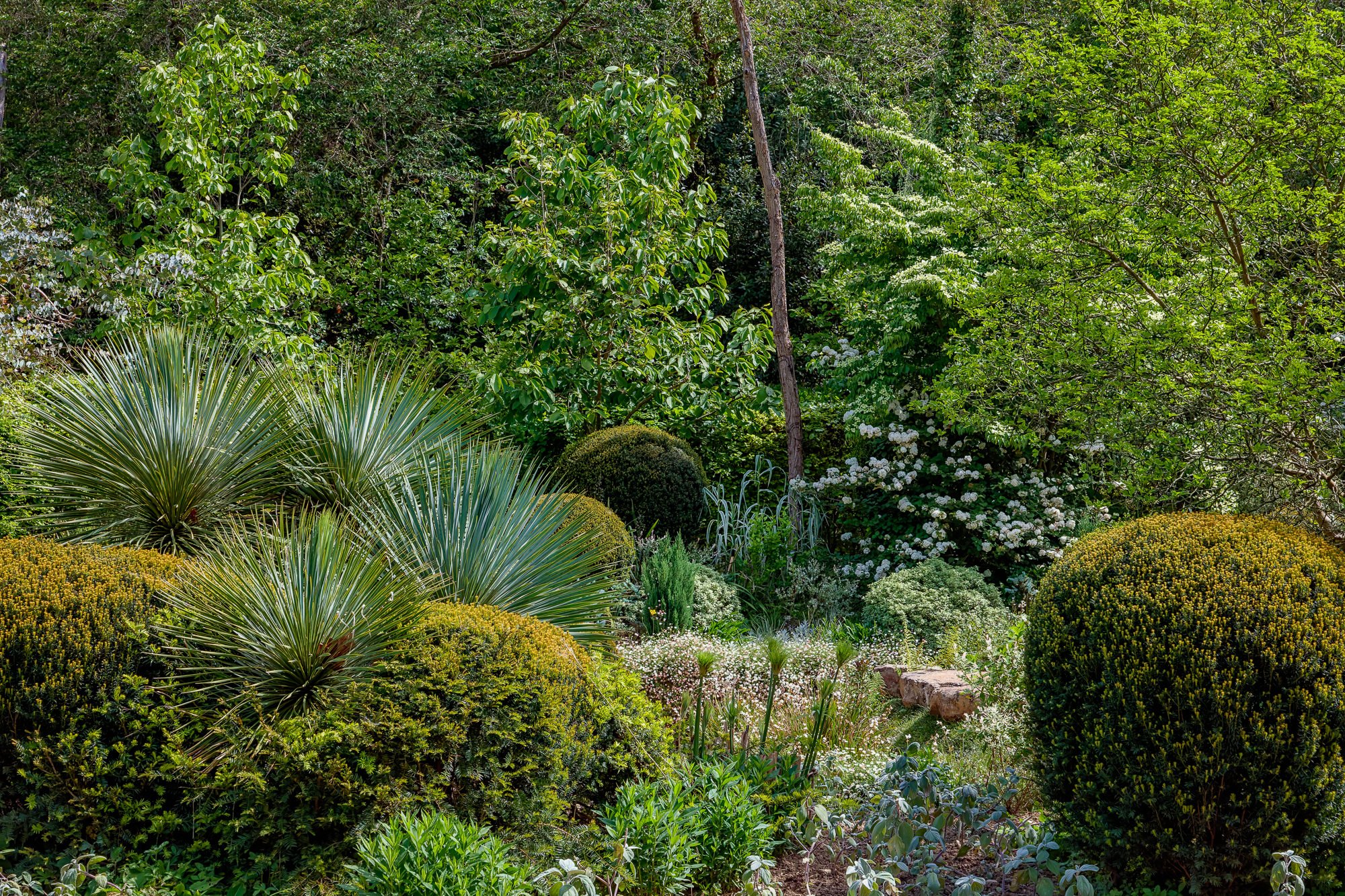
The familiarity at one remove applies also to the Moon Garden – a more successful space all round than the actual White Garden here that, for me, somewhat lacked definition and expected a Cornus controversa 'Variegata' to do all the hard work. The Moon Garden, on the other hand, is a triumph, a fusion (to continue the comparison) of Sissinghurst's White Garden and recently revitalised Delos. Pale forms, ghostly glaucous foliage and enormous slabs of sandstone, all offset by artfully positioned white metal chairs, create a complete contrast to the tones found elsewhere in the garden. The Mexican daisies (Erigeron karvinskianus) were running riot, Acacia pravissima had been trimmed into leggy Modigliani-esque sculpture, Yucca rostrata spikily played off the yew domes dotted throughout.
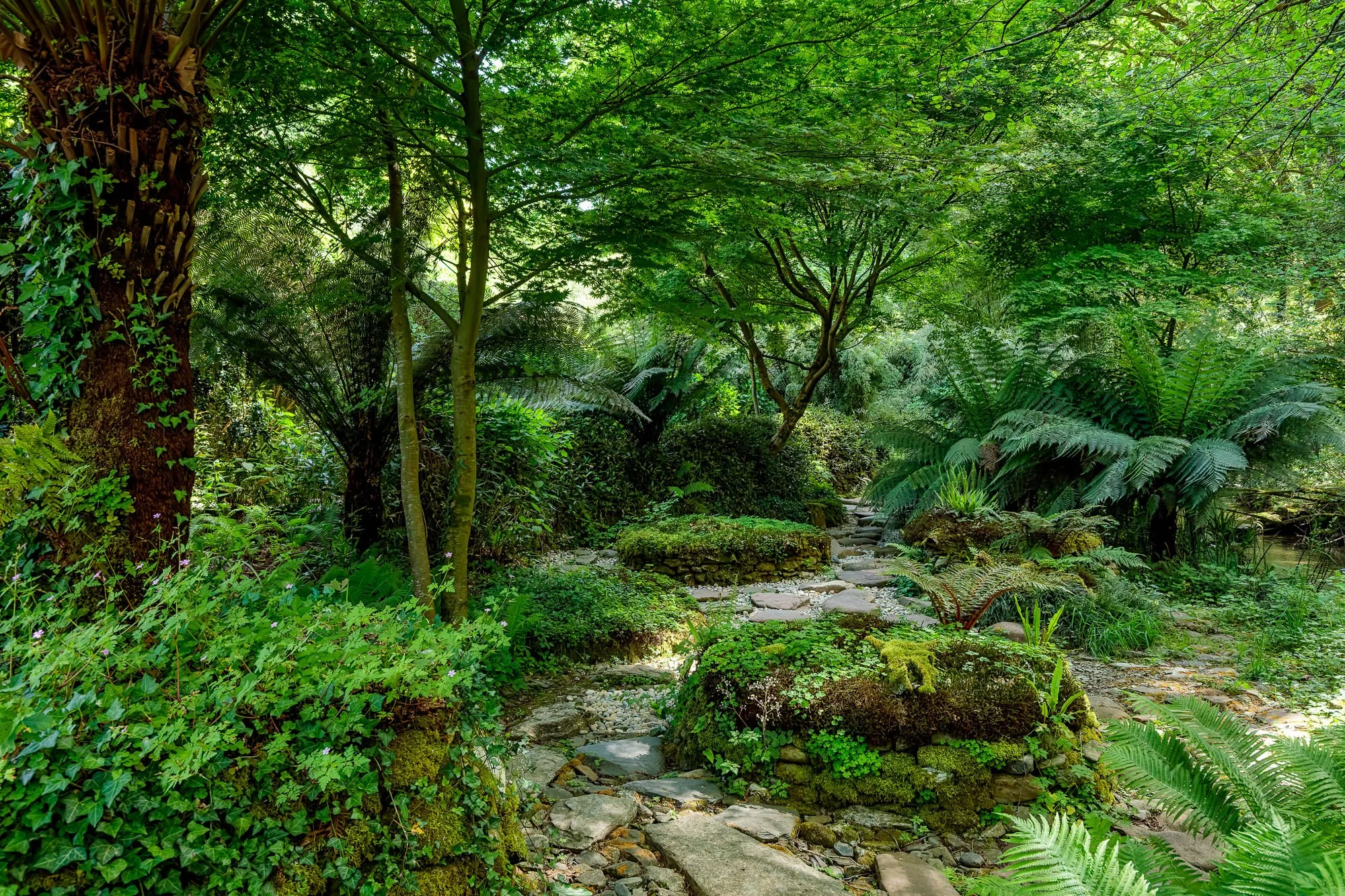
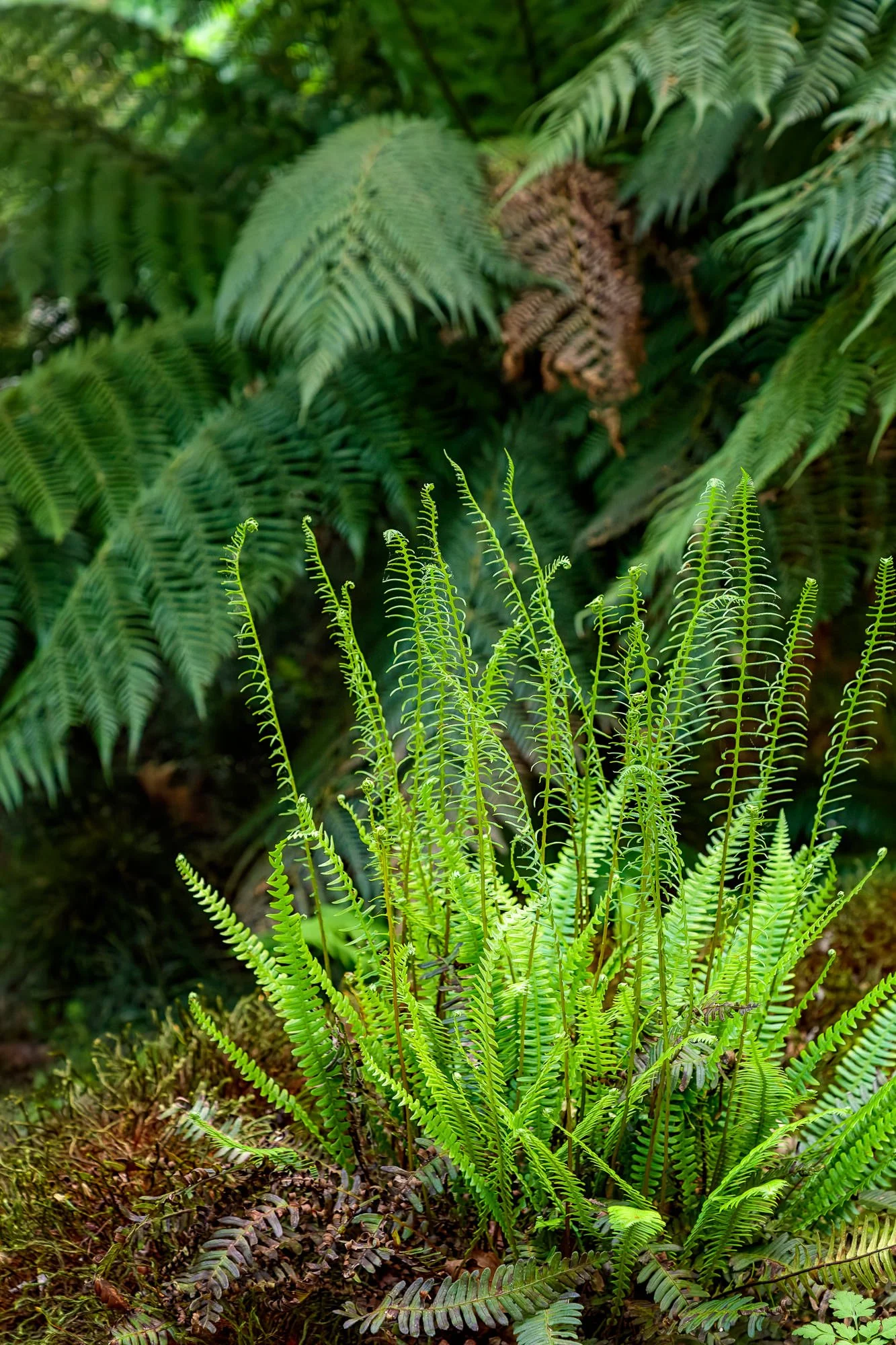
Other well-executed 'rooms' include a wetland area beneath an imposing Taxodium mucronatum leading to a Jurassic-themed walk by the stream. The first area is filled with bog and swamp-lovers, while the second is a haven for ferns of all kinds and mounds of moss echoing the rounded stones used to form the path. This shady, moody, contemplative route wends its way to a clump of bamboo that curiously lacked impact – the scale was just a little too diminutive, the drama of being transported to an alien environment absent, the requisite sense of menace missing.
Another good idea that fell slightly short of its target is the Hydrangea Maze. Admittedly, April is not the most exciting time of year to view mophead hydrangeas. But the density of planting suggests that at the height of the season the whole area might be impenetrable without some careful tweaks and adjustments. And at the risk of sounding a negative note (still frowned on in garden reviews, but that's a whole other discussion), intriguing ideas are occasionally let down by a slightly too carefree attitude that suggests some areas might get overlooked when they should be popping.
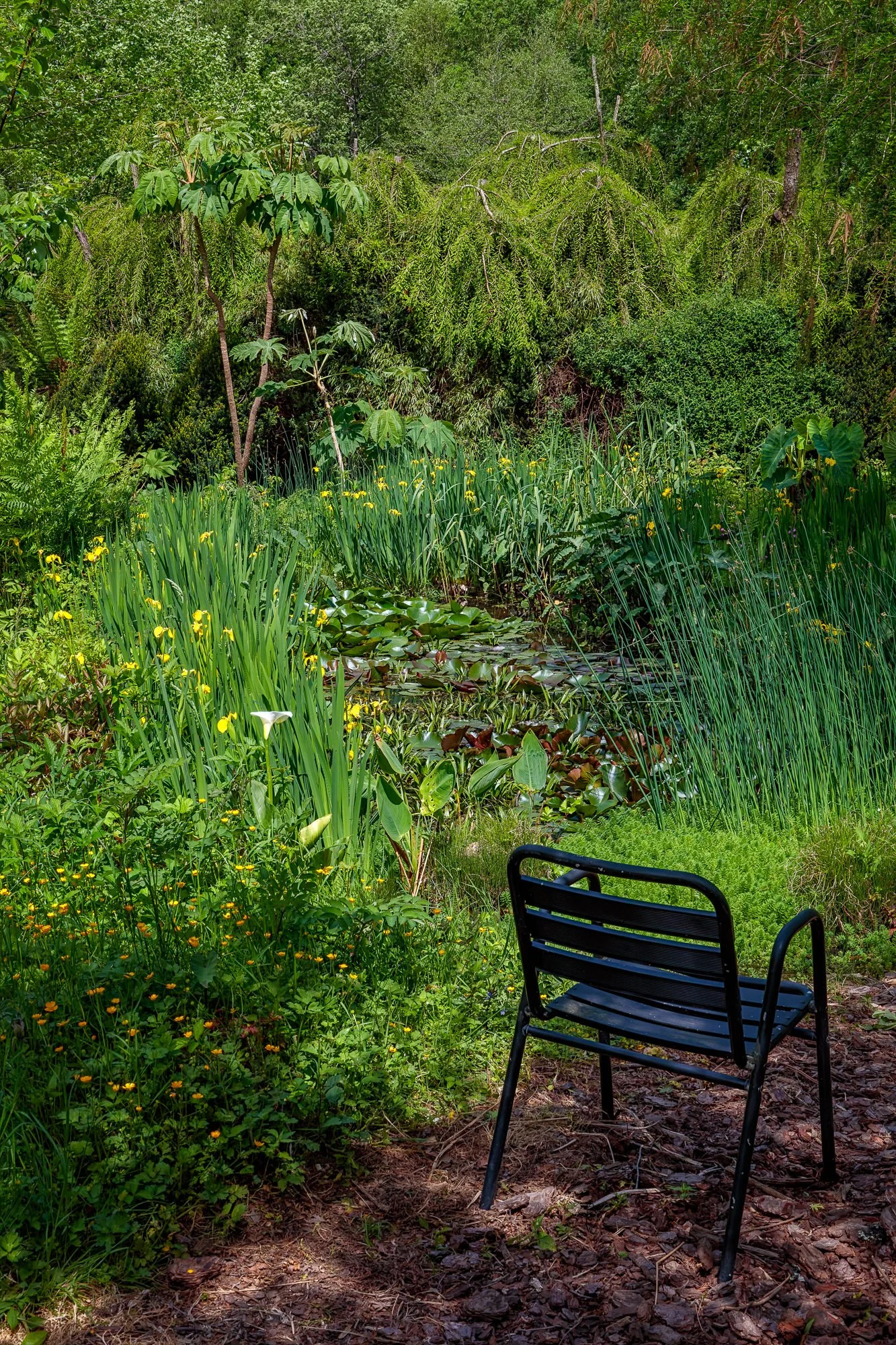
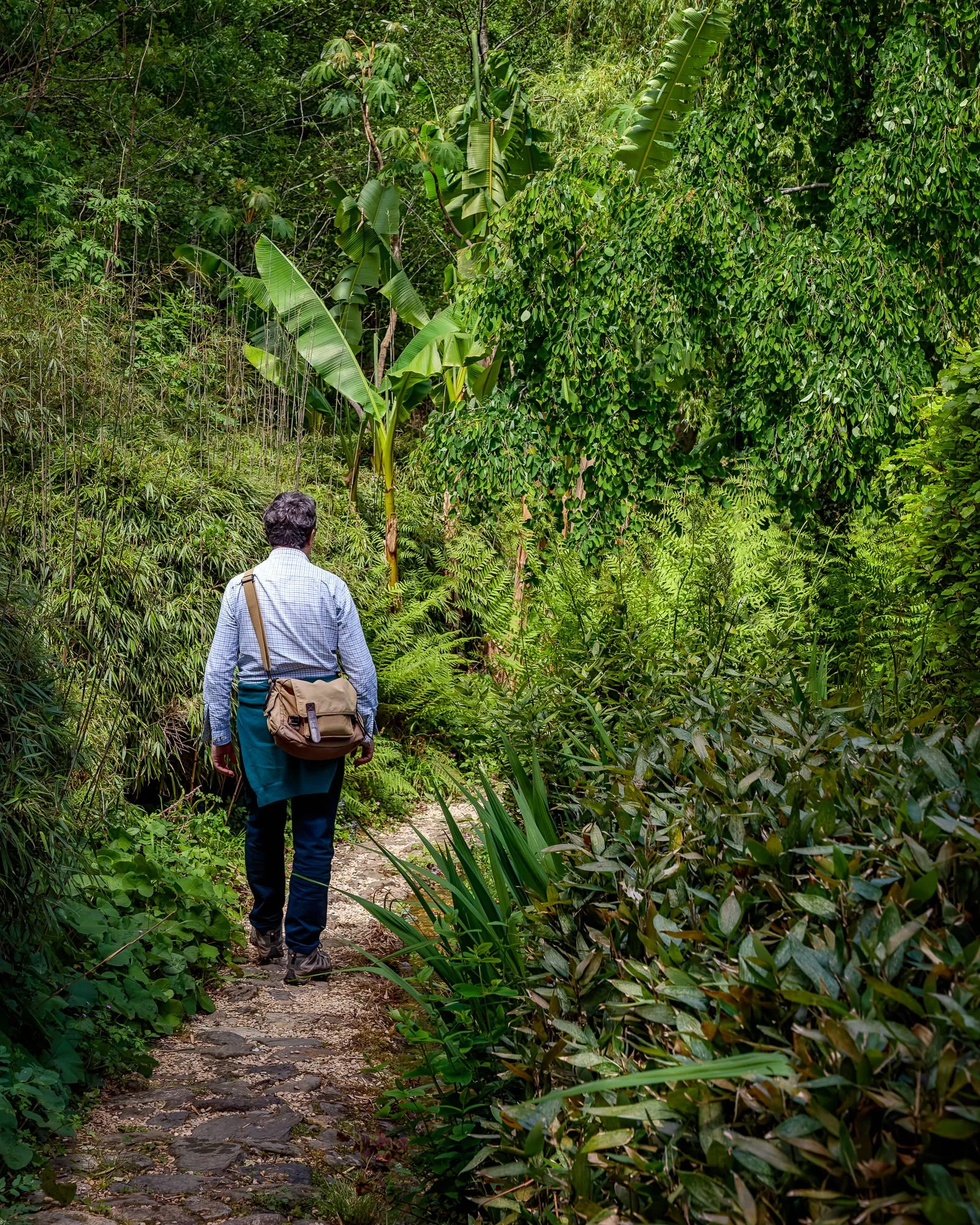
There's a fine line between delightfully loose and distractingly scrappy. Structural lines lose their crispness, planting is not shown off to its best advantage. Features should draw the eye, not confuse it. A charming tale about subterranean watercourses meeting in the exact spot identified by a visiting witch for a pond deserves better. A general tightening up wouldn't go amiss with certain 'rooms', such as the Secret Garden, being hopefully a work in progress rather than just a missed opportunity.
Some areas (The Garden of Extravagance and the Big Leaf Garden) weren't yet firing on all cylinders so early in the season, but show promise of things to come. I have a soft spot for the razor sharp Pseudopanax ferox and the weeping katsuras repeated throughout this section of the garden. And you can never have too many tetrapanax. Just as well, given its propensity to sucker with gay abandon.
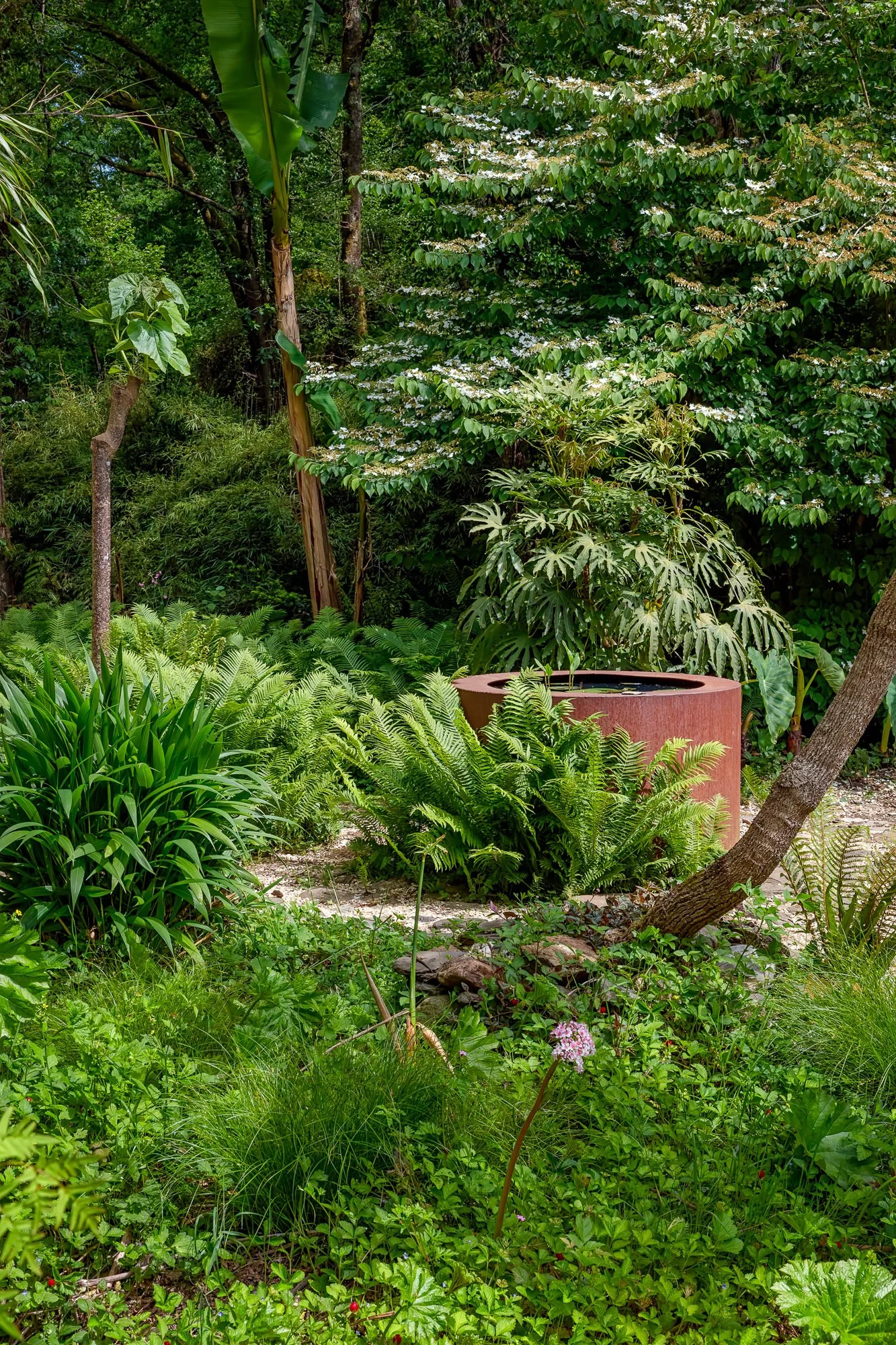
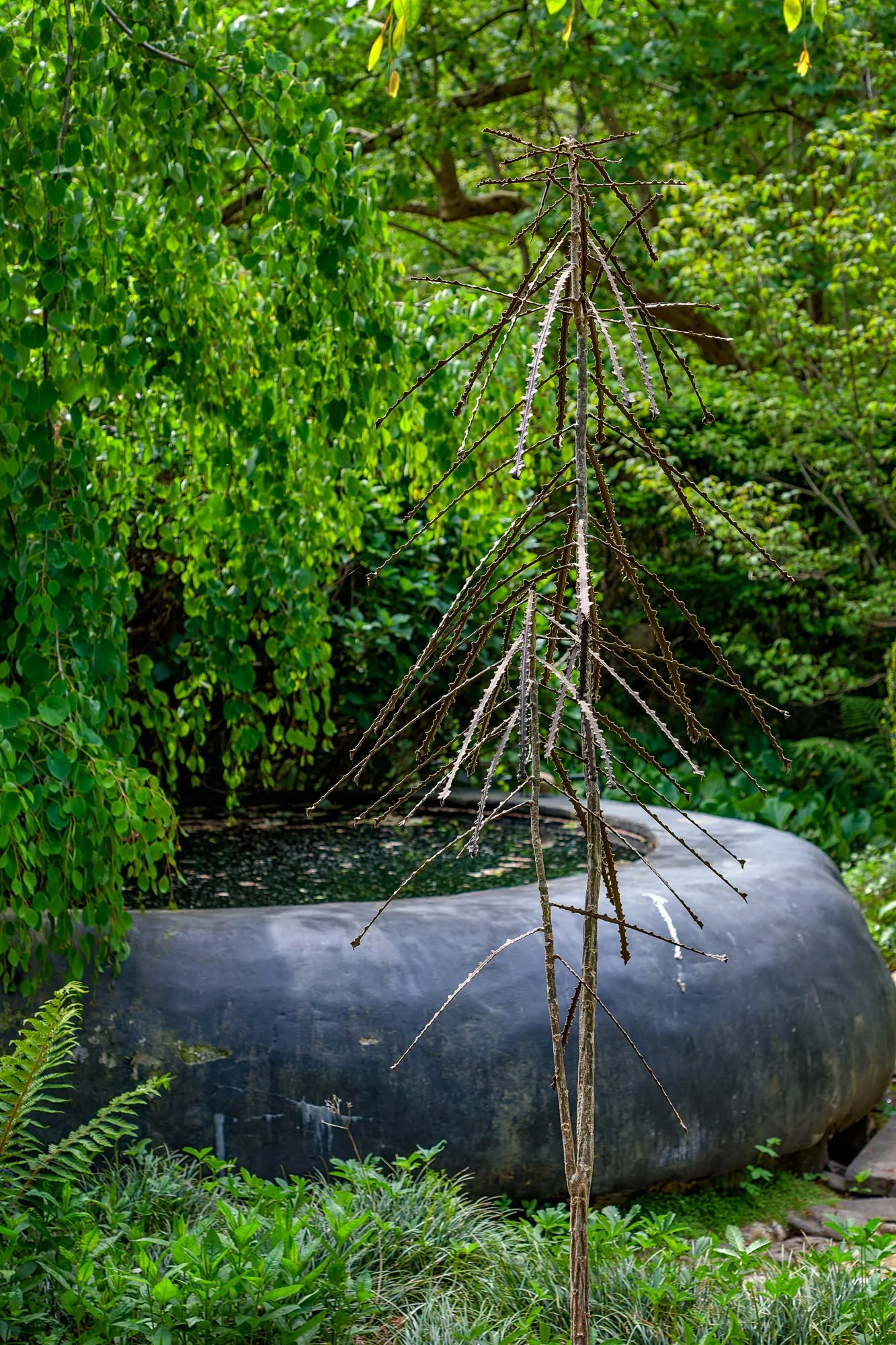
But while the planting is playing catch up, the structure comes to the fore. Rounded or slightly elliptical forms abound in water features, planting beds (in the Meadow, for example, looking dishevelled but geometrically sound) and in the plants themselves – domes, balls and mounds proliferate.
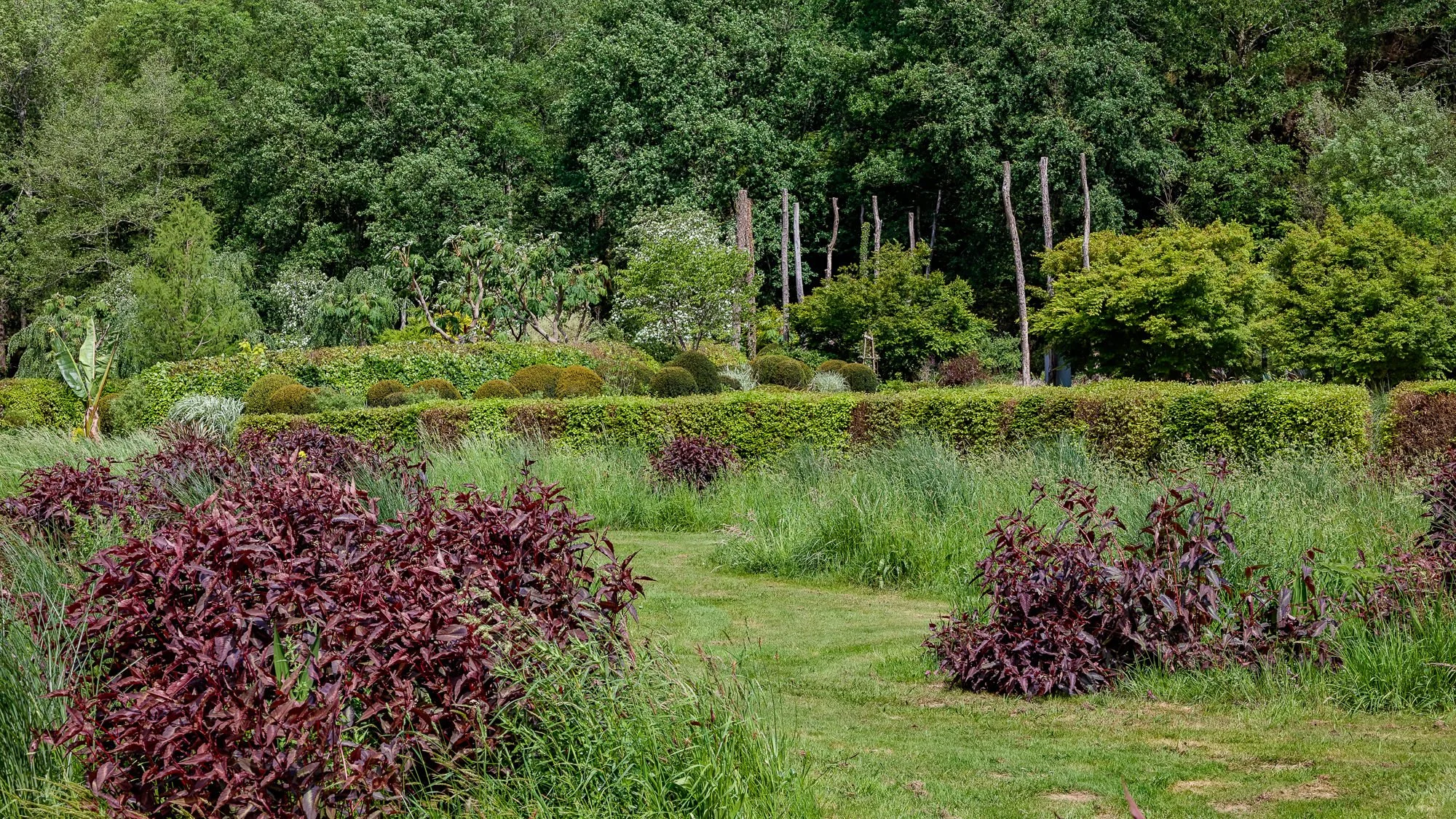
All of which can be explained by the designer's inspiration coming in the form of an egg, the whole garden being organised around this one shape, imbuing the space with a unifying significance. Without the aid of a drone, the visitor can only sense the larger patterns reduced to their essence in the various repeated, small-scale structures more easily appreciated from eye-level.
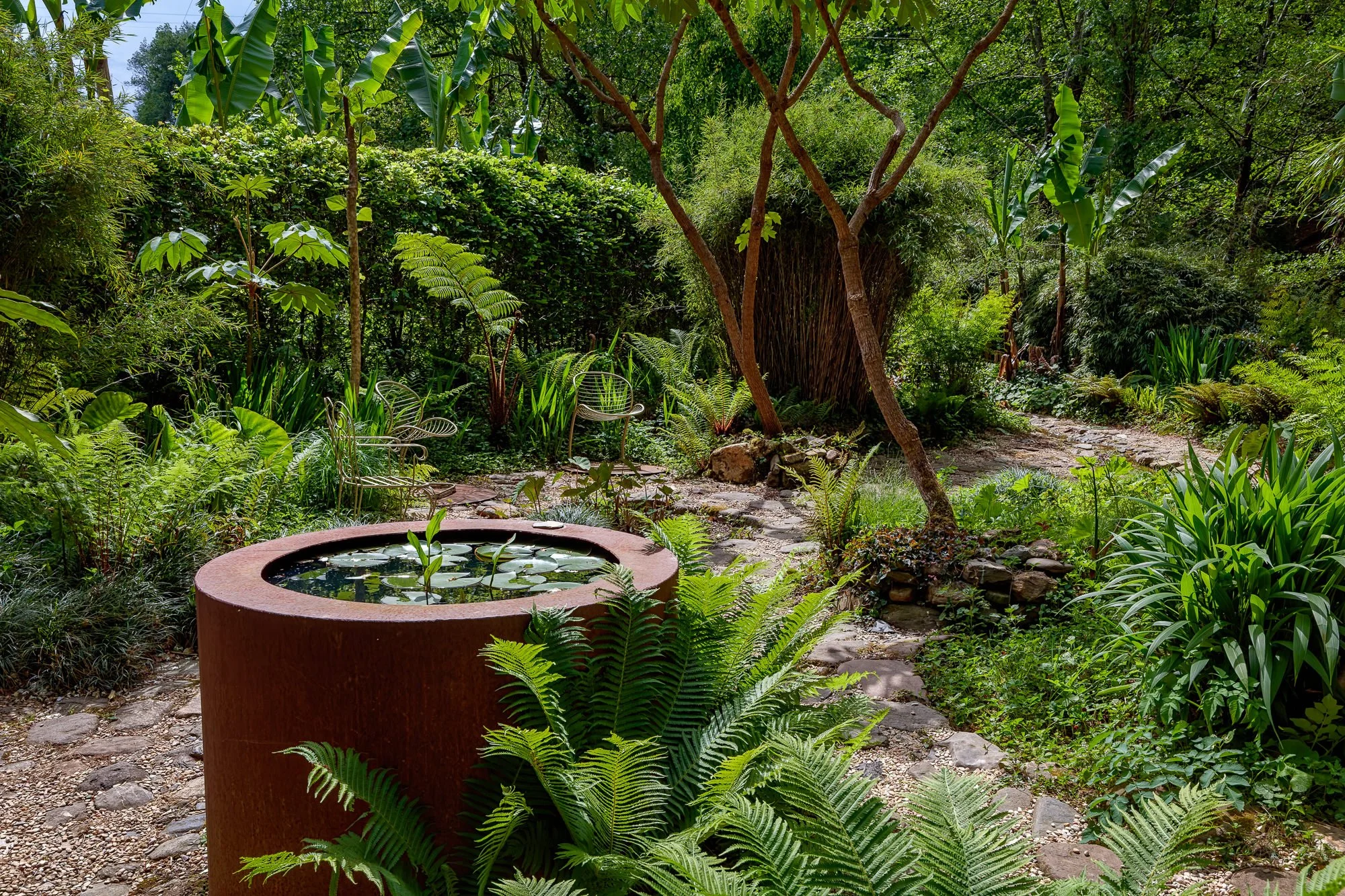
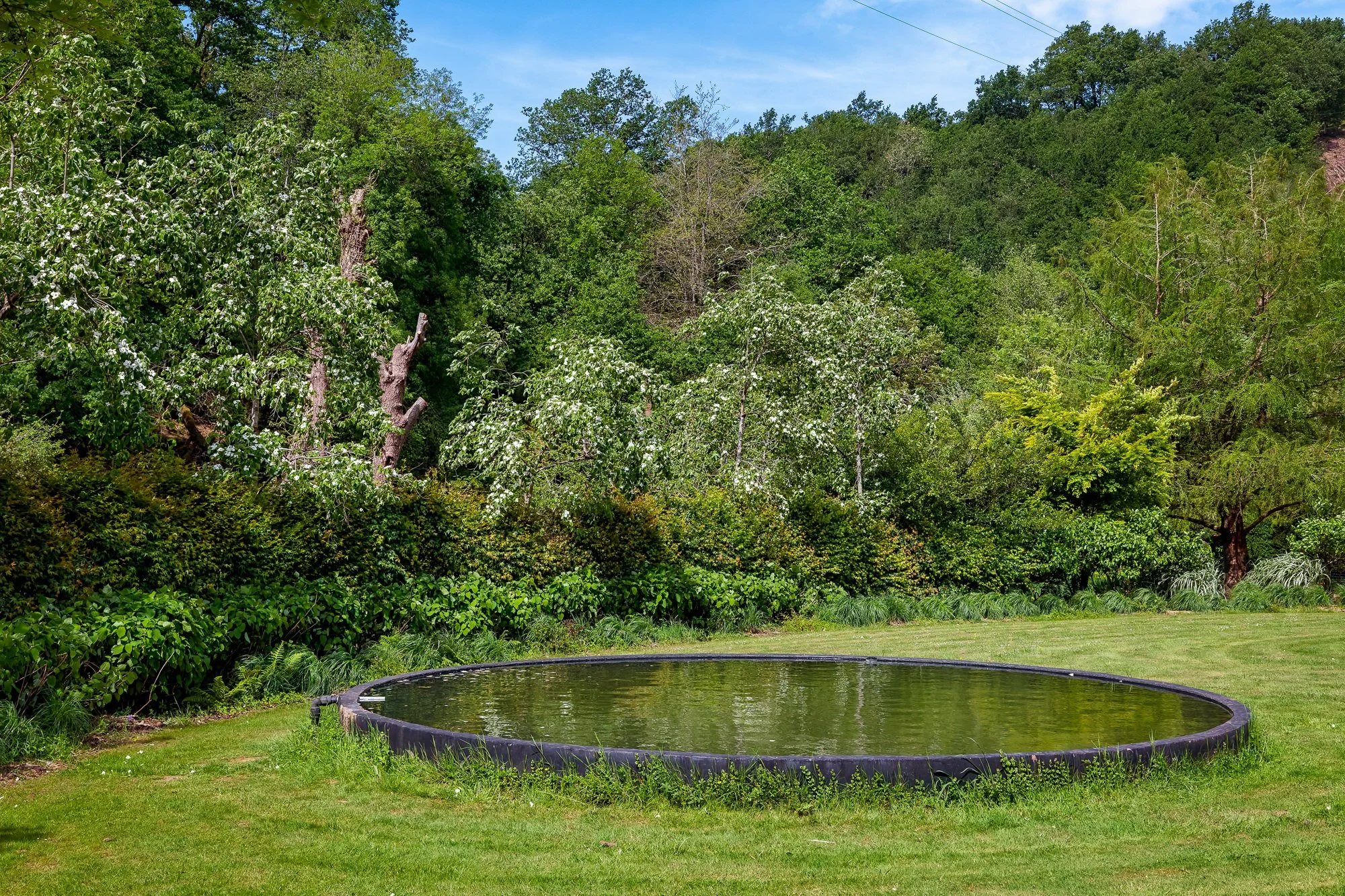
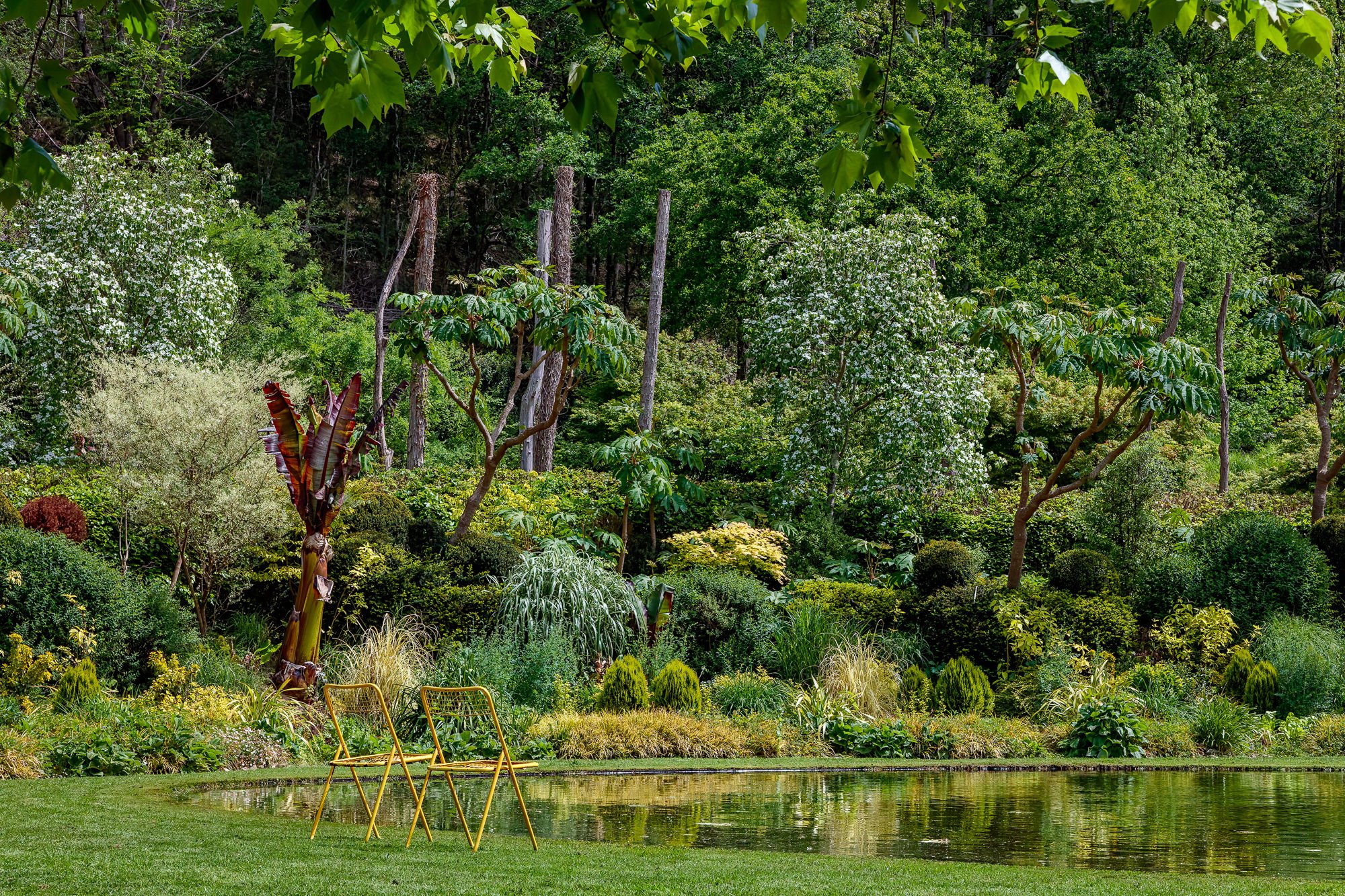
Where the designer's inspiration is most successfully translated to the ground is the Mirror Garden, embraced on one side by the Yellow Garden. A generous expanse of water edged with manicured grass and a border stuffed with yellow leaves and flowers (take that, stuffy good taste!) certainly packs a punch, amplified by the discipline and skill with which the entire scheme is carried through.
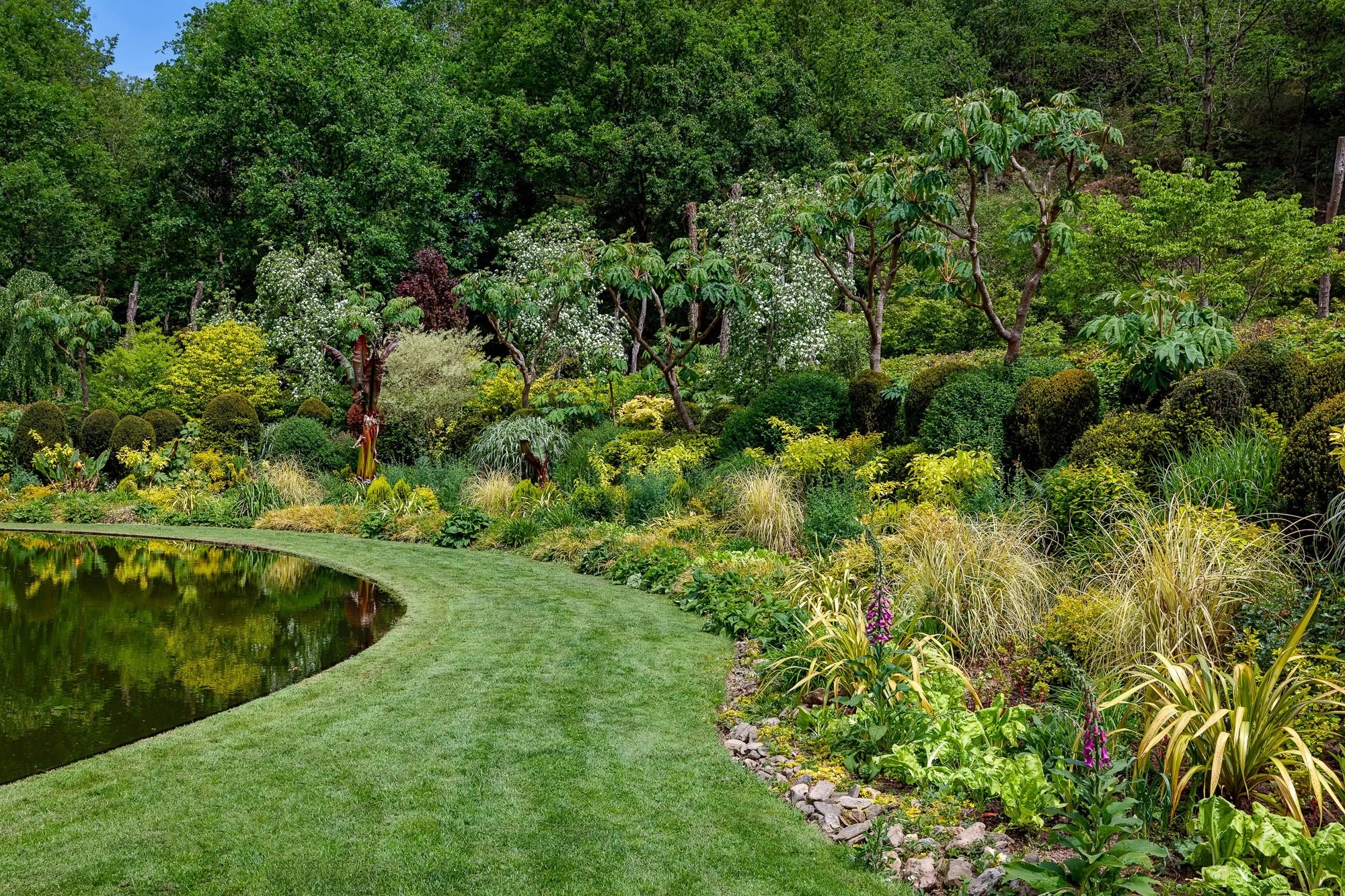
There's a reason this is the most photographed part of the garden – it's where concepts, materials, plants and design all come together to form a pleasing whole. It's not perfect (one side is marred by an experiment in contortion where weeping swamp cypresses are propped up to provide a screen), but it's not far off.
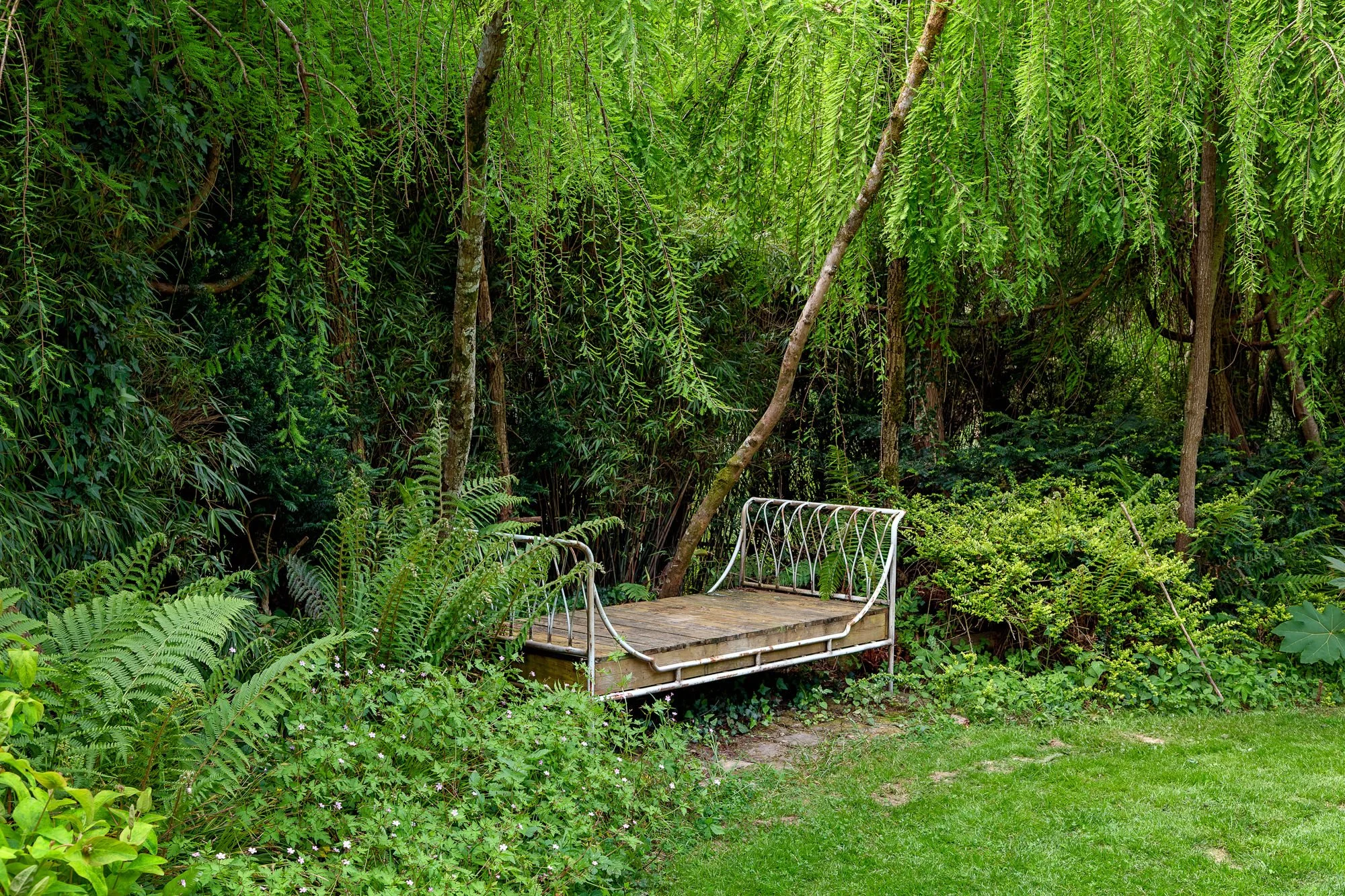
While the water provides a link to the heavens (reflections of scudding clouds a speciality), the planting showcases some of the repeated signature plants found elsewhere in the garden – architectural tetrapanax, bananas, flowering dogwoods, phormiums and phlomis. Balanced, rhythmic and sufficiently startling to give Vita a fit of the vapours, this is the culmination of a garden that is at once intensely personal and a striking re-imagination of a well-trodden garden path.
More information here: https://lurgarden.eus/index.php?lg=en